
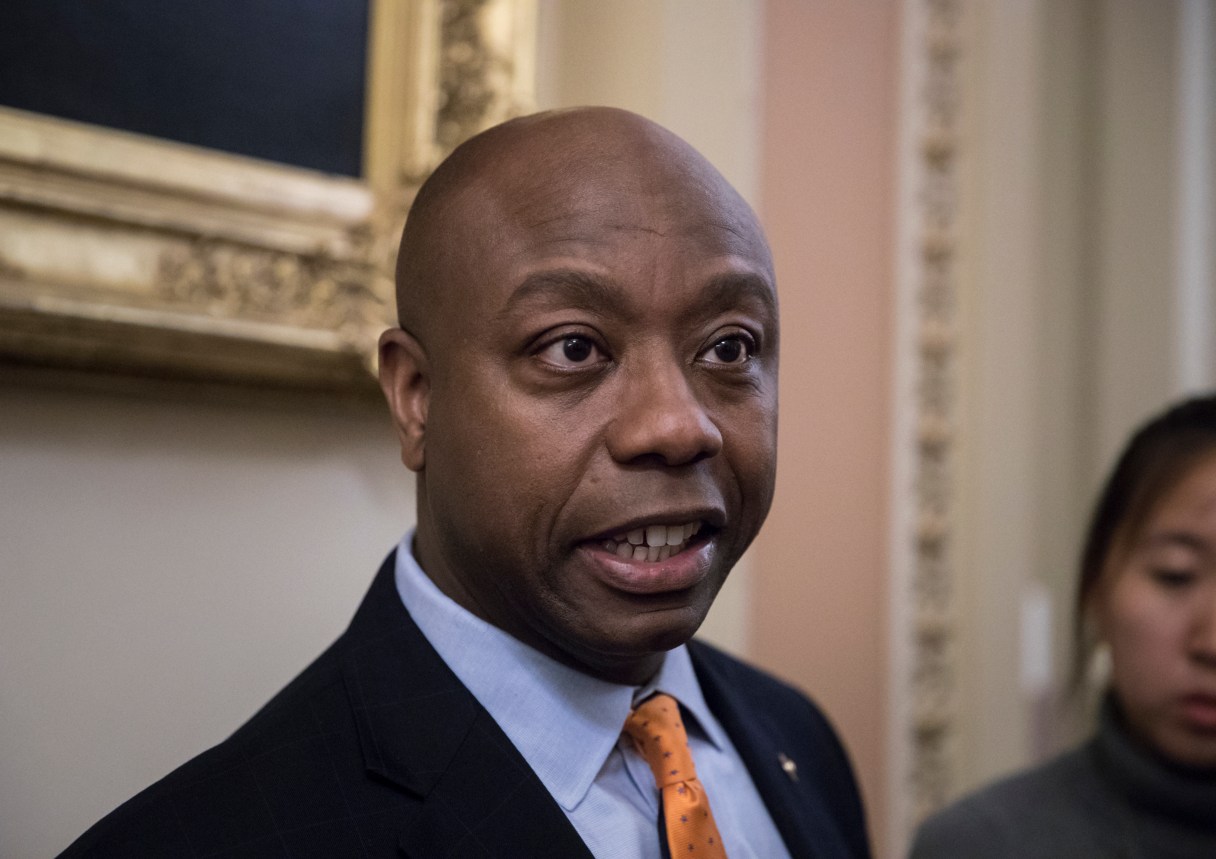
WASHINGTON (AP) – The Senate’s lone black Republican urged President Donald Trump on Wednesday to avoid inflammatory racial rhetoric such as his statement blaming “many sides” for the violence at a recent white nationalist protest in Virginia.
Sen. Tim Scott of South Carolina said he met for roughly a half hour with Trump and Vice President Mike Pence at the White House. He said the president tried to explain his comment, and why he said there were “very fine people” among the nationalists and neo-Nazis protesting the possible removal of a Confederate statue in Charlottesville, Virginia, last month.
“We had three or four centuries of rape, murder and death brought at the hands of the (Ku Klux Klan) and those who believe in a superior race,” Scott told reporters later at the Capitol. “I wanted to make sure we were clear on the delineation between who’s on which side in the history of the nation.”
Scott bluntly criticized Trump for assigning blame in a way that put white supremacist protesters on equal footing with counterdemonstrators who turned out for the Aug. 12 protests, sparked by Charlottesville officials’ decision to remove a statue of Confederate Gen. Robert E. Lee.
That remark, Scott said, compromised Trump’s moral authority as president.