
WASHINGTON (AP) – The Senate has overwhelmingly approved a sweeping policy bill that would pump $700 billion into the military, putting the U.S. armed forces on track for a budget greater than at any time during the decade-plus wars in Iraq and Afghanistan.
Senators passed the legislation by a 89-8 vote Monday. The measure authorizes $700 billion in military spending for the fiscal year that begins Oct. 1, expands U.S. missile defenses in response to North Korea’s growing hostility and refuses to allow excess military bases to be closed.
The 1,215-page measure defies a number of White House objections, but President Donald Trump hasn’t threatened to veto the measure. The bill helps him honor a pledge to rebuild an American military that he said had become depleted on former President Barack Obama’s watch.
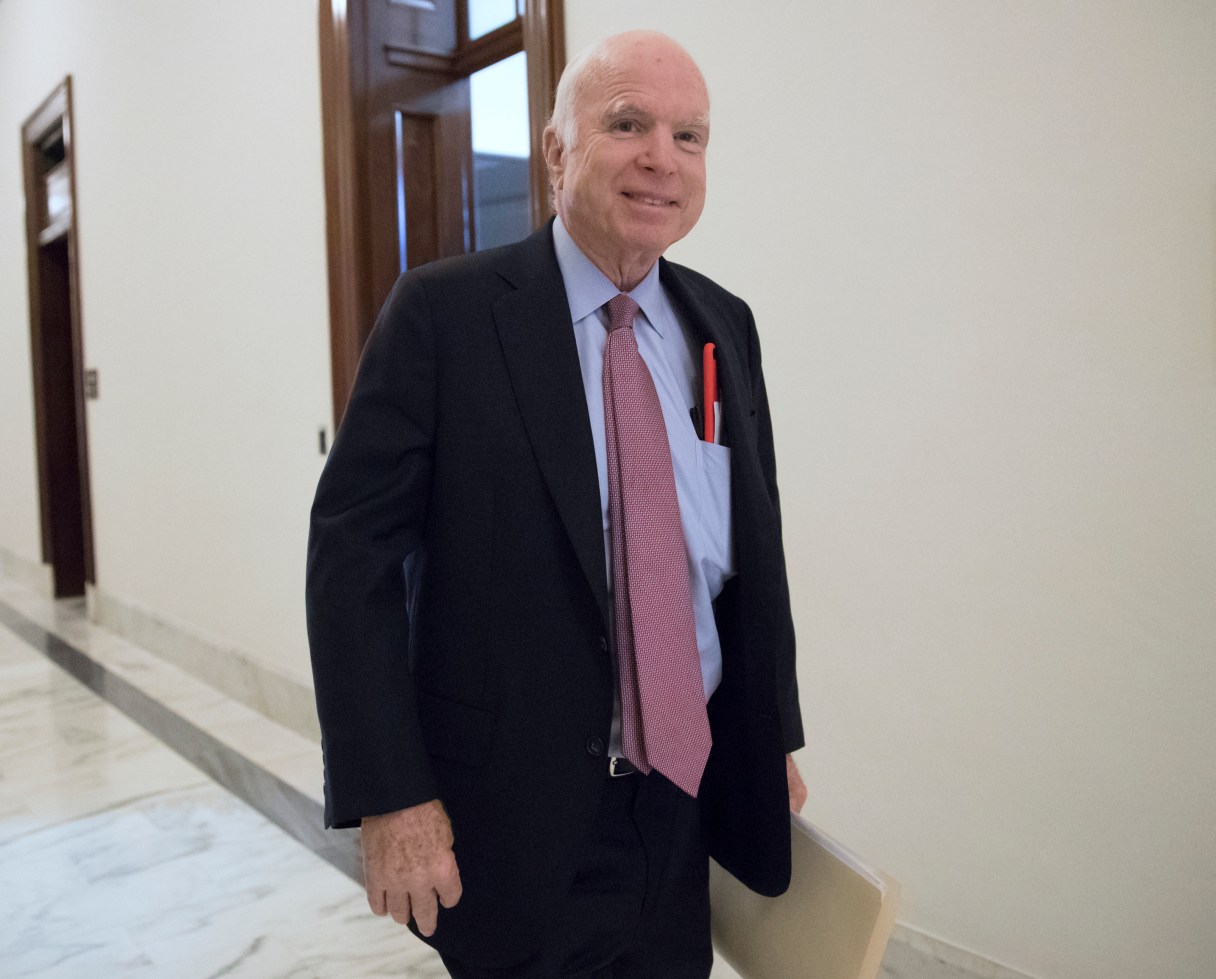
Sen. John McCain, R-Ariz., and other national security hawks have insisted the military branches are at risk of losing their edge in combat without a dramatic influx of money to repair shortfalls in training and equipment. Congress’ failure to supply adequate budgets is at least partly responsible for a series of deadly ship collisions and helicopter crashes, according to McCain, the Armed Services Committee chairman.
What they said
“Governing is about setting priorities, and this bill shows the men and women who serve in our armed forces are a top priority. We owe our service men and women in uniform a debt of gratitude, and the Fiscal Year 2018 National Defense Authorization Act helps ensure they receive the support and resources they need. The defense bill not only authorizes pay raises for troops at Ft. Campbell and the Naval Support Activity Mid-South in Millington, but also reforms and modernizes the military health care system to improve and expand access to care for military families. This bill also authorizes funding for advanced equipment to help ensure the men and women of the armed forces have the tools they need protect American interests at home and abroad. Finally, this legislation strengthens our national security by supporting important programs at the Y-12 National Security Complex in Oak Ridge to help maintain our nuclear weapons arsenal.”- U.S. Sen. Lamar Alexander, R-Tenn.”We are deeply indebted to our brave men and women in uniform for their service to our country, and I am incredibly grateful for the work they do to defend our nation from a variety of threats every day. Unfortunately, this legislation not only blows the budget caps by nearly $83 billion but also exceeds the president’s funding request by more than $32 billion and continues the abuse of OCO as a budget gimmick. While I support investing the appropriate resources to ensure our troops have the tools they need, we cannot continue to do things the same way and deepen the fiscal crisis jeopardizing our national security. The inability to get our fiscal house in order is the greatest threat to our country, and I will continue fighting for an agreement that responsibly funds our military without adding to our massive deficits.”- U.S. Sen. Bob Corker, R-Tenn.”This legislation helps us improve and increase military readiness by directing funding where it’s needed and making a bigger investment in our armed forces. I thank Chairman McCain and Ranking Member Reed for their tireless efforts on this measure to ensure our men and women in uniform have the resources needed to confront global threats. We must continue to take seriously the threats to our liberty by posed by the Islamic State in Iraq and the Levant, North Korea, the Taliban and Russia. I’m also pleased that we are giving our men and women in uniform who are serving our nation a pay raise. JSTARS is an asset of our U.S. military and our intelligence agencies with a capability that is second to none in the world,” said Isakson. “It has proven itself indispensable in our campaign to defeat ISIL, in counter-terrorism operations, and even during the current hurricane disaster responses. I applaud today’s effort by the Senate to protect this valuable asset, and I will continue fighting for its support.”- U.S. Sen. Johnny Isakson, R-Ga.
McCain, who is battling an aggressive type of brain cancer, guided the bill toward passage as he railed against Washington gridlock and political gamesmanship. But he couldn’t quell disputes among his colleagues over several contentious amendments that were blocked from votes and failed to be added to the bill.
Among them was a proposal by Sens. Kirsten Gillibrand, D-N.Y., and Susan Collins, R-Maine, that would have protected transgender service members from being kicked out of the armed forces. Gillibrand and McCain seek to achieve the same goal through separate legislation they introduced late last week. That bill also is supported by Jack Reed of Rhode Island, the top Democrat on the Armed Services panel.
Approved by the Armed Services Committee by a 27-0 vote in late June, the overall Senate bill provides $640 billion for core Pentagon operations, such as buying weapons and paying troops, and another $60 billion for wartime missions in Afghanistan, Iraq, Syria and elsewhere. Trump’s budget request sought $603 billion for basic functions and $65 billion for overseas missions.
With North Korea’s nuclear program a growing threat to the U.S. and its allies, the bill includes $8.5 billion to strengthen U.S. missile and defense systems. That’s $630 million more than the Trump administration sought for those programs, according to a committee analysis.
North Korea last week conducted its longest-ever test flight of a ballistic missile, firing an intermediate-range weapon over U.S. ally Japan into the northern Pacific Ocean. The launch signaled both defiance of its rivals and a significant technological advance.
The legislation directs the Defense Department to deploy up to 14 additional ground-based interceptors at Fort Greely, Alaska, an increase that will expand to 58 the number of interceptors designed to destroy incoming warheads. The department also is tasked with finding a storage site for as many as 14 other spare interceptors, and senators envision an eventual arsenal of 100 with additional missile fields in the Midwest and on the East Coast.
The White House, in a statement issued earlier this month, called the order for more interceptors “premature” given the Pentagon’s ongoing review of missile defense programs.
Despite the push for the additional billions in military spending, major hurdles need to be cleared before all the extra money materializes. Lawmakers will have to work out a deal that lifts the caps on federal agency budgets, including the Pentagon’s, mandated by a 2011 law. Congress has passed temporary relief from the limits before, but senior military officials have urged for the law to be repealed altogether.
As their House counterparts did, the Senate bill rejects Defense Secretary Jim Mattis’ plan to launch a new round of base closings starting in 2021. He told lawmakers in June that closing excess installations would save $10 billion over a five-year period. Mattis said the savings could be used to acquire four nuclear submarines or dozens of jet fighters. But military installations are prized possessions in states and lawmakers refused to go along.
The bill allots $10.6 billion for 94 Joint Strike Fighter aircraft, which is two dozen more than Trump requested. The bill also provides $25 billion to pay for 13 ships, which is $5 billion and five ships more than the Trump sought.