
Monday, November 16, 2026Nov 16

Winners and losers in GOP’s last-ditch health overhaul

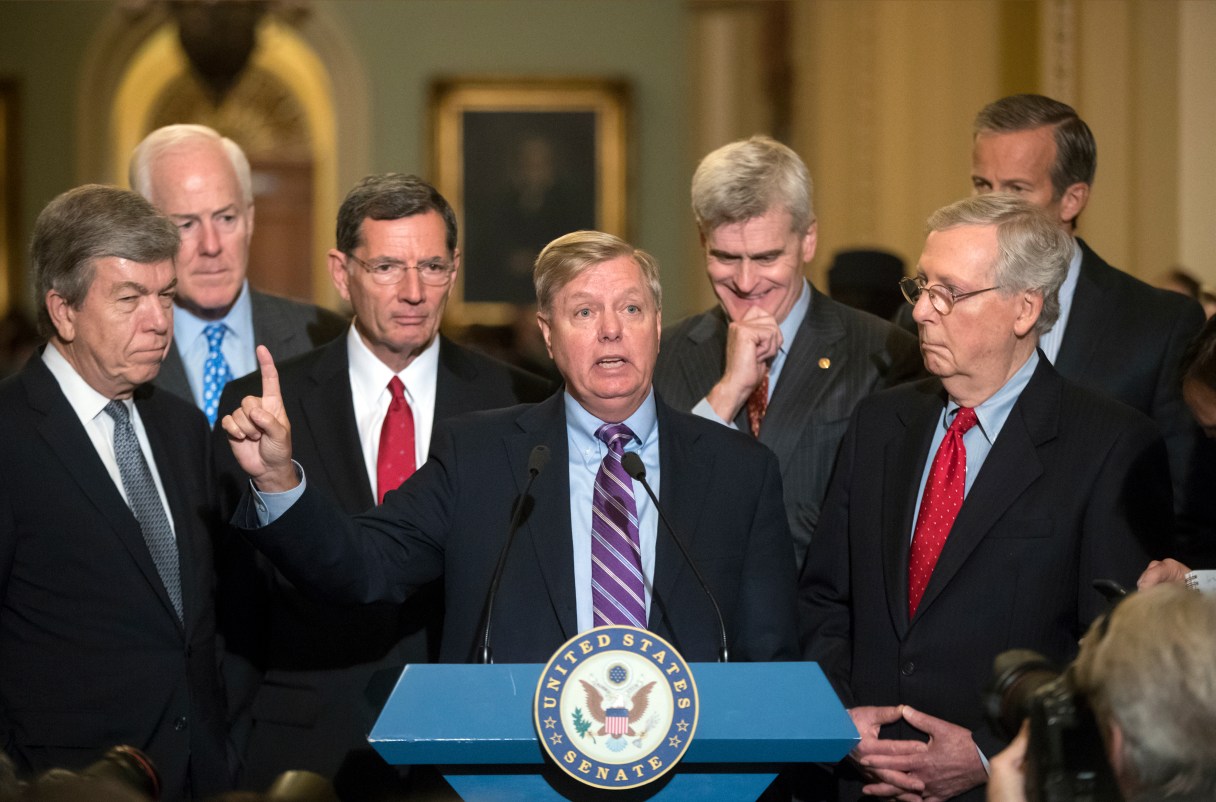
Sen. Lindsey Graham, R-S.C., joined by, from left, Sen. Roy Blunt, R-Mo., Majority Whip John Cornyn, R-Texas, Sen. John Barrasso, R-Wyo., Sen. Bill Cassidy, R-La., Senate Majority Leader Mitch McConnell, R-Ky., and Sen. John Thune, R-S.D., speaks to reporters as he pushes a last-ditch effort to uproot former President Barack Obama's health care law, at the Capitol in Washington, Tuesday, Sept. 19, 2017. To win, 50 of the 52 GOP senators must back it _ a margin they failed to reach when the chamber rejected the effort in July. (AP Photo/J. Scott Applewhite)

WASHINGTON (AP) – The GOP’s last-ditch effort to repeal “Obamacare” would redistribute hundreds of billions of dollars in federal financing for insurance coverage, creating winners and losers among individual Americans and states in ways not yet fully clear.

Independent analysts say the latest Senate Republican bill is likely to leave more people uninsured than the Affordable Care Act, and allow states to make changes that raise costs for people with health problems or pre-existing medical conditions.

After closed-door meetings Tuesday, supporters seemed confident but acknowledged they’re not sure if the bill can pass. There’s only a narrow window for the Senate to act under special budget rules that expire at the end of the month.

The Congressional Budget Office has said it doesn’t have time to complete a full analysis of the impact on coverage before the deadline.

The biggest changes would start in 2020 – the next presidential election year. That’s a political risk for Republicans, since health care changes often involve unforeseen problems.