
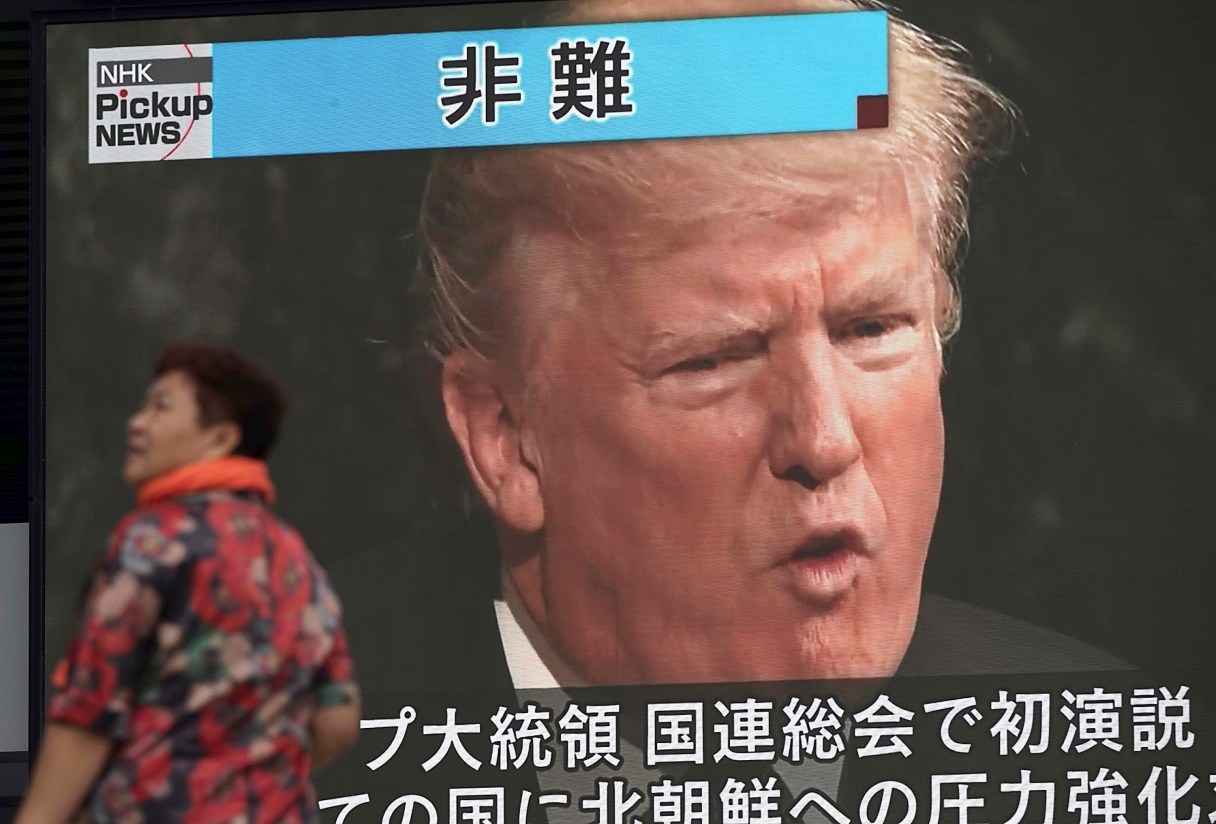
SEOUL, South Korea (AP) – Was it a bluff? A warning that Washington would shoot down North Korea’s next missile test? A simple restatement of past policy? Officials and pundits across Asia struggled Wednesday to decode President Donald Trump’s threat to “totally destroy North Korea” if provoked.
There was, however, no immediate comment from the focus of Trump’s belligerence: North Korea held its tongue in the hours after the U.S. president’s speech.
In a region well used to North Korea’s pursuit of nuclear weapons generating a seemingly never-ending cycle of threats and counter threats, Trump’s comments Tuesday at the U.N. General Assembly stood out.
South Korea officially played them down, while some politicians worried that Trump’s words signaled a loss of influence for Seoul. Tokyo focused on his mention of Japanese citizens abducted by the North. Analysts across Asia expressed surprise, even wry amusement, in one case, that Trump’s words seemed to mirror threats normally emanating from North Korean state media.
Officials from the office of President Moon Jae-in, a liberal who has advocated dialogue with the North while being forced into a hawkish position by the North’s weapons tests, called Trump’s words a signal of Washington’s strong resolve to deal with the North but essentially a repetition of a basic U.S. policy.