
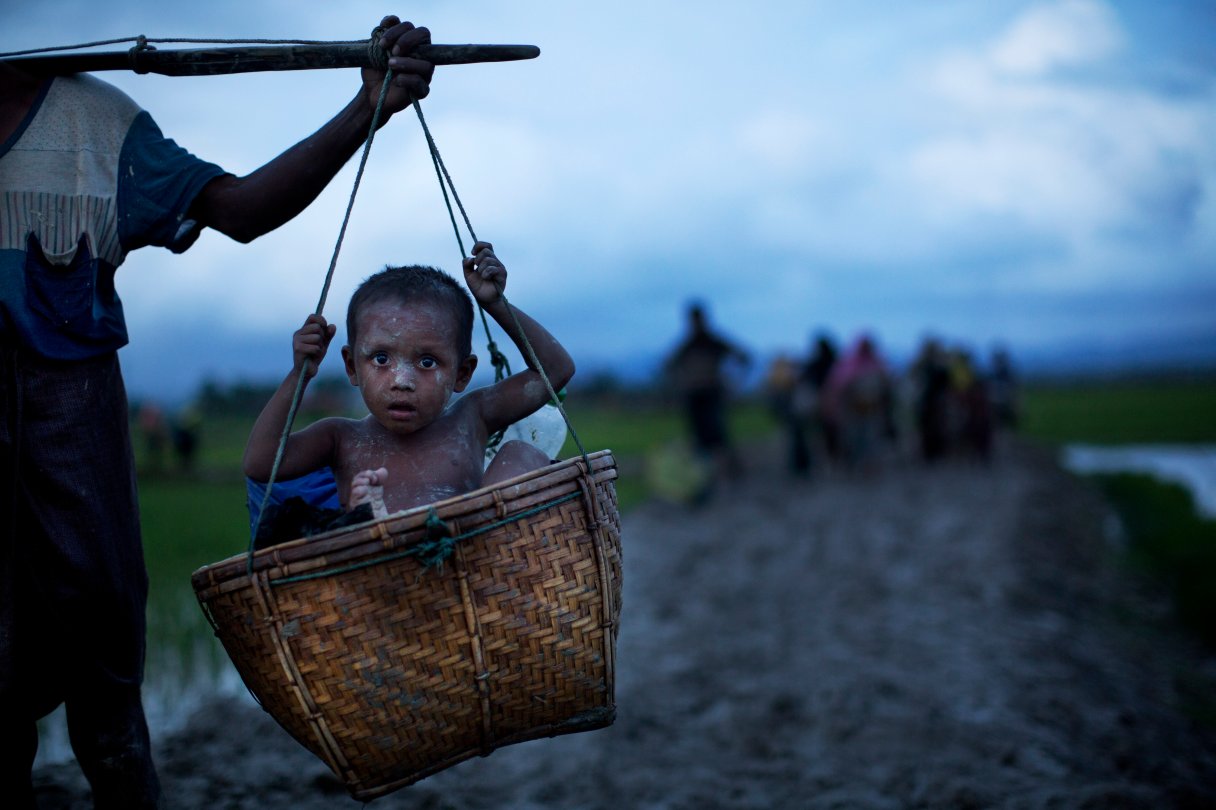
COX’S BAZAR, Bangladesh (AP) – More than 400,000 ethnic Rohingya Muslims have poured into Bangladesh since the latest wave of violence exploded in their nearby home of Myanmar last month. The crisis has drawn global condemnation, with the United Nations and human rights groups calling on Myanmar to end what they describe as a systematic campaign of ethnic cleansing.
The Associated Press’ South Asia news director, Bernat Armangue, is part of an AP team in the refugee camps documenting the crisis. Armangue, a photographer who covered global stories from the Arab Spring to the 2015 earthquake in Nepal, shares his thoughts on some of the images he has taken of the unfolding calamity:
___
A BLEAK PROCESSION
Shortly after we arrived, we started driving down to the area where we knew refugees were arriving in Bangladesh. There was a moment, looking across the rice fields, that I could suddenly see a line of people crossing, like a long snake moving. We stopped the car and started walking through muddy fields. There were so many people crossing the border. Families. A lot of parents. Fathers and mothers holding their children. Children carrying babies. All of them were covered in mud, and some were carrying these huge sticks attached to baskets and plastic bags, which held their belongings. The most shocking thing was to realize that in some of these plastic bags and baskets were not belongings, but elders and children who could not walk by themselves.