
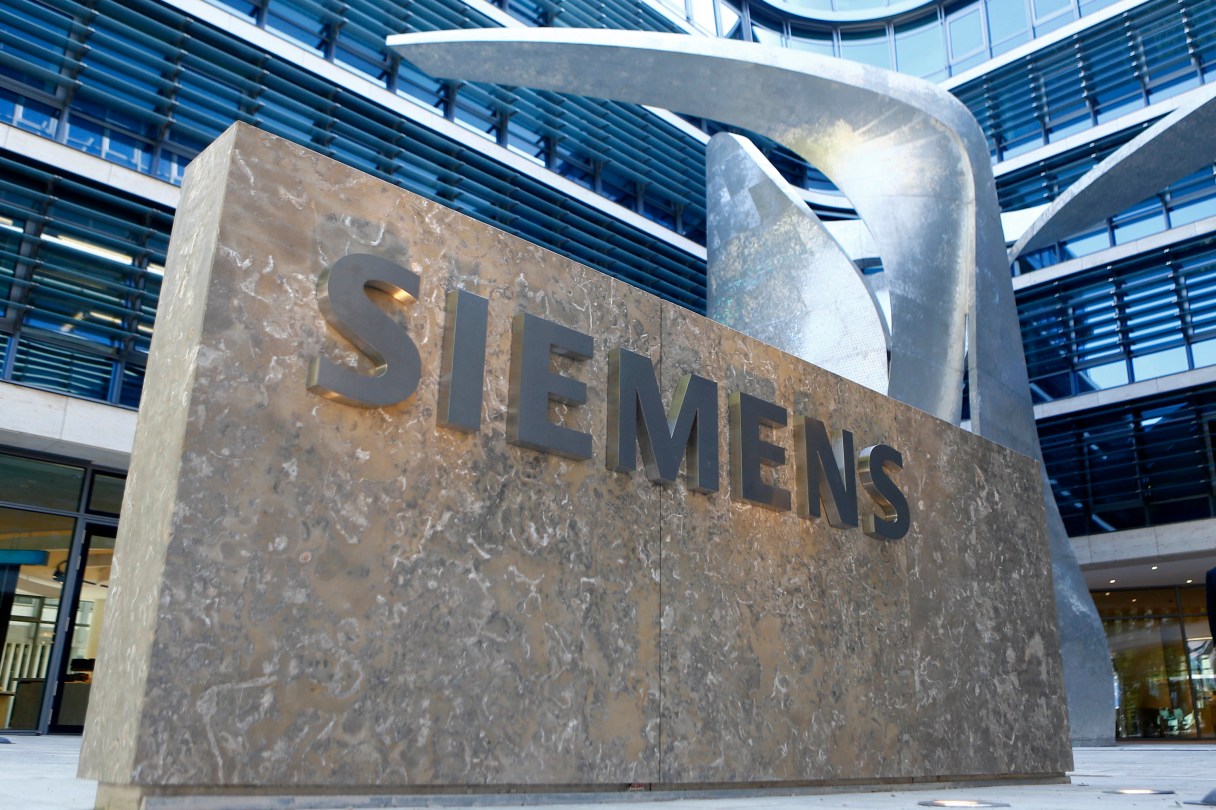
FRANKFURT, Germany (AP) – German industrial equipment maker Siemens AG said Tuesday it has agreed to merge its train-building business with French rival Alstom, creating a “new European champion” in the face of rising competition from China.
The deal is a sign of renewed French-German cooperation just days after German Chancellor Angela Merkel won a fourth term in office.
Munich-based Siemens said that under the memorandum of understanding laying out the deal it would hold 50 percent of the shares in the combined entity, with the chance to eventually acquire 2 percent more.
The deal skirted political sensitivities on the French side. The new group’s headquarters will be in the Paris area, and Alstom CEO Henri Poupart-Lafarge will lead the entity, which will be called Siemens Alstom.
Both companies make sleek, high-speed trains that go fast enough to compete with airline travel. Many of Alstom’s Avelia model trains can be operated at 300 kph (186 mph) or more. Siemens, based in Munich, makes the ICE, which whisks business travelers and tourists between major German cities such as Berlin, Hamburg, Cologne and Frankfurt. Both firms also make equipment for slower regional trains.