
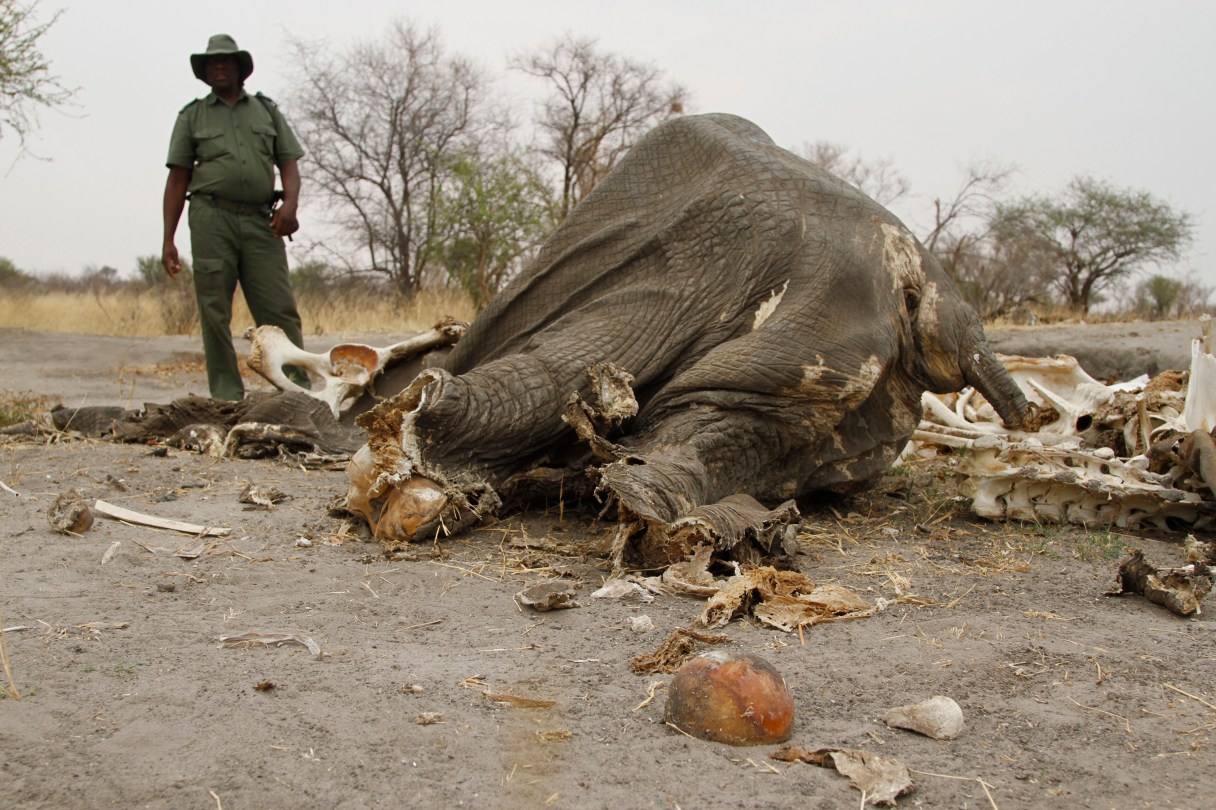
JOHANNESBURG (AP) – Hundreds of vultures in Namibia died after feeding on an elephant carcass that poachers had poisoned. Poachers in Zimbabwe used cyanide to kill dozens of elephants for their ivory tusks. In Mozambique three lions died after eating bait infused with a crop pesticide.
Poisoning Africa’s wildlife is an old practice, but conservationists fear such incidents are escalating in some areas, saying relatively easy access to agricultural chemicals and the surging illegal market for animal parts are increasing pressure on a number of already beleaguered species. The threat is compounded by the indiscriminate nature of killing with poison, in which a single contaminated carcass can take down a range of animals, particularly scavengers such as vultures.
This month, a continent-wide database was launched to gather data on wildlife poisoning and better understand a phenomenon that has been widely documented in southern Africa, where a reported 70 lions have been fatally poisoned in the last 18 months, according to managers. While the African Wildlife Poisoning Database lacks records from underreported areas including Central Africa, it dates to 1961 and lists nearly 300 poisoning incidents in 15 African countries that killed more than 8,000 animals from dozens of species, including leopards, hyenas, impalas, cranes and storks.
“It’s still a big work in progress,” said Darcy Ogada, a Kenya-based database coordinator and assistant director of Africa programs at The Peregrine Fund, a conservation group. The goal, Ogada said, is to get governments to pay more attention to the “underground world” of wildlife poisoning that also threatens livestock, water sources and people who eat meat from birds and other poisoned animals.
Poachers with guns have killed hundreds of thousands of elephants and thousands of rhinos in Africa in past years, but wildlife traffickers have increasingly laced carcasses with poison to target vultures that circle overhead and can draw the attention of anti-poaching rangers. Previously, poisons such as strychnine were primarily used by farmers to kill jackals, wild dogs and other predators that attack livestock, though some landowners and communities have responded positively to anti-poison campaigns.