
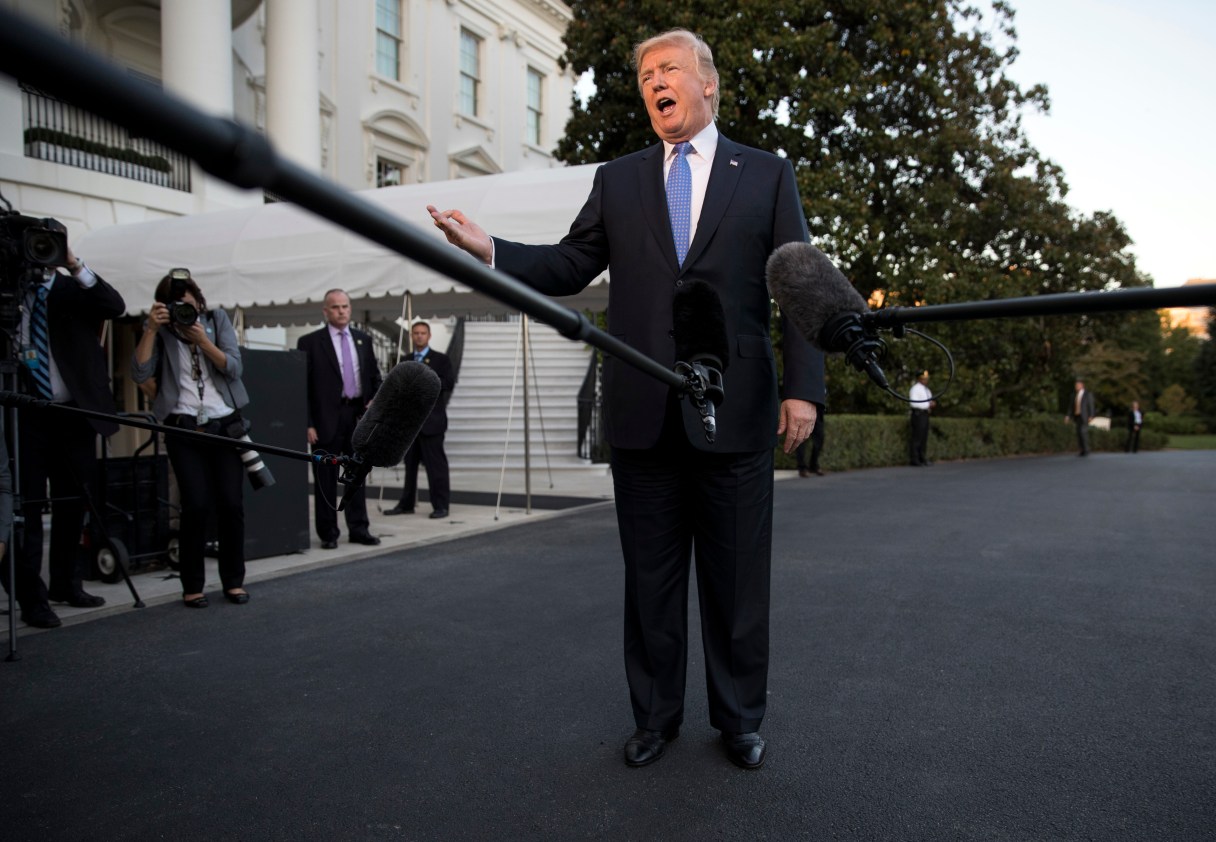
WASHINGTON (AP) – When President Donald Trump announced plans to go to Indiana Wednesday to sell the GOP tax overhaul plan, party leaders cheered his engagement on the high-stakes issue. When the White House said one of Trump’s traveling companions would be Indiana’s Democratic Sen. Joe Donnelly – a top target in next year’s midterm elections – the hopes turned to head-smacking disbelief.
The episode underscores the extent to which Trump has been an uneven – or at best, unpredictable – ally for his party, both on policy and politics. Time and again, Trump has complained about his party as loudly as he vents about Democrats, or shifted his position as Republicans leaned on him for support. The dysfunctional dynamic now stands at the center of Republicans’ last chance this year to prove they can pass major legislation – a sweeping, multitrillion-dollar tax cut that GOP officials believe is crucial to the party maintaining its congressional majority in the midterms.
“Literally, if they can’t do this, they can’t do anything,” said Tim Pawlenty, the former Republican governor of Minnesota and head of the Financial Services Roundtable, a bank lobbying group. Trump is a constructive force in the effort, Pawlenty said, “if he can stay focused and stay on message.”
The president this week repeatedly demonstrated his sometimes fickle friendship. As the party licked its wounds over the failure of its health care legislation, he floated working with Democrats on that issue, something he’s already done on immigration and spending matters. While he agreed to requests from Senate Majority Leader Mitch McConnell to campaign for the establishment-backed candidate in Alabama’s GOP primary, he undercut his impact by pondering aloud whether he’d made a mistake. Luther Strange, the candidate Trump backed, lost Tuesday to firebrand jurist Roy Moore by nine points.
Trump quickly endorsed Moore and his tweets backing Strange were deleted.