
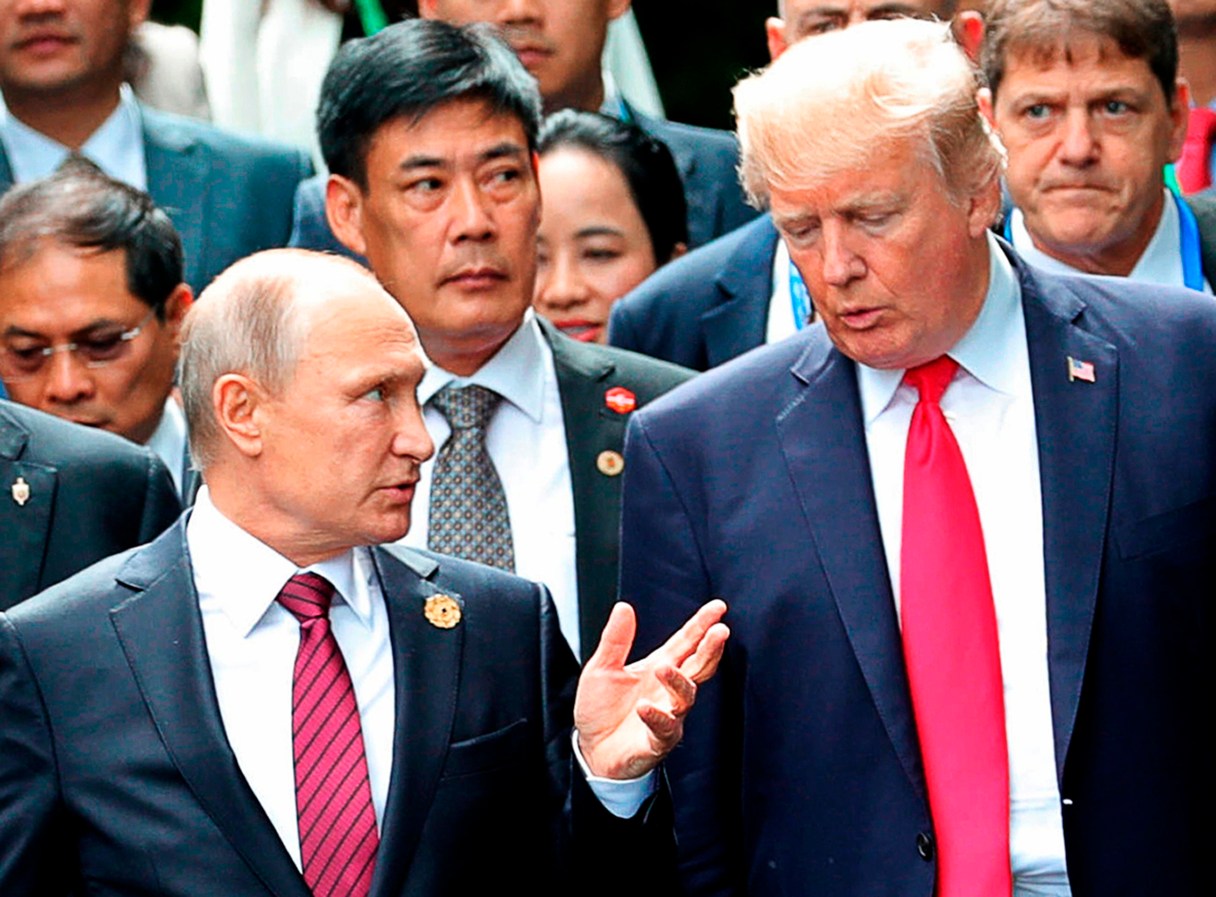
WASHINGTON (AP) – The Trump administration says it is amenable to a White House meeting between President Donald Trump and Russian President Vladimir Putin, raising the prospect of the Russian president’s first Washington visit in more than a decade even as relations between the two powers have eroded.
White House press secretary Sarah Huckabee Sanders said the White House was among “a number of potential venues” discussed in Trump’s telephone call last month with Putin. The Kremlin said earlier Monday that Trump invited Putin during the call.
Both sides said they hadn’t started preparations for such a visit.
If it happens, Putin would be getting the honor of an Oval Office tete-a-tete for the first time since he met President George W. Bush at the White House in 2005. Alarms rang in diplomatic and foreign policy circles over the prospect that Trump might offer Putin that venue without confronting him about Russia’s interference in the 2016 presidential election or allegations that Russia masterminded the March 4 nerve agent attack on a former Russian double agent.
“It would confer a certain normalization of relations and we’re certainly not in a normal space,” said Alina Polyakova, a foreign policy fellow at the Brookings Institution. “Nothing about this is normal.”