
WASHINGTON (AP) – In a striking reversal, President Donald Trump has asked trade officials to explore the possibility of the United States rejoining the Trans-Pacific Partnership agreement, a free trade deal he pulled out of during his first days in office as part of his “America first” agenda.
Trump’s request comes as he faces pressure from farm-state Republicans anxious that his protectionist trade policies could spiral into a trade war with China that would hit rural America. Trump spent the 2016 presidential campaign ripping into the multi-national pact, saying he could get a better deal for U.S. businesses by negotiating one-on-one with countries in the Pacific Rim. Now, faced with political consequences of the action, Trump appears to be reconsidering.
“Last year, the president kept his promise to end the TPP deal negotiated by the Obama Administration because it was unfair to American workers and farmers,” the White House said in a statement. The president assigned his top trade advisers, U.S. Trade Representative Robert Lighthizer and his new chief economic adviser, Larry Kudlow, “to take another look at whether or not a better deal could be negotiated.”
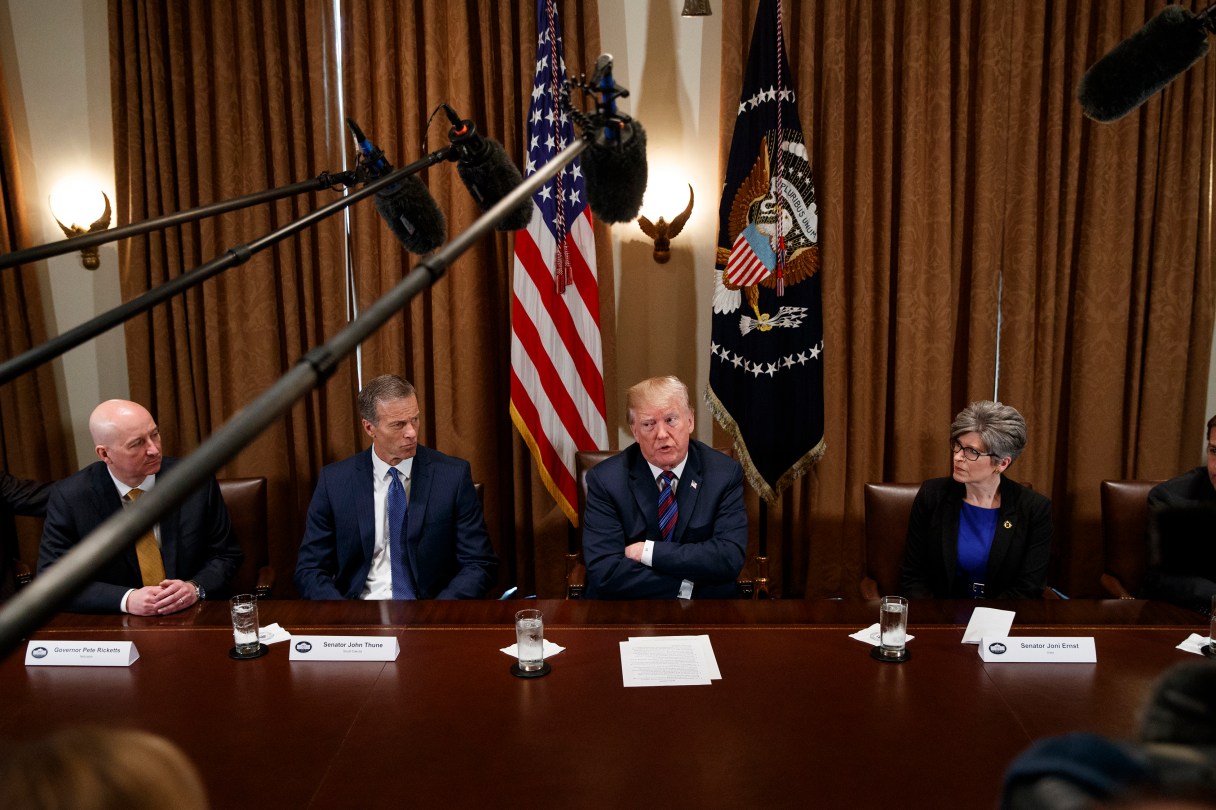
Trump first disclosed his request Thursday to a group of lawmakers at a White House meeting on trade. Lawmakers have been pressing Trump to shift course after escalating trade threats, including China’s plan to slap tariffs on soybeans and other U.S. crops.
The apparent decision comes after the 11 other TPP countries went ahead last month and signed the pact in Santiago, Chile – without the United States. The agreement is meant to establish freer trade in the Asia-Pacific region and put pressure on China to open its markets to compete with and perhaps eventually join the bloc.