
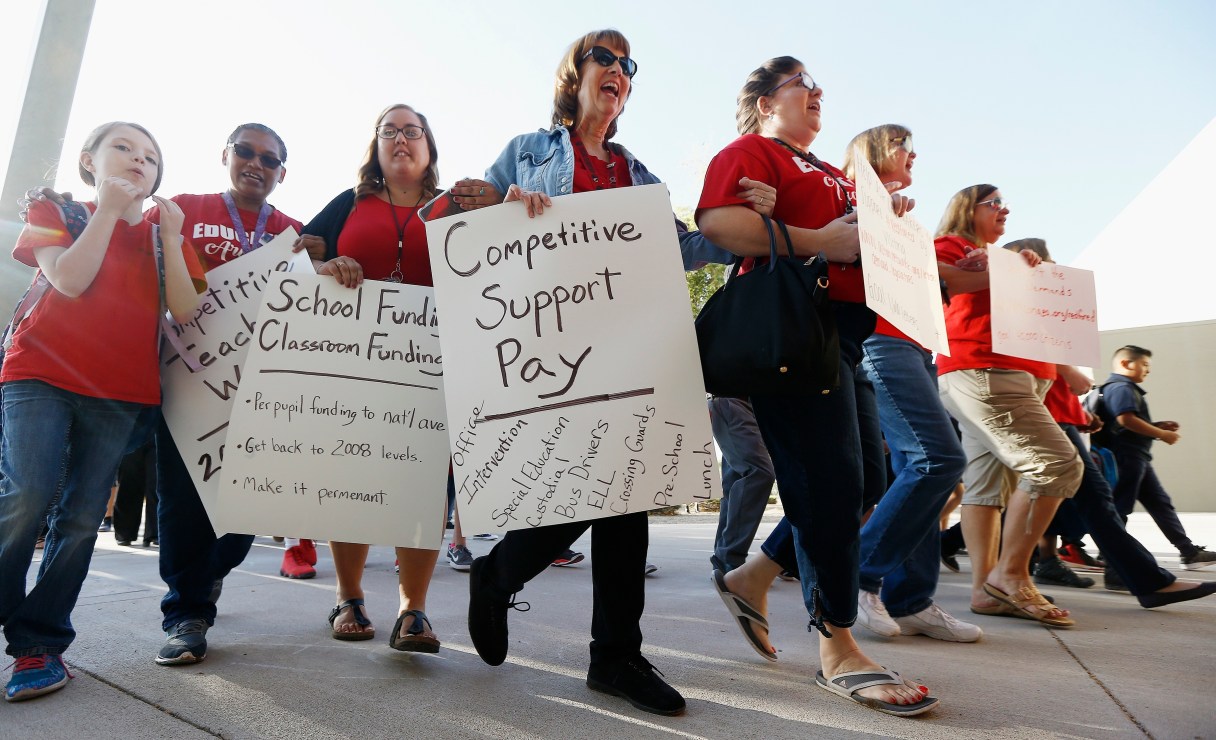
PHOENIX (AP) – As recently as Tuesday, a defiant Arizona governor refused to meet with teachers threatening to strike over low pay and said he was sticking with a 1 percent raise proposal.
By Thursday, Republican Doug Ducey managed to scrape $274 million from the cash-starved state’s coffers to offer a 9 percent wage hike starting this fall. He’s following that with 5 percent more each in the 2019 and 2020 school years. He’s also counting the 1 percent raise the Legislature approved for the current school to call it a 20 percent overall raise.
“It’s amazing what a threatened teachers strike in an election year can get the Republicans to do,” Democratic Rep. Rebecca Rios said. “I’m impressed.”
The teacher-led rebellion over low wages and funding cuts spread from its genesis in West Virginia to Arizona, Kentucky and Oklahoma.
The Great Recession forced legislatures nationwide to slash budgets and make major cuts across all spending areas. However, in Arizona legislators also passed major corporate tax cuts designed to phase in as the economy recovered. As such, Arizona’s budgets are still exceptionally tight a decade after the recession.