
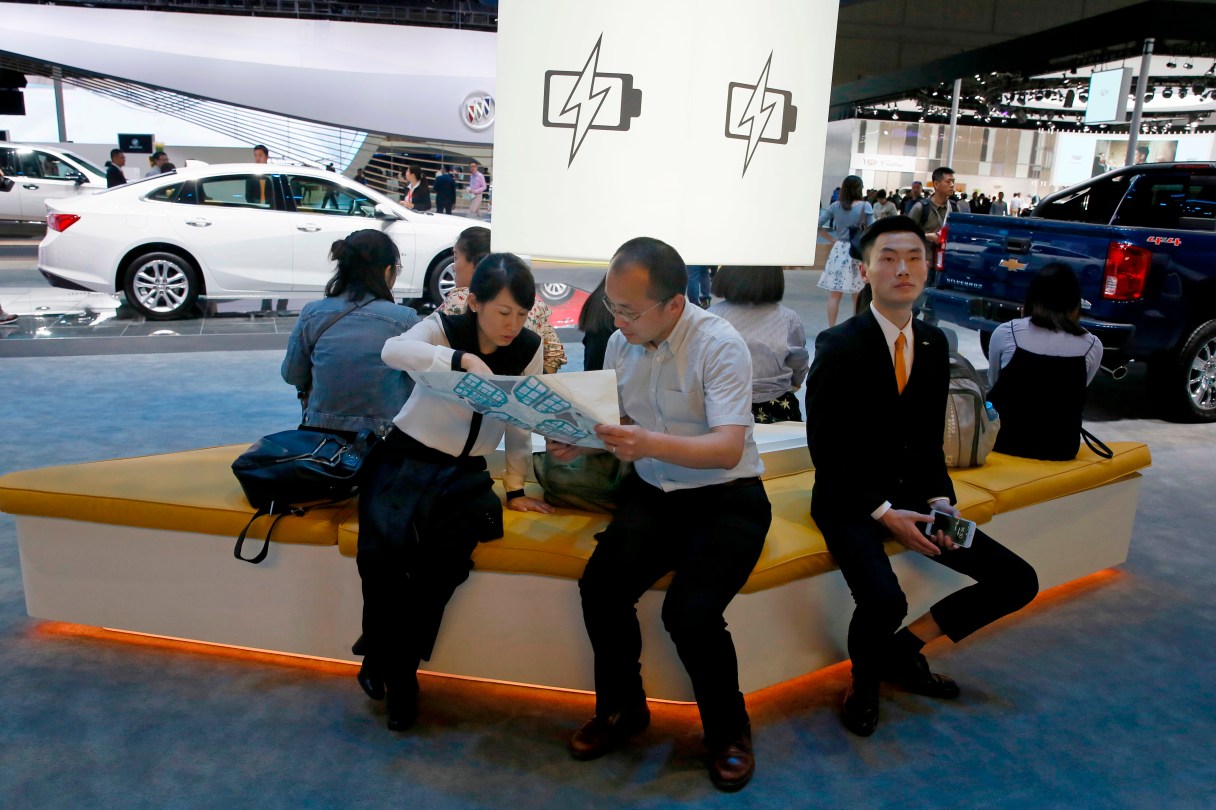
Facing the risk of a trade fight with the United States, China announced plans Tuesday to allow full foreign ownership of automakers in five years.
The change would scrap rules that require global automakers to work through state-owned partners – an arrangement that forces those foreign companies to share technology with potential competitors in China. It was unclear whether Beijing’s action might mollify U.S. President Donald Trump, who has threatened to slap tariffs on $150 billion of Chinese goods in response to complaints that Beijing pressures foreign companies to hand over technology.
The possibility of a trade war between the world’s two largest economies has shaken financial markets and could threaten the steady economic growth that is buoying most of the regions of the world.
“If you keep poking at the economic expansion, it could turn around and bite you,” Maurice Obstfeld, the International Monetary Fund’s chief economist, told reporters Tuesday as the IMF issued its latest forecast for global growth. There aren’t “going to be any winners coming out of a trade war.”
The lending agency kept its forecast for global economic growth this year at 3.9 percent, which would be the fastest pace since 2011. But Obstfeld warned that that bright outlook depends on avoiding a major trade conflict.