
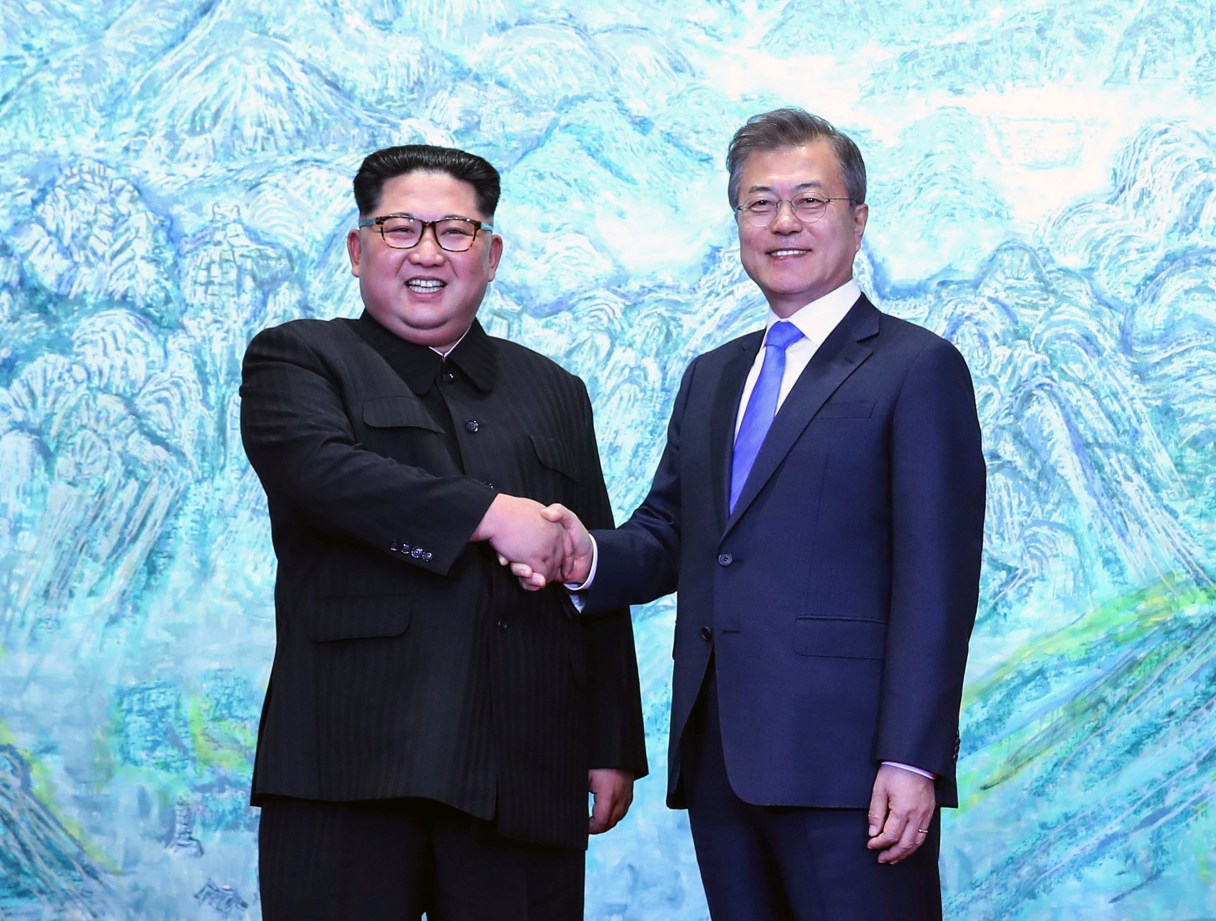
GOYANG, South Korea (AP) – The leaders of North and South Korea played it safe Friday, repeating a previous vow to rid the Korean Peninsula of nuclear weapons but failing to provide any specific measures or forge a potential breakthrough on an issue that has captivated the world since the rivals seemed on the verge of war last year.
In a sense, the vague statement by North Korean leader Kim Jong Un and South Korean President Moon Jae-in to achieve “a nuclear-free Korean Peninsula through complete denuclearization” kicks the issue down the road to a much-anticipated summit between Kim and U.S. President Donald Trump in coming weeks.
Even so, the Koreas’ historic summit Friday might be remembered as much for the striking images of two men from nations with a deep and bitter history of acrimony holding each other’s hands and grinning from ear to ear as they crossed back into the North and then returned again to the South after Kim first made history by walking over the border to greet Moon. Kim was the first North Korean leader to touch southern soil since the end of the Korean War.
It marks a surreal, whiplash swing in relations for the Koreas, from nuclear threats and missile tests to intimations of peace and cooperation. Perhaps the change is best illustrated by geography: Kim and Moon’s historic handshake and a later 30-minute conversation at a footbridge on the border occurred only meters (feet) from the spot where a North Korean soldier fled in a hail of gunfire months earlier, and an easy walk from where North Korean soldiers axe-murdered two U.S. soldiers in 1976.
The summit must be seen in the context of the last year – when the United States, its ally South Korea and the North threatened and raged as the North unleashed a torrent of weapons tests – but also in light of the long, destructive history of the rival Koreas, who fought one of the 20th century’s bloodiest conflicts and even today occupy a divided peninsula that’s still technically in a state of war.