
Jaguar to build Savannah plant
Jaguar Land Rover Classic will soon be heading to Georgia, placing its first facility in the U.S. in Savannah.
Gov. Nathan Deal announced the move Wednesday, saying the facility will be located in Crossroads Business Park, near a portion of Gulfstream Aerospace.
The new facility will provide access to a range of authentic Jaguar and Land Rover Classic cars, services and parts. The company, based in the United Kingdom, said the facility will also include a state-of-the-art 42-bay workshop for comprehensive vehicle health checks, service and repairs for all Jaguar and Land Rover vehicles out of production for a decade or more.
The $15 million operation will create 75 new jobs with salaries starting at $80,000. The company will be manufacturing and rebuilding classic Jaguar and Land Rover vehicle models, Tollison said.
Mortgage rates decline again
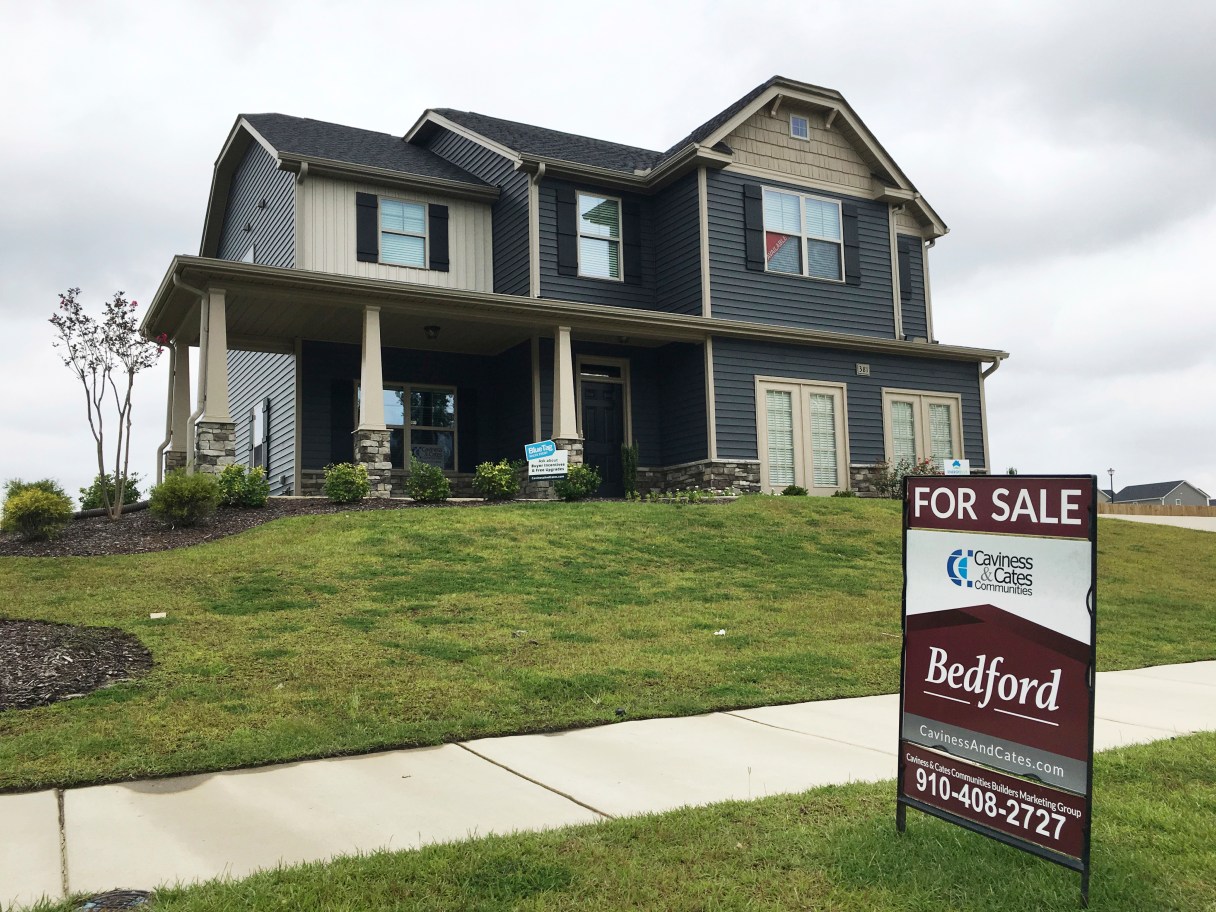
Long-term U.S. mortgage rates fell this week for the second straight week, with relatively lower rates continuing to fail to spark home sales.
Mortgage buyer Freddie Mac said Thursday the average rate on 30-year, fixed-rate mortgages dipped to 4.53 percent from 4.59 percent last week. Long-term loan rates have been running at their highest levels in seven years. The average benchmark 30-year rate reached a high this year of 4.66 percent on May 24. By contrast, the rate stood at 3.89 percent a year ago.
The average rate on 15-year, fixed-rate loans fell to 4.01 percent this week from 4.05 percent last week.
Mortgage rates have remained mostly steady since late spring despite higher rates of inflation and unease in world financial markets. But the pause in borrowing rates “is not leading to increasing home sales,” said Freddie Mac chief economist Sam Khater.
Rising home prices, tight inventories of affordable homes and historically higher mortgage rates are to blame, Khater said.
“Dash Bash” touts growth of EPB fiber
EPB Fiber Optics today launches its 100K Dash Bash at Miller Plaza as the city-owned utility nears signing up 100,000 users of its fiber optic telecom service.
From 11 a.m. to 1 p.m. today at Waterhouse Pavilion in Miller Plaza, EPB will promote its telecommunications services with free food, a free Escape Experience and a chance to meet the viral star Veronic “Pooh” Nash, who touts EPB’s fiber optic service in the utility’s current advertising campaign. Those who refer a friend to sign up for EPB will receive $50 Fiber Optics credit and a T-shirt.
Today’s event is the first of several that EPB’s marketing department is conducting to help boost EPB fiber optic subscriptions past 100,000 customers. EPB spokesman John Pless said EPB now has about 98,000 fiber optic users for either its internet, TV or phone services.
When EPB launched its fiber optic service less than a decade ago, it projected it would need about 35,000 subscribers to break even and be viable.
White House called FCC about Sinclair
The chairman of the Federal Communications Commission, an independent agency, says a White House official called to talk about a proposed merger between Sinclair Broadcast Group Inc. and Tribune Media Co.
Ajit Pai told a Senate panel Thursday that Don McGahn, the White House counsel, called for a “status update” on the agency’s action on the deal.
He said McGahn “saw something in the news and wanted to know what our decision was,” but did not express an opinion. The call came July 16 or 17, Pai said. Pai on July 16 had expressed “serious concerns” about the merger.
The Tribune scrapped the deal on Aug. 9.
Trump tweeted that FCC’s “disgraceful” action scuttled what would have been a “much needed” conservative voice among the “fake news” media.
July housing starts up only 0.9 percent
U.S. housing starts ticked up just 0.9 percent in July, a sign that higher construction costs might be weighing on homebuilders.
The Commerce Department said Thursday that housing starts last month rose to a seasonally adjusted annual rate of 1.17 million, not nearly enough to reverse the steep 12.9 percent plunge seen in June as rising lumber, land and labor costs appeared to constrain new construction. Lumber prices have shot up by about $7,000 per home since the start of 2017, largely due to tariffs on Canadian softwood lumber by the Trump administration, according to the National Association of Home Builders.
“It looks like U.S. homebuilders are finding it increasingly difficult to get into the groove,” said Jennifer Lee, a senior economist at BMO Capital Markets.
Still, housing starts have risen 6.2 percent year-to-date. Solid job growth and a dearth of existing homes for sales have increased demand for new properties.