

The results of President Donald Trump’s reimposed sanctions on Iran show why the 2015 deal the Obama administration struck with the terrorist nation was such bad policy in the first place.
Had the sanctions in place at the time been kept in place, the country by now may have been willing to give up its nuclear program, which was the original red line put in place by the United States when talks began earlier this decade.
Instead, in an effort to get a deal, some deal, any deal, a deal for something to be in place to give the Obama administration a “win” in foreign policy, U.S. negotiators kept giving in. By the time the deal was complete, not only did Iran not have to stop its nuclear program, but it did not have to stop its terrorist activities, it could choose many of the parameters around future nuclear inspections, it saw the return from the U.S. of some $100 billion in frozen assets (plus $1.7 billion for a never-completed 1979 arms deal) and it would have its full nuclear program back in a decade.
What the other six nations that signed the agreement, known as the JCPOA (Joint Comprehensive Plan of Action), wanted was a return of trade with the Middle East country. They weren’t as concerned with terrorism as they were with the almighty Euro.
Trump, the veteran deal-maker, told anyone who would listen just how bad the deal was – that he’d sign the U.S. out of it on his first day of office.
Oh, no, cried Democrats, left-wing pundits and Europeans, forgetting that Iran had frequently violated the deal, had not cut down on its terrorist activities and had not made the country a panacea for its citizens. That would be the worst thing we could do.
Besides, they said, the deal’s other signees will never go along with it, they’ll keep trading with the country and the country already has all that cash we gave it.
When Trump finally pulled the plug on the deal earlier this year, with sanctions being reimposed in two rounds (Aug. 7 and Nov. 5), the world didn’t end. What’s more, it stirred the Iranian people, who’d never felt much of a promised recovery after the deal; it caused businesses in some of the Western countries to pull back on deals it had made with Iran; and it threatens to hit Iran where it really hurts, in the distribution of its oil supply.
After all, the second phase of the re-imposition of the sanctions restricts the sale of its oil and petroleum products on the world market. And currently, oil exports account for one-fifth of the country’s economy.
The first phase already blocks Iran from buying U.S. dollars and places penalties on companies for selling Iran auto parts and commercial planes, which the Trump administration alleges Iran can use to smuggle weapons to Syria.
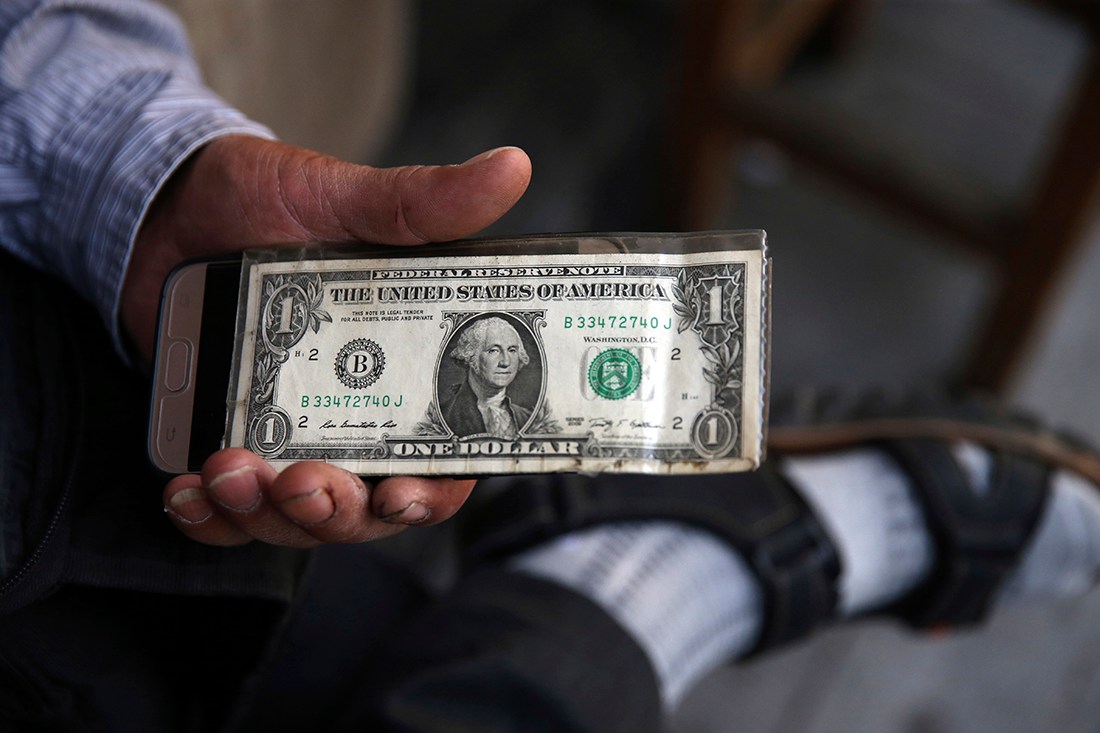
In the country, the currency has lost more than half its value since January, unemployment is in double digits and the prices of many products have more than doubled.
The U.S. left already has decided its strategy. Since it couldn’t persuade Trump to leave the sanctions in place, it will claim the sanctions are cruel and only hurt ordinary Iranians, a claim with some validation.
But Trump has a longer view, which is what Obama should have had, even if he was short on notches on the legacy chart.
The president is trying to achieve both an Iran without the capability to produce fissionable materials for nuclear bombs and an Iran that is no longer a terrorism sponsor.
But, Foreign Minister Mohammad Javad Zarif told deal-backing CNN Sunday, the U.S. will never get what it wants.
“I believe there is a disease in the United States,” he told the network, “and that is the addiction to sanctions. We felt that the United States had learned that at least as far as Iran is concerned, sanctions do produce economic hardships but do not produce the political outcomes that they intended them to produce, and I thought that the Americans had learned that lesson. Unfortunately I was wrong.”
Trump has expressed an interest in revisiting the deal, looking to gain better terms (with conditions spelled out recently by Secretary of State Mike Pompeo), but the foreign minister said he hopes pressure from the deal’s other signatories might get Trump to change his mind. And he said a face-to-face meeting between Trump and Iranian President Hassan Rouhani was not likely to change anything.
The Iranians, instead, will bide their time in the hope for another soft, pliable Democratic president in 2021. Indeed, Supreme Leader Ali Khamenei said there will be no negotiations, no war and that there are no problems. “The people,” he said, will overcome the obstacles.
The people might do just that, but it may be in the way of regime change, as occurred in 1979, when the current regime came to power.
However, we like the American president’s side of things and hope he holds out for real peace, which may not come during his first (or only) term in office but is the right plan to pursue.