
Monday, November 16, 2026Nov 16

Mom was Neanderthal: Fossil shows mix of humankind’s cousins

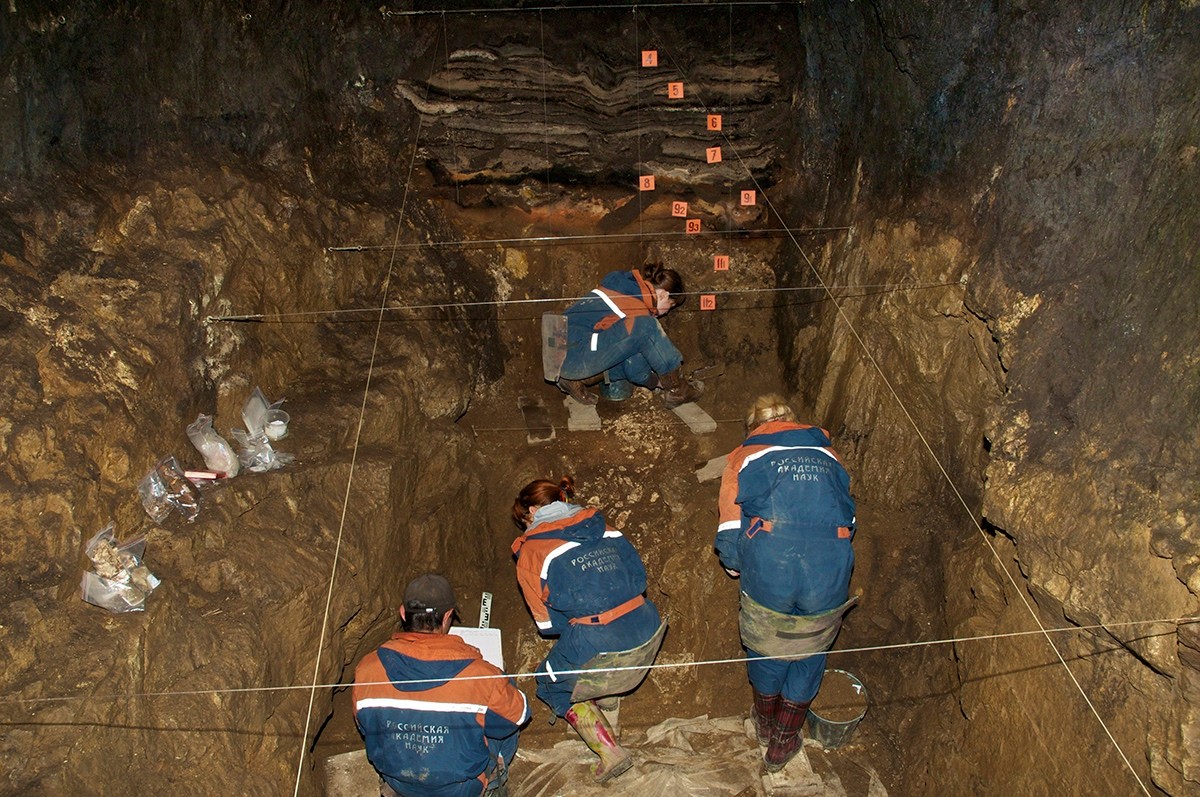
In this 2011 photo provided by Bence Viola of the University of Toronto, researchers excavate a cave for Denisovan fossils in the Altai Krai area of Russia. On Wednesday, Aug. 22, 2018, scientists reported in the journal Nature that they have found the remains of an ancient female whose mother was a Neanderthal and whose father belonged to another extinct group of human relatives known as Denisovans. (Bence Viola/Department of Anthropology - University of Toronto/Max Planck Institute for Evolutionary Anthropology via AP)

BERLIN (AP) – Scientists say they’ve found the remains of a prehistoric female whose mother was a Neanderthal and whose father belonged to another extinct group of human relatives known as Denisovans.

The 90,000-year-old bone fragment found in southern Siberia marks the first time a direct offspring of these two groups has been discovered, according to a study published Wednesday in the journal Nature.

Both groups disappeared by about 40,000 years ago. Neanderthals lived in Europe and Asia, while fossils of Denisovans are known only from the cave where the fragment was found.

Past genetic studies have shown interbreeding between the two groups, as well as with our own species, which left a trace in the DNA of today’s people. But the new study is the first to identify a first-generation child with Neanderthal and Denisovan parents.

“It’s fascinating to find direct evidence of this mixing going on,” said Svante Paabo, one of the study’s lead authors.