
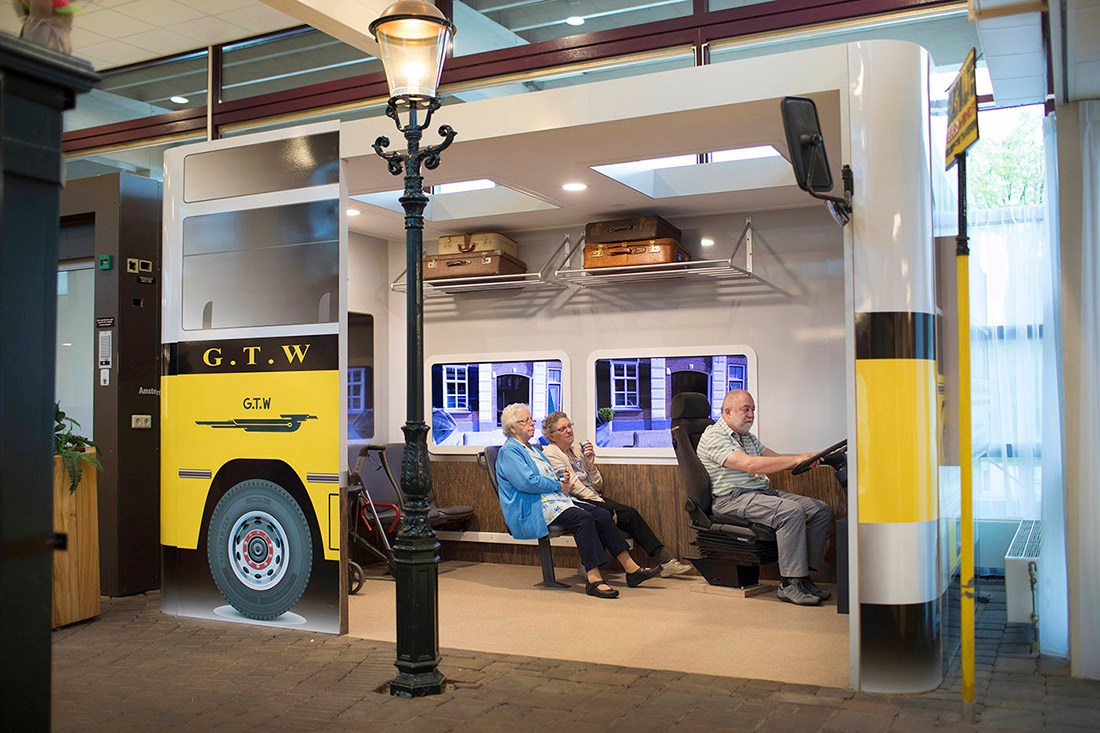
DOETINCHEM, Netherlands – “We’re lost,” said Truus Ooms, 81, to her friend Annie Arendsen, 83, as they rode a city bus together.
“As the driver, you should really know where we are,” Arendsen told Rudi ten Brink, 63, who sat at the wheel of the bus.
But she was joking.
The three are dementia patients at a care facility in the eastern Netherlands. Their bus ride – a route on the flat, tree-lined country roads of the Dutch countryside – was a simulation that plays out several times a day on three video screens.
It is part of an unorthodox approach to dementia treatment that doctors and caregivers across the Netherlands have been pioneering: harnessing the power of relaxation, childhood memories, sensory aids, soothing music, family structure and other tools to heal, calm and nurture the residents, rather than relying on the old prescription of bed rest, medication and, in some cases, physical restraints.