





The Center for Women’s Business Research estimates that approximately 15 percent of America’s 20 million small businesses are jointly owned by couples. Married couples typically pledge their loyalty to one another, “for richer or poorer.” Still, does sharing a life together mean you can also create and share a business? Couples often share a vision, pull for one another to succeed and complement each other’s strengths and weaknesses. But being in business together also means couples risk having problems at work affect their home life or vice versa.
“The co-founder relationship can be a tricky one, and even trickier if your co-founder is your significant other,” says David Martin, who started Heed PR this year with his wife, Natalie. “But it can also be highly rewarding.”
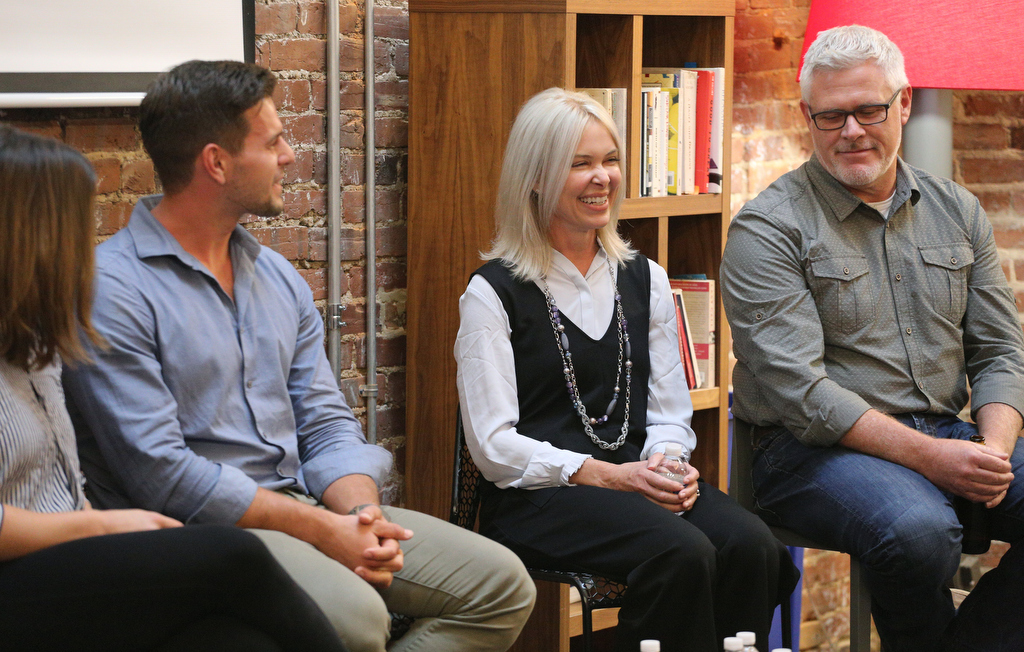
During Chattanooga’s Startup Week in October, Martin brought four couples of local startup businesses together to talk about the challenges and opportunities of sharing both their personal lives and a business.
Natalie Martin said starting a business with her husband is something she wanted to do, but still made her nervous – “even more than when we got married.” Going into business with your spouse doubles risks and rewards. A business failure, which often happens with startup ventures, can leave a family without an economic lifeline.
David said “jumping off the cliff together” by leaving other jobs to start their business can be scary. But he said one key to success is to write down the vision of what is expected. Martin said their business has prospered because each of them has complementary skills.
Brian and Jamey Elrod, who co-founded Text Request, say they had wanted to go into business together since they started dating in their teens. But the couple first pursued corporate jobs, saved money and gained experience and contacts before venturing off on their own.
“While we were working elsewhere we always kept our eyes and ears open for a good business opportunity,” Brian Elrod says, noting that the couple have worked in several startup ventures together. “We also recognize that we have different skill sets and try to focus on what each of us does best, and we’re truthful and straightforward with one another.”
Working with your spouse is not always for the faint of heart, or those easily offended by the ones they love. The demands of business are often not very romantic, especially when first getting started, and spending both day and night together can tax any relationship.
“We’re just used to being totally honest and not being offended by what the other says,” Jamey Elrod says.
That ability to communicate honestly and directly often gives couples an advantage in the workplace, experts say.
Romana Biscarini, who started Vibrant Meals with her husband, Marco, said she enjoys the support of her spouse, whom she credits with helping their startup venture grow to 18 employees and a storefront on the North Shore. Both Marco, an All-American runner, and Ramana, a former college swimmer and water polo player, share a passion for healthy food and lifestyles and relocated to Chattanooga from California because of the local support for entrepreneurs. To ensure that their business life doesn’t overtake their personal life, the Biscarinis recently agreed to take one day a week to relax.
“We close the business on Sunday and try to go hiking and not talk about work,”Romana Biscarini says. “We try to turn off too much talk about the business at home, especially the negative things. We still love to talk about our successes though.”
The weekends are also a personal time for Corey and Emily Critser, co-owners of Lanewood Studio who turned their romance and marriage into a growing photography business in Chattanooga.
“We work well together and enjoy being able to spend so much time with one another, but we have learned to make sure we don’t just talk about business and spend some time on the weekends doing other things,” Emily Critser says.