

Every parent dreads the day their precious little angel will gaze up at them, wide-eyed and brimming with innocence, and ask that frightful question:
“Mommy, daddy, where do babies come from?”
Fewer parents, however, give thought to the equally awkward hurdle they’ll have to face long before their younglings ever crack the mystery of the birds and the bees: the day they find out the truth about Santa Claus.
Though it may seem trivial, breaking the news about Kris Kringle is no laughing matter (for the most part). The sense of betrayal can quickly put a damper on the season – and if your child’s eye-opening is anything like local mother Bess Williams’, you’ll definitely want to be prepared.
For Williams’ young believers, Ella and Jack, the awful realization came on the Christmas Eve of 2016, at the tender age of 10 and 9, respectively.
On the evening in question, the children had gone out caroling, giving Williams just enough time to fulfill her elf-ly duties. Each year, as was tradition, Williams and her husband would leave two sets of Christmas Eve pajamas topped with marshmallows and other goodies at the front door, where they would be discovered by the children after a neighbor posing as one of Santa’s helpers rang the door bell and snuck away.
For years, the operation had gone off without a hitch, but on that fateful night, as Williams dashed out front to make the necessary arrangements, she was completely unaware that her two children had been standing on a neighbor’s porch, where they watched the entire deed unfold.
When Ella and Jack returned a few minutes later, they looked solemn and ready for confrontation. Wearing faces that clearly read “do you have anything you want to tell me,” the duo gave their mom a chance to fess up.
When she deflected – insisting they “Look at your cool jammies! Yay!” – Jack burst into tears and Ella flew into a fury.
“You are a liar!” the girl shrieked. “You have been a liar my whole life!”
The evening ended with Williams and her husband ashamedly sitting on the couch while a third- and fifth-grader lectured them on the disgraceful nature of lying.
“Now, it’s something that we can all look back and giggle about,” Williams laughs as she recalls the bizarre scene two years later. “But they were so devastated that this thing that had been so carefully curated as real wasn’t real. I almost feel guilty saying it out loud.”
Williams, of course, is not alone. Many parents hear the jingle bells tinkling on their conscience when they realize they’ve gone in too deep. So we set out to ask the tough questions about whether the Santa ruse is naughty or nice.
IS IT ALL A LIE?
When it comes to determining whether the collective fib we tell our kids about elves and flying reindeer is wrong, Pastor Courtney Krueger of First Cumberland Presbyterian Church says he doesn’t believe so.
While some might look to the Good Book to condemn the Santa fraud, Krueger points out that the Ten Commandments were put in place to prevent actions that harm people, adding that he does not believe the Santa myth causes harm.
“Even if I tell them an untruth in order to give them a fun experience, if I’m doing it out of love, then I don’t see that as a moral failure or a sin,” Krueger says. “They may initially be angry, but my guess is that [those] kids are going to [grow up and] tease their children with Santa Claus because they want them to have the same experience, and eventually, it just becomes an inside joke for everybody.”
Krueger, of course, speaks from experience.
Sixteen years ago, the pastor’s 9-year-old son David blurted out the unspeakable question during a car ride home from school with his 5-year-old sister Sarah in tow. Though Krueger’s recollection of the incident is fuzzy, his son, now 25, tells him that he and his wife immediately panicked.
“We didn’t want Sarah to have to consider that, as the younger of the two,” laughs Krueger, who took the boy aside soon after so he and his wife could explain the matter in private.
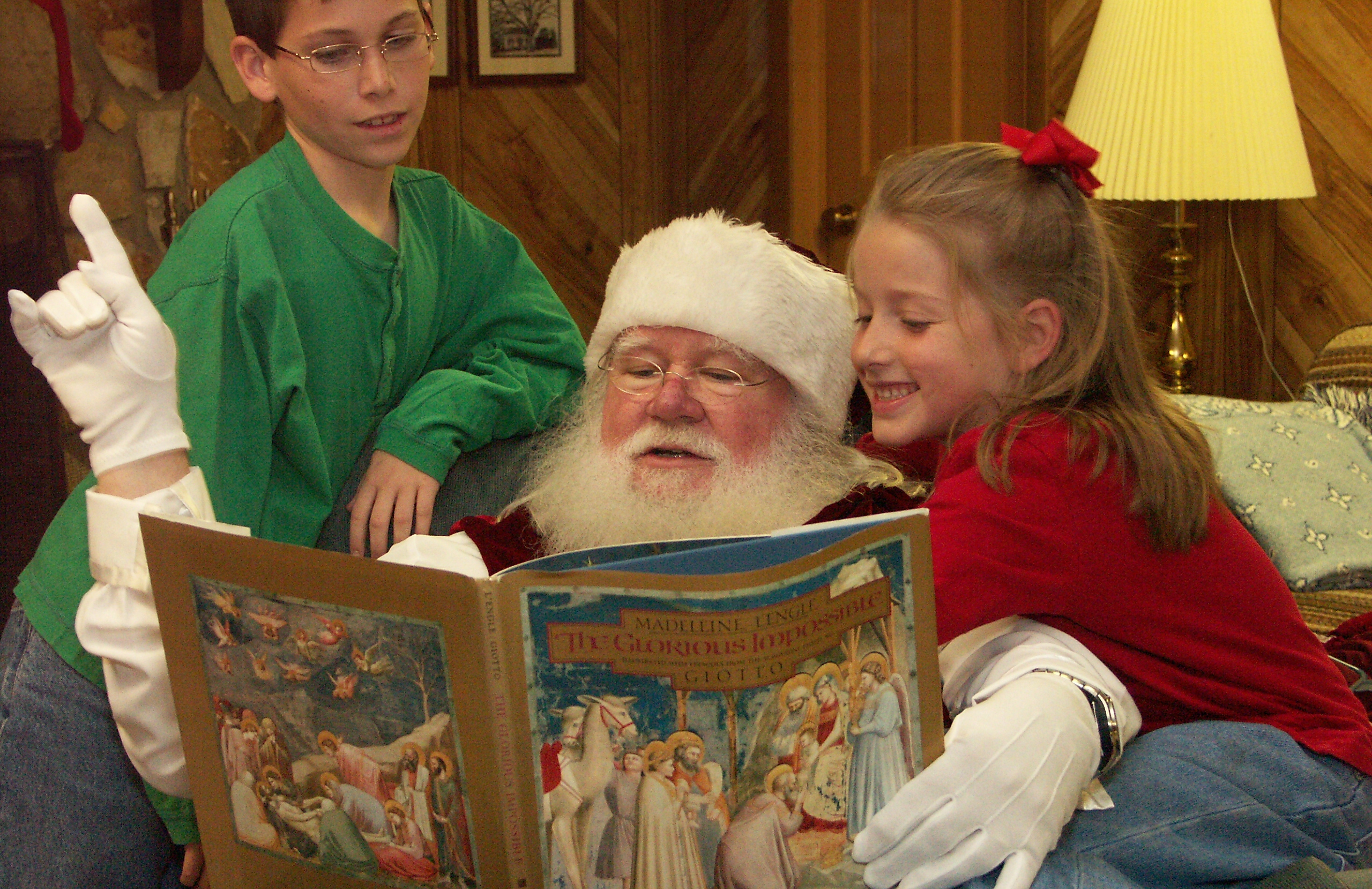
What Krueger didn’t learn until later – 16 years later, in fact – was that Sarah, curious about the outburst, had cornered David after the clandestine meeting to find out the truth.
Following what was no doubt a brutal interrogation, the kindergartner got her brother to spill the beans, and with the sobering discovery out in the open, the siblings devised a scheme to keep their parents unaware of their enlightenment, for fear they’d wake up Christmas morning to find nothing but pine needles under the tree.
“We laughed, we had so much fun talking about that,” says Krueger, whose kids now tease him about the innocent untruth they told their parents. “That says to me it was OK, we did alright.”
WHAT DO PARENTS GET OUT OF IT?
For all the hassle, it seems parents get very little out of the Santa charade. They invest time, energy and money into clever gimmicks and flashy toys, then give all the credit to a jolly do-gooder up North.
So why do they keep up the ruse?
In addition to providing joy, Beth Capecchi, a psychologist at Grounded Counseling, believes it could also be because a small part of them wants to hold onto the magic just a little bit longer.
Santa Stats
84: Percentage of adults who reported believing in Santa as a child, according to a 2011 study.83: Percentage of 5-year-olds who believed Santa is real, according to a separate study the same year.69: Percentage of parents who pretend Santa visits their home on Christmas Eve.9: Median age kids stop believing in Santa.Source: Associated Press; Journal of Cognition and Development; Pew Research Center; YouGov
“I still remember looking up at the sky on Christmas Eve thinking, ‘I feel like I just saw something that looked like it was more than just a star,'” she says.
Though those days of magic and endless possibilities have long since expired for Capecchi, she got to relive that excitement each year through her own children, as their imaginations ran wild at the thought of reindeer trotting on their roof and a mythical celebrity squeezing down their chimney.
“It’s just wonderful watching their faces, knowing in your heart that you provided that experience for them,” says Krueger, who also relished the opportunity to become the bringer of magic during the holiday season.
Even though Capecchi’s children, now 12, 10 and 9, have become more appreciative to her for their Christmas loot since learning the truth, she still misses the fantasy of it all, she admits. Krueger believes that’s because the holiday isn’t just about instant gratification for parents. They’re also in it for the long haul.
Krueger points to his own father, a vehement lover of Christmas. Looking back on it now, he realizes that a large part of his father’s passion for the season came from watching Krueger and his two younger sisters go berserk at the sight of Santa’s offerings.
Today, three years after his father’s passing, that memory is more precious to Krueger than the presents themselves, and he hopes he’s provided that same kind of legacy for his own kids.
“I don’t need the credit in the short term,” Krueger says. “They’ll look back in years to come and say, ‘Wow. Mom and Dad really worked hard to make a magical moment happen for us.’ And that’s worth waiting for.”
HOW DO I BREAK THE NEWS?
While Capecchi agrees with the many other mental health professionals whose research has concluded that a childhood belief in Santa is likely to bear little to no long-term negative ramifications, she stresses that how parents approach that conversation does matter. Here are some ideas to consider as your young ones near discovery day.
Step 1: Determine if they’re ready. Capecchi’s three children, ever the pack of super-sleuths, began to gradually suspect they were being duped over the last two years when they noticed the suspicious number of Santas at any given mall and observed that he always seemed to wrap their presents in the same wrapping paper their parents kept around the house.
If your own children have begun to put Father Christmas under investigation, Capecchi suggests you gauge their readiness by keeping note of the frequency of their questions, or by testing the waters with questions of your own, such as “How sad would you be if someone told you he isn’t real?” or “Do you want to believe in the magic?” Then, make sure your assessment isn’t tarnished by your personal desire to perpetuate the myth and preserve the magic vicariously.
Step 2: Break down the origin. Krueger suggests using the inevitable confrontation as an opportunity to launch into a deeper, more meaningful conversation.
That discussion could, of course, include a re-emphasis on Baby Jesus and the reason for the season, but it could also include the true story of Saint Nicholas and reports of his generosity, such as the legend that tells of the modest saint tossing three bags of gold into a poor man’s window under the cover of night to help the man’s three daughters afford a dowry.
Both approaches open the door for an explanation of how the legend of Santa Claus came to be and what the character represents, allowing the listener to feel like he or she is gaining a more mature understanding of the holiday instead of losing a childhood hero.
Step 3: Teach them to become Santa. Now that the cat’s out of the bag, it’s time to let the kids in on the biggest secret of them all: Anyone can be Santa Claus, no suit or sleigh required. All it takes is a willingness to give.
For Williams’ children, the journey toward becoming Santa began soon after the front porch debacle of 2016, when their mother imparted a crucial piece of Christmas wisdom to them. “The spirit of Santa was always in you. And now you’re growing, it’s growing, and now it’s time for you to focus on doing nice things for other people,” Williams explained to the siblings, now 12 and 11.
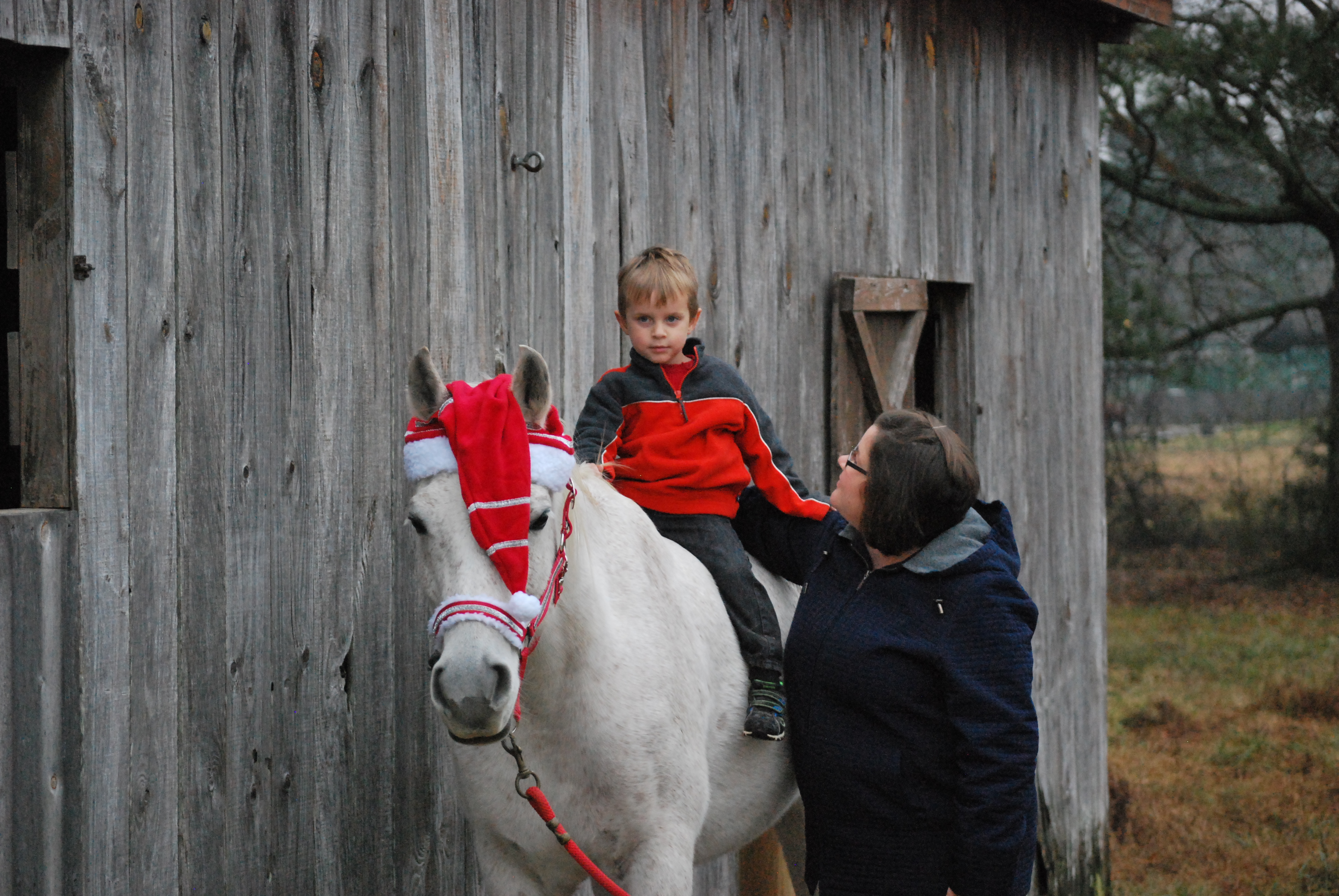
Today, family Christmases at the Williamses’ household have evolved into a celebration of giving rather than getting, with more and more emphasis placed on providing random acts of kindness as the tweens begin to understand that not everyone is fortunate enough to have all they might need or want.
The children also take pleasure in helping their parents prepare all the elf-themed Christmas shenanigans to bring the magic to life for their younger brother, Finn, who is now 5.
Step 4: Explain why it’s all a secret. Since Santa will no doubt be a hot topic of discussion in the classroom, Capecchi recommends parents warn their kids not to spoil the fun for other children – or their parents.
“It is a very personal thing and it’s a huge tradition for people, and that could really change some major traditions,” she says.
She suggests advising children to reveal only what they personally believe if asked by another child, instead of discussing what their parents believe. Children could also suggest their curious classmates ask their own parents for the skinny on Mr. Claus.
Step 5: Keep traditions alive. While the era of Santa may have come to a close, that doesn’t mean treasured family traditions need to fall by the wayside, Capecchi says. Even though her children have confirmed their suspicions about Santa, they still leave cookies out for the fun of it.
“I think there’s still something really reassuring and comforting about putting cookies out,” Capecchi says.
Plus, she adds, it doesn’t hurt to keep that spark of imagination alive. Just in case it turns out there really is a magic workshop up at the North Pole and the kids had it right all along.
Classroom capers
One of the most common ways parents say their kids learn about Santa is from rumors at school. So how are teachers working to keep kids from snitching in the complex information hub that is an elementary school cafeteria? Simple. By using the time-honored Elf on the Shelf.At least, that’s how Amber Miller at Red Bank Elementary School does it.Each December, the teacher introduces her third-grade class to Snowflake, a plush elf who brings treats like reindeer antlers and candy canes all the way from the North Pole (which is code for the local Dollar Tree).Each time the students leave the classroom, Snowflake moves into a different position (thanks to the magic of fellow teachers and office staff who sneak in to make quick rearrangements), and the kids return to find him swinging from the class projector or flying on a little stuffed Rudolph.Like many Elf on the Shelf traditions, Snowflake’s arrival is announced with a handwritten letter from Santa (who also happens to be Miller’s husband) stating that the elf’s magic will only exist so long as they believe and no one touches him. However, Miller takes it a step further by having a conversation with the kids about how Snowflake’s feelings will be hurt if they say he’s not real.“Whenever someone says something unkind to you, do you want to share with them?” she asks them. The answer is typically “no.”Still, Miller says at least one student protests the magic each year, prompting Snowflake to write the child’s name on a little naughty list he keeps handy. If the student’s name appears on the list three times, he or she misses out on the treats the elf brings — causing most to wave the white flag and join in on the fun.Even if they secretly don’t believe, Miller explains, the method allows the kids to still get excited about the season without spoiling it for others.“I think students should have the freedom to still believe without others making fun of them or feeling too old to really enjoy it,” she says. “I would give anything to go back and enjoy the time where I truly believed in Santa again.“I choose to let them be little as long as they will allow it, because it only takes a few words to lose the magic forever.”