
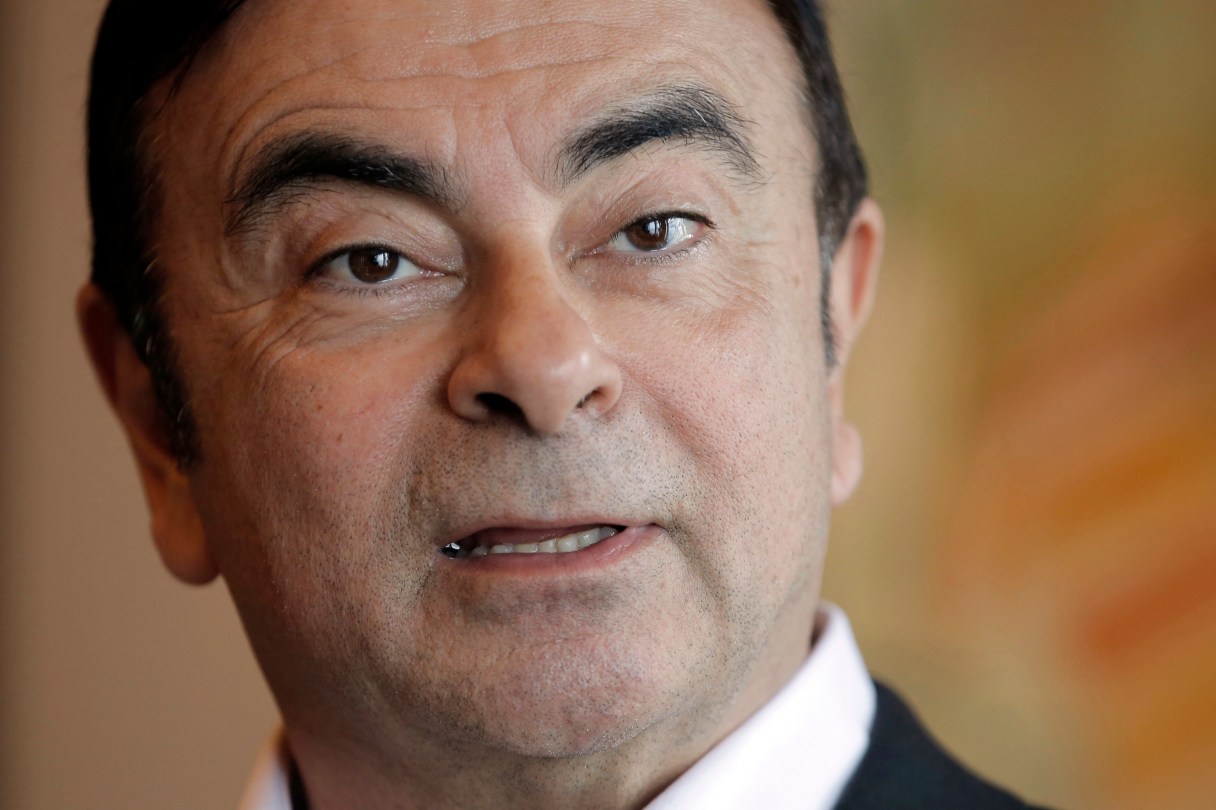
TOKYO – One of the biggest mysteries surrounding the arrest of Nissan’s former chairman Carlos Ghosn is over how he allegedly could have underreported his income by millions of dollars for years and why the company is going after the suspected wrongdoing now.
Ghosn, who headed the Renault-Nissan-Mitsubishi Motors auto alliance, was arrested Nov. 19 on suspicion he underreported his income by $44 million over five years, or about half of what he was really making. Nissan Motor Co. and Mitsubishi have ousted him as chairman; the board of Renault SA of France says it’s waiting for more evidence.
Nissan is among a growing list of top-name Japanese companies whose corporate governance has been found lacking in recent years.
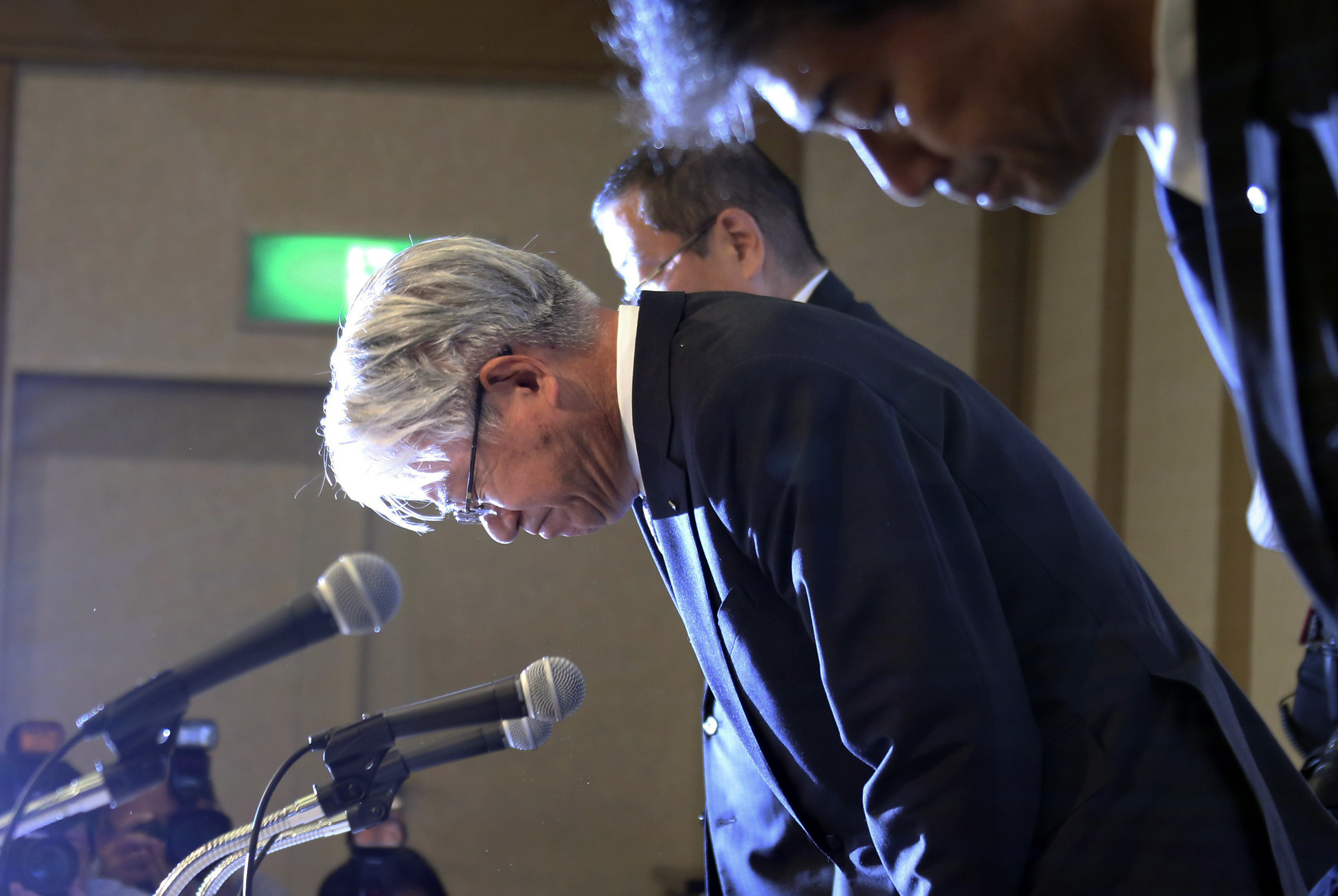 FILE – In this Oct. 13, 2017, file photo, Kobe Steel President and CEO Hiroya Kawasaki bows during a press conference in Tokyo. The raft of scandals at many blue chip Japanese companies suggests managers are struggling to meet sometimes overly ambitious profit targets amid slowing demand, labor shortages, rising costs and intensifying competition. But they also highlight a rift between old-guard practices and an increasingly global business world in Japan. Major steelmaker Kobe Steel was charged with violating competition laws after massive faking over many years of quality data for products sent to hundreds of companies, including aluminum castings and copper tubes for autos, aircraft, nuclear power plants, appliances and trains. (AP Photo/Koji Sasahara, File)
“Wait a minute. Who wrote the financial statements? The accountants. Who audited them? The auditors,” Christopher Richter, auto analyst for CLSA Securities Japan Co., said of the case. “How do you do this without other people being complicit?”
Japanese prosecutors say Ghosn and another Nissan executive, Greg Kelly, an American suspected of collaborating with him, were arrested because they are considered flight risks. But the timing of the scandal, given the length and scale of the alleged wrongdoing, is raising questions.