
In John Holloway’s early years as an entrepreneur, saving for his own future wasn’t a priority.
“I invested a lot of money into one of my first businesses and came out break even at best. I am kicking myself for not setting some of that money aside for retirement,” says Holloway, co-owner of NoExam.com, a life insurance brokerage based in Roswell, Georgia.
These days, when his company’s cash flow and profits are strong enough, he takes money out of the business and invests in a retirement account.
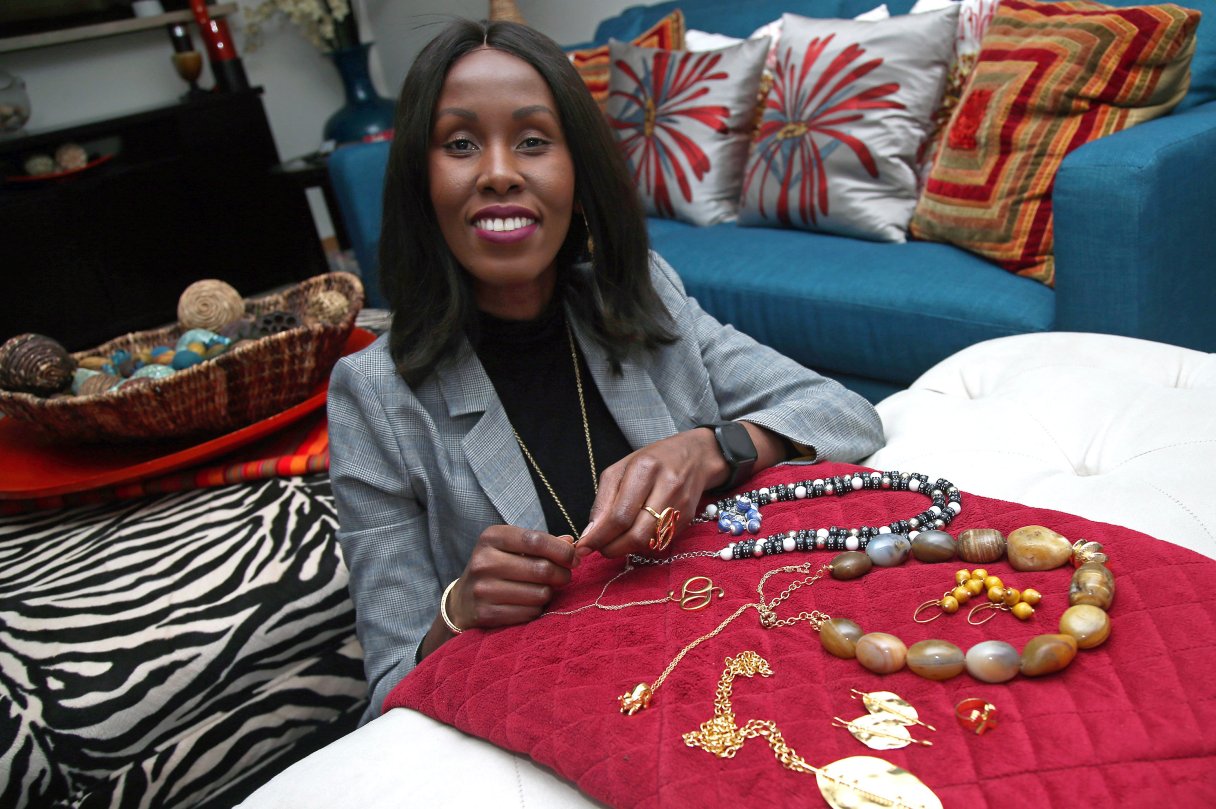
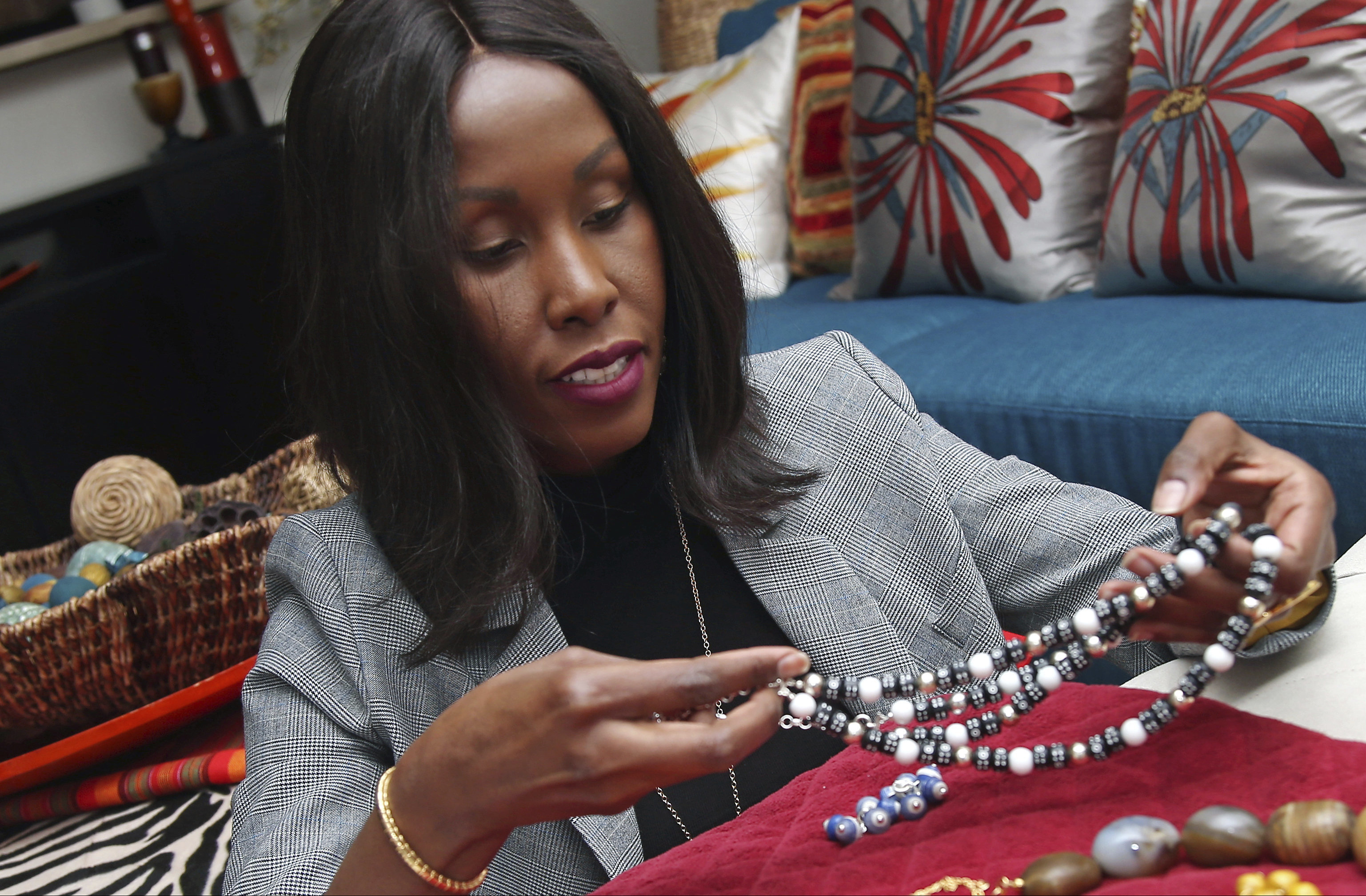 In this Monday, Dec. 3, 2018, photo, Shamila Nduriri, who owns Dalasini, an upscale jewelry company, holds some of her jewelry in her Minneapolis apartment. Nduriri, who studied finance in college, saved aggressively when she worked for a corporation and continues to put money aside now that she owns Dalasini. (AP Photo/Jim Mone)
“I am trying to diversify – having all of my eggs in one basket is stressful,” Holloway says.
Saving for retirement hasn’t been a priority for many small business owners over the years. They’ve hoped to build their businesses, sell at a huge profit and have a comfortable retirement. While they’ve taken profits out for homes and college tuition, it was more important to reinvest earnings into the company rather than save for retirement. But attitudes about saving may be evolving after the financial devastation of the Great Recession, when tens of thousands of businesses failed.