
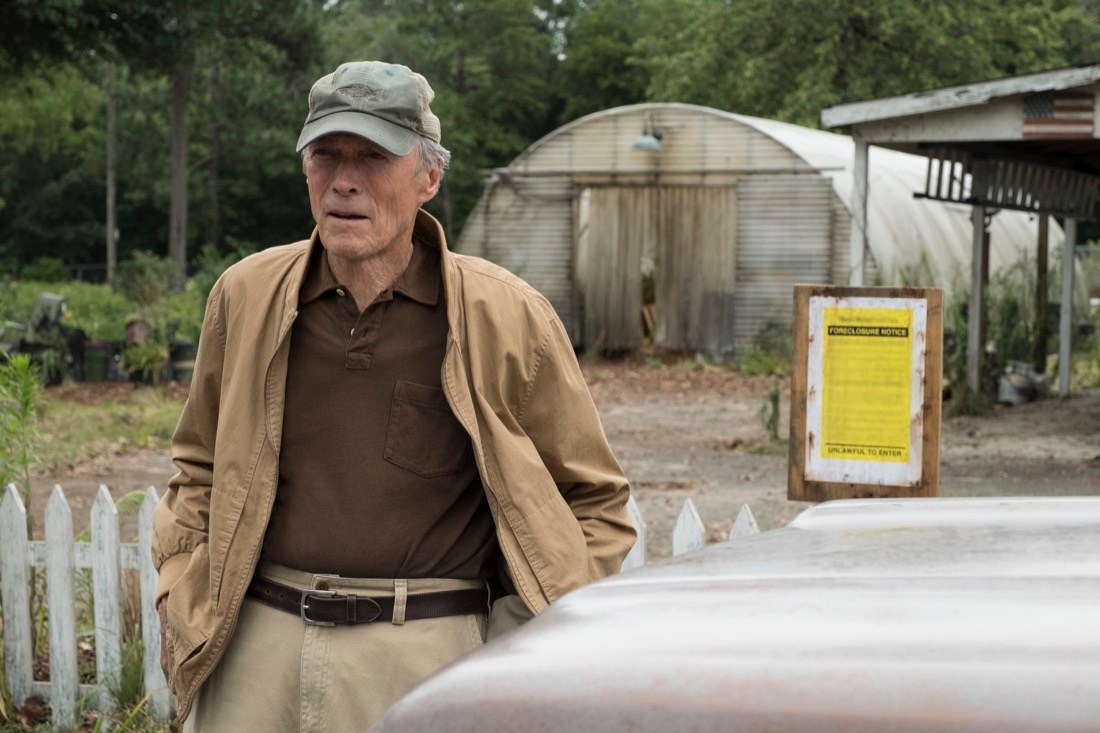
Both tender apologia and vigorous justification, Clint Eastwood’s “The Mule” is a deeply, fascinatingly personal meditation from the 88-year-old director who, like his aged drug mule protagonist, has spent a long time on the road.
“The Mule” is the indefatigable Eastwood’s second film just this year, following “The 15:17 to Paris,” a distinctly undramatic dramatization of the thwarted 2015 train attack, starring the real-life heroes. Eastwood isn’t playing himself in “The Mule” – far from it – but it’s hard not to appreciate, and be moved by, the film’s many echoes for the filmmaker, acting for the first time in one of his own since 2008’s similarly self-reflective “Gran Torino.”
That he finds such intimate dimensions in the story of Leo Sharp is a testament to both Eastwood’s knack for pared-down elegy and to the lean script by Nick Schenk that envisions larger American themes within its geriatric drug courier.
Sharp was arrested at age 87 with 104 kilos of cocaine in the back of his pickup while en route to Detroit. Little in the World War II veteran’s appearance suggested his secret identity. Sharp, it was discovered, was among the most prolific regional smugglers for the Sinoloa cartel. The hard-to-believe tale was recounted by The New York Times’ Sam Dolnick, an article that’s been adapted here.
“The Mule” takes plenty of liberties with Sharp’s story – Eastwood’s smuggler is named Earl Stone, and is a Korean War vet – just as it has found curious parallels for its star. Some of them are silly. Some are profound. But rarely does “The Mule” – for better and worse – not reverberate with Eastwood’s own mythology in intriguing, if sometimes painfully awkward ways.