
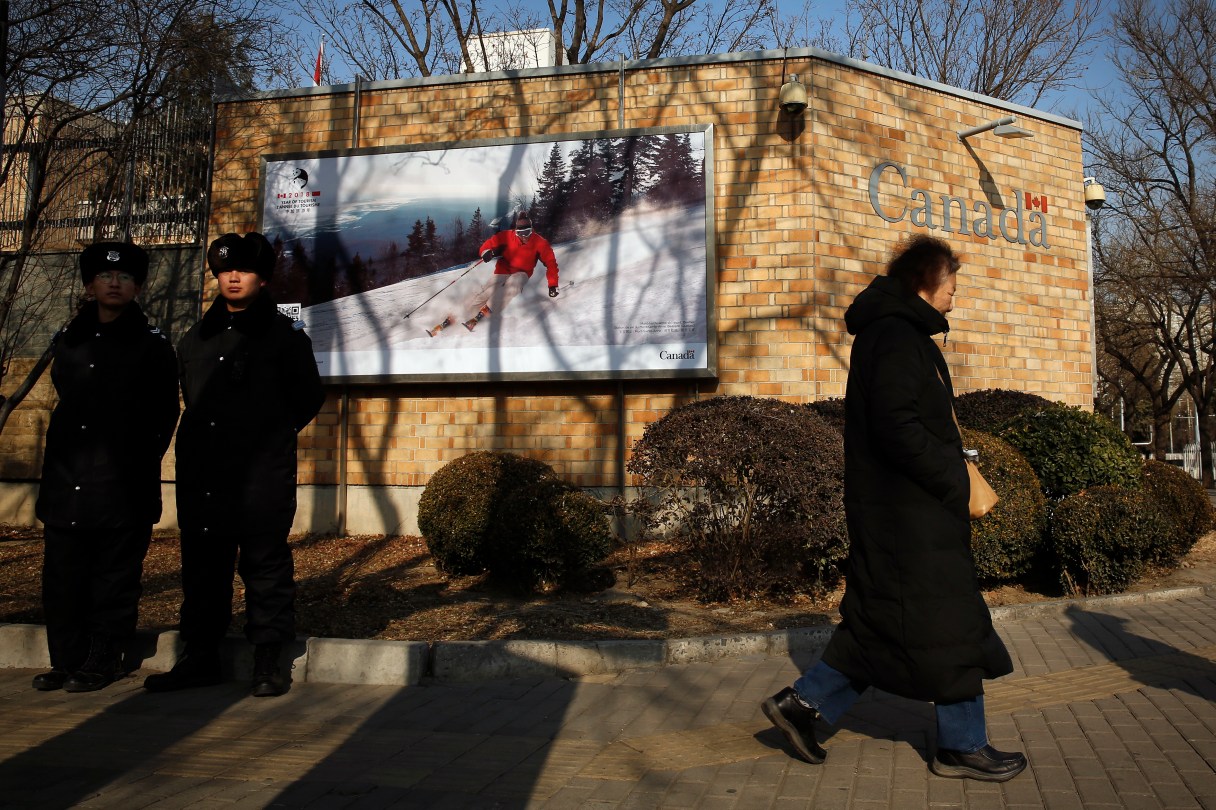
WASHINGTON – By detaining two Canadians in an apparent act of retaliation, China is looking like the country its harshest critics say it is: one unbound by the laws, rules and procedures that govern other major industrial nations.
Canada’s arrest of a top Chinese technology executive at the request of the United States has set off a diplomatic furor with Beijing.
And the way the countries have acted in the controversy draws a clear distinction between their political and legal systems – at a time when the United States, Canada and other advanced economies are rethinking the way they do business with China.
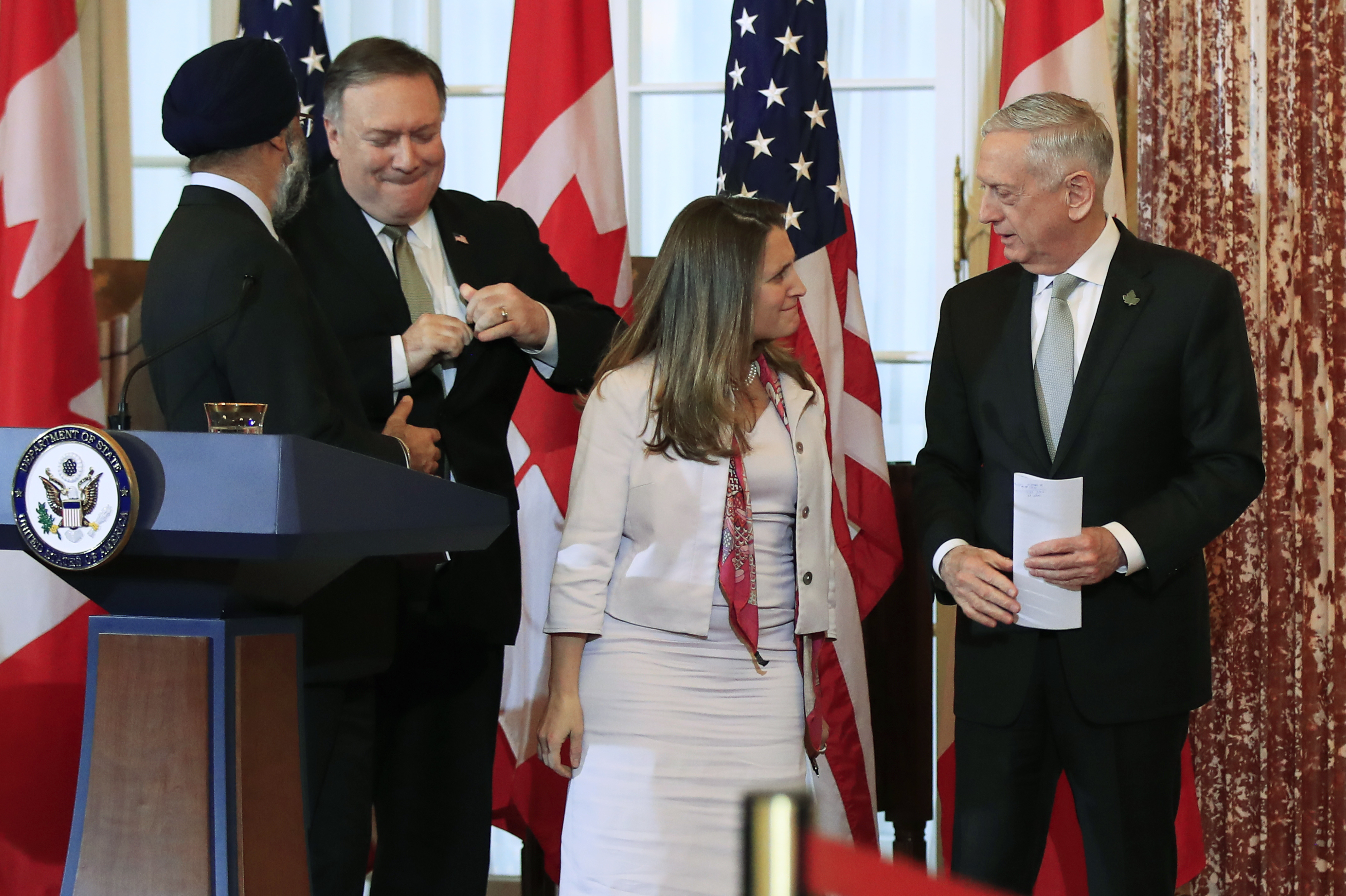 Secretary of State Mike Pompeo, second from left, and Defense Secretary Jim Mattis right, shake hands with their Canadian counterparts Canadian Minister of Foreign Affairs Chrystia Freeland, second from right, and Canadian Minister of Defense Harjit Sajjan, left, as they conclude their news conference following a U.S.-Canada 2+2 Ministerial at the State Department in Washington, Friday, Dec. 14, 2018. (AP Photo/Manuel Balce Ceneta)
Canada gave Huawei chief financial officer Meng Wanzhou – daughter of the telecom giant’s founder – three days of public hearings before releasing her on bail to the cheers of members of Vancouver’s large Chinese community who came to court to show their support.
By contrast, the Chinese secretly detained two Canadians on vague suspicions of “engaging in activities that endanger the national security” of China. Beijing didn’t allow Canadian officials to see Michael Kovrig, a former diplomat in China, for four days. And it has yet to allow them access to detained entrepreneur Michael Spavor.