
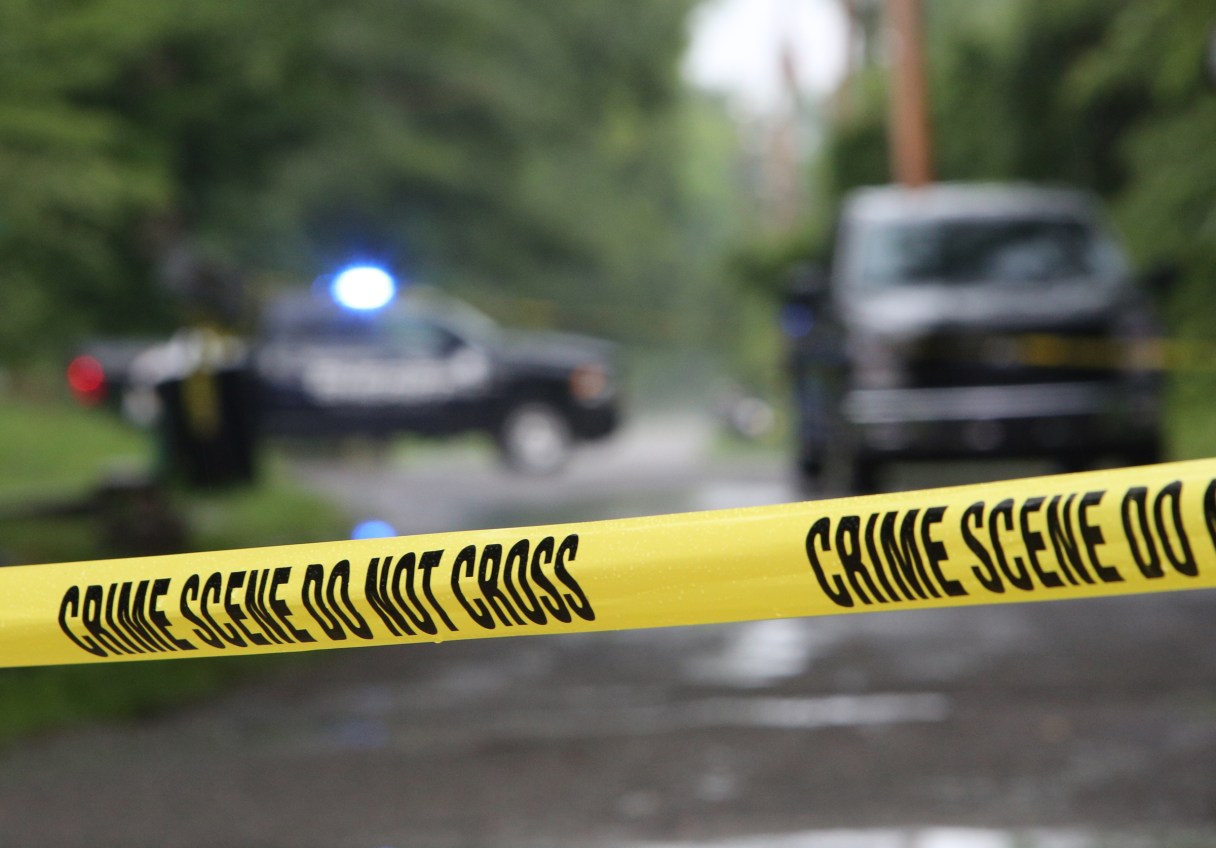
There may be no harder job in our society than being a cop.
Police officers don’t just patrol streets and watch for crime. They are also called on to be social workers, teachers, psychologists, negotiators, trainers, mystery solvers and, of course, MacGyver-like rescuers.
All too often, however, the only real, sustained in-depth training they have in any of those fields is in aggressive pursuit and self-defense.
That’s why we read more stories and talk to our friends and family more about lethal force and brutality than about successful community policing – even though we have plenty of good community policing, sometimes called democratic policing. Face it, you don’t pick up the phone and call your best friend to talk about the red lights that worked just fine as you drove home. You only do that when the red lights all around each intersection continually flashed yellow and traffic snarled.
So good community or democratic policing – a police force that is publicly accountable, subject to the rule of law, respectful of human dignity and that intrudes into our lives only under certain limited circumstances – is pleasing but not much of a conversation for us. Until we are outraged that we didn’t see it.
Such has been the case in several recent Chattanooga area incidents.
» A Chattanooga rapper was punched and kicked by a Hamilton County Sheriff’s Office detective while in handcuffs. A cellphone video captured the Dec. 3 incident as officers arrested Charles Toney in connection with a grand jury indictment on charges of drug possession. The officer, who said Toney spit on him and bit his finger, has been placed on desk duty as the department conducts an internal investigation. The video shows only the officer punching Toney twice in the mouth then shaking his hand as if in pain.
» In November, a Chattanooga officer was arrested on charges of felony kidnapping and felony sexual battery after allegedly taking a woman caught shoplifting to his apartment, fondling her and telling her he wanted to have sex with her, according to an affidavit of complaint filed against the officer.
» On Oct. 21, a 27-year-old man woke up in Parkridge Medical Center East’s intensive care unit after an East Ridge Police Department arrest left him with a chipped tooth, a hammering heart, a bruise the size of a grapefruit around his groin and more on his stomach, wrists and sides.
» In March 2017, a Hamilton County Sheriff’s Department vehicle pursuit led to a beating so severe one of the suspect’s testicles was ruptured. That incident resulted in a federal lawsuit against the sheriff’s office.
Chattanooga police in recent years have had fewer brutality incidents come to light after the Berke administration hired two police chiefs – Fred Fletcher, who retired, and David Roddy, who took Fletcher’s place – who publicly embraced community policing.
Fletcher initiated what he called “diversity immersion training” for new police cadets, and Roddy recently expanded on that idea in October by sending 30 cadets for “soft-skills training” with researchers at Southern Adventist University in a program called “Community Action Poverty Simulation.”
Southern’s dean of social work, Kristie Wilder, said those who had never encountered poverty found the simulation to be a rude awakening: “You see people literally choosing to steal to survive because they have no other option; then they might get arrested and not be able to bond out,” she said. Understanding the desperate motivations “demystifies those people.”
CPD Assistant Chief Glenn Scruggs said he could see “a lot of light bulbs coming on.” He pointed to the frustration expressed by one cadet playing a single mother who couldn’t figure out how to get her lights turned back on or file an insurance claim because she couldn’t pay for transportation. “She was stumped that people had to go through all these hoops to get to that,” Scruggs said.
But Chattanooga’s police department training is the exception, not the rule.
According to The Conversation – an online, academic, evidence-based news website – it’s hard to improve American policing without that kind of leadership.
Policing in America is not a standardized profession guided by an all-encompassing established set of procedures and policies. There are at least 12,000 local police agencies in our country, making it one of the most decentralized police organizations in the world.
“One problem is the inequality inherent in the system,” wrote policing professor Frederic Lemieux, of George Washington University in a 2016 article. “For example, Washington, D.C., has 61.2 police officers per 10,000 residents, while Baton Rouge has just 28.7.”
What’s more, there are more than 600 state and local police academies across the country delivering training programs that vary tremendously in content, quality and intensity. Add to that a slow and steady integration of minorities and women into police ranks, along with new technologies that have given us crime hot-spot profiling, tasers, drones, body cameras and closed circuit TV surveillance. Most of these changes have been positive, but some just created new challenges.
Lemieux argues that police agencies are a mirror of our beliefs and values as a society, and policing is inseparable from politics: “The state of our police system, in other words, for good or for ill, is an accurate proxy measure of the state of our democracy,” he says.
If that’s the case, the only real way to improve policing in our towns, counties and nation starts with us. We have to vote in better leaders.