
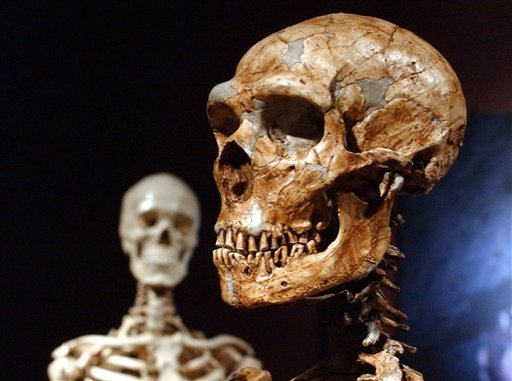
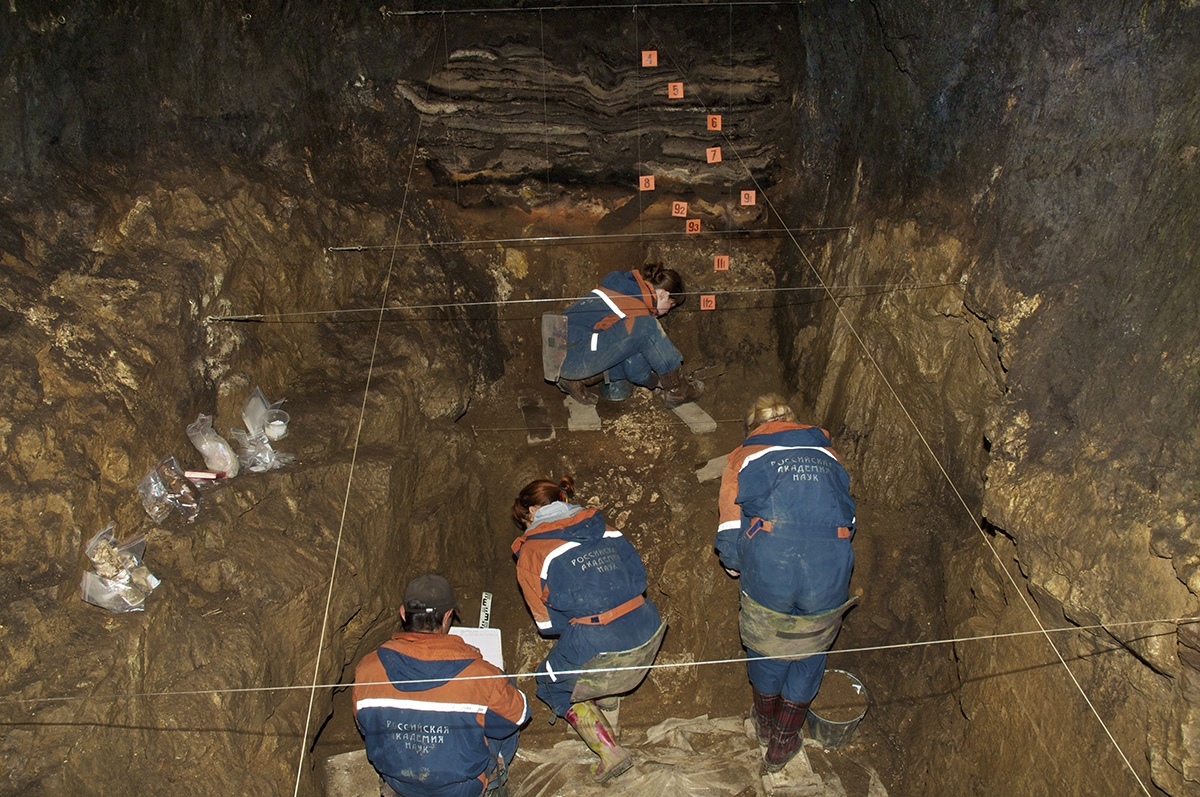
 In this 2011 photo provided by Bence Viola of the University of Toronto, researchers excavate a cave for Denisovan fossils in the Altai Krai area of Russia. On Wednesday, Aug. 22, 2018, scientists reported in the journal Nature that they have found the remains of an ancient female whose mother was a Neanderthal and whose father belonged to another extinct group of human relatives known as Denisovans. (Bence Viola/Department of Anthropology – University of Toronto/Max Planck Institute for Evolutionary Anthropology via AP)
People who sign up for genetic testing from companies like 23andMe can find out how much of their DNA comes from Neanderthals. For those whose ancestry lies outside Africa, that number usually falls somewhere between 1 percent and 2 percent.
Scientists are still a long way from understanding what inheriting a Neanderthal gene means to people. Some Neanderthal genes may be helpful – improving our defenses against infections, for example – but other bits may leave carriers slightly more prone to certain diseases.
On Thursday, a team of scientists revealed that two pieces of Neanderthal DNA may have another effect: They may change the shape of our brains.
The study, published in the journal Current Biology, wasn’t designed to determine how Neanderthal genes influence thought – if they do so at all. Instead, the value of the research lies in its unprecedented glimpse into the genetic changes influencing the evolution of the human brain.
“This study is surely a milestone,” said Emiliano Bruner, a paleoanthropologist researcher at Spain’s National Research Center on Human Evolution, who was not involved in the research.