
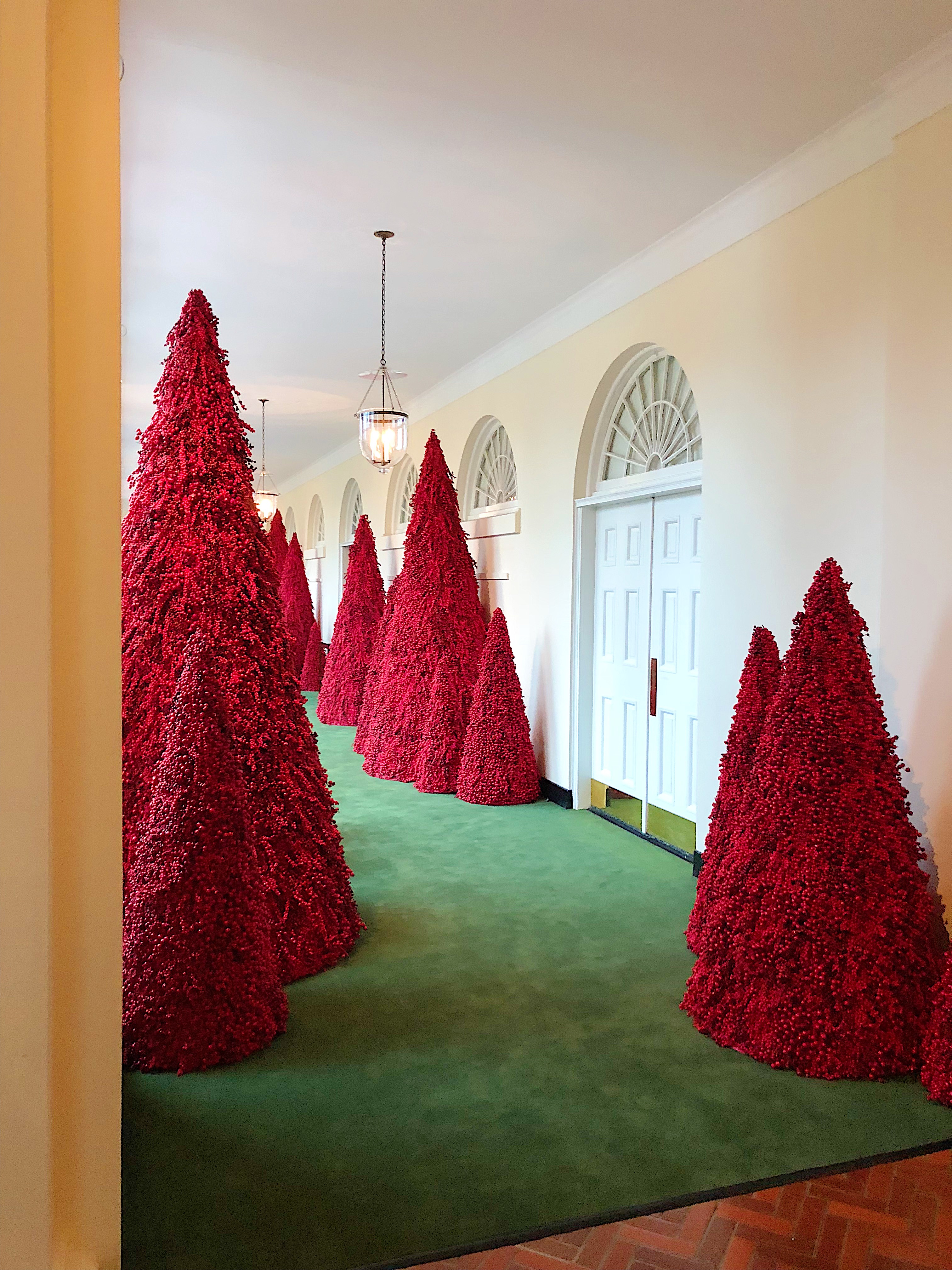
When the White House unveiled its 2018 Christmas decorations last month, the standout was a corridor lined with bright red topiary trees.
Those crimson conifers dominated news coverage and internet memes, but with little positive spin. The stark images of the never-greens drew comparisons to the spinning brushes in car-wash tunnels, bloody scenes from Stanley Kubrick’s “The Shining” and the red-cloaked, servile women of the “The Handmaid’s Tale.”
Chattanooga designer Brandon Carruth has heard the critiques, but he has seen the trees up close. Yes, it’s a stark look on camera, he agrees, but in person they are “absolutely magical.”
“The tallest is like 10 feet, and the smallest is 2 feet,” he says. “I had the opportunity to see them in person and witness the effort put into those trees. They’re stunning.”
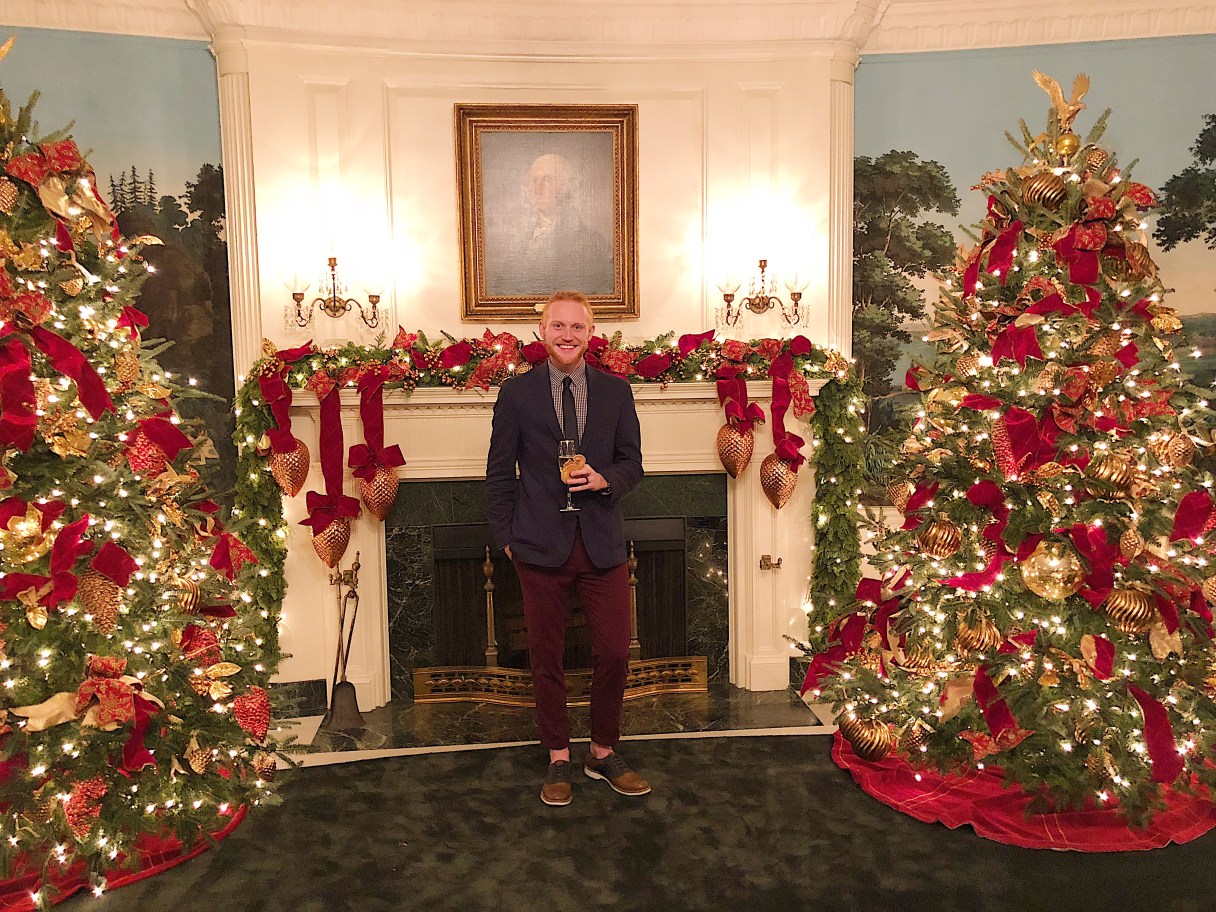
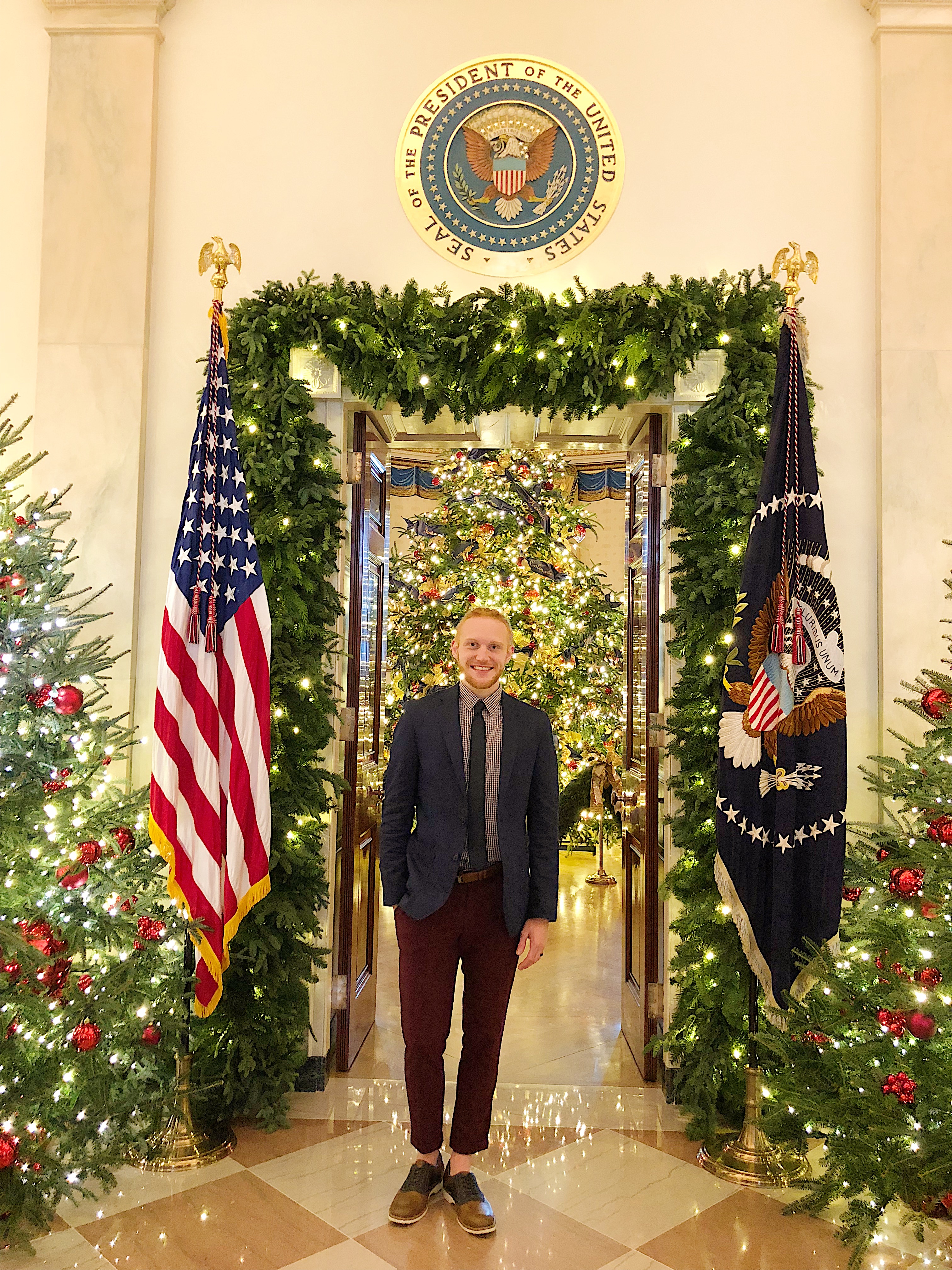
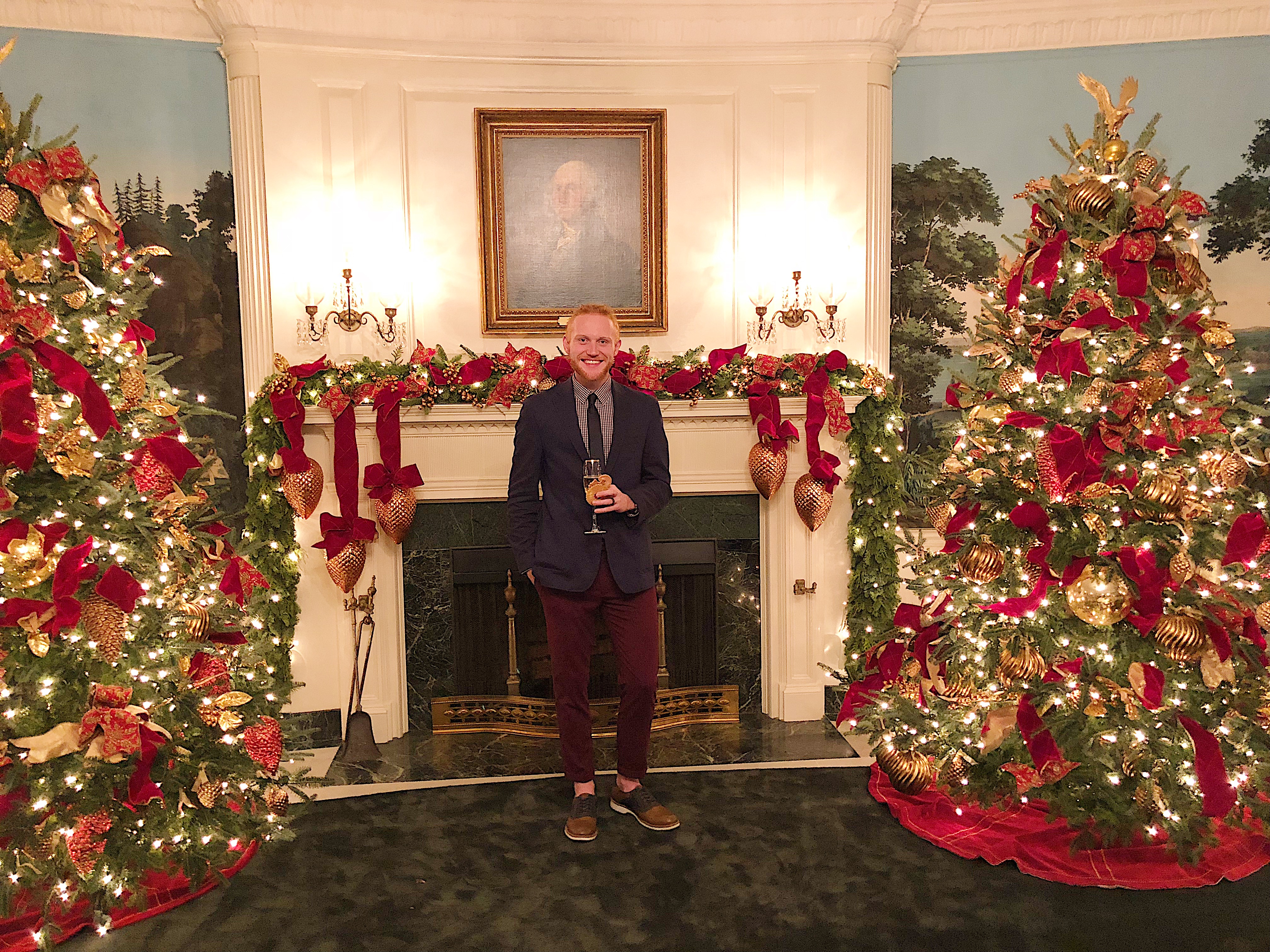
His firsthand account is more than just tourist talk. For the second year, the 21-year-old owner of Chatt Christmas, a seasonal decorating service, was invited to decorate the White House.
Carruth flew to Washington, D.C., on Thanksgiving Day – a few hours earlier than last year, so he could get in more sightseeing – and was pressed into service for the next three days, Friday through Sunday. On Monday, the volunteers were treated to a reception with first lady Melania Trump, who had handpicked all the decorative flourishes the designers dispersed.
The theme for the first family’s second Christmas in the White House is “American Treasures,” meant to honor “the spirit of the American people,” the first lady said in a statement that also thanked “the many volunteers and staff who worked hard to decorate the halls of the People’s House in Christmas cheer.”
About 200 people from all 50 states were involved in the decorating marathon, including a separate team that readied the decor and trucked it in from a warehouse in Virginia the first part of Thanksgiving week.
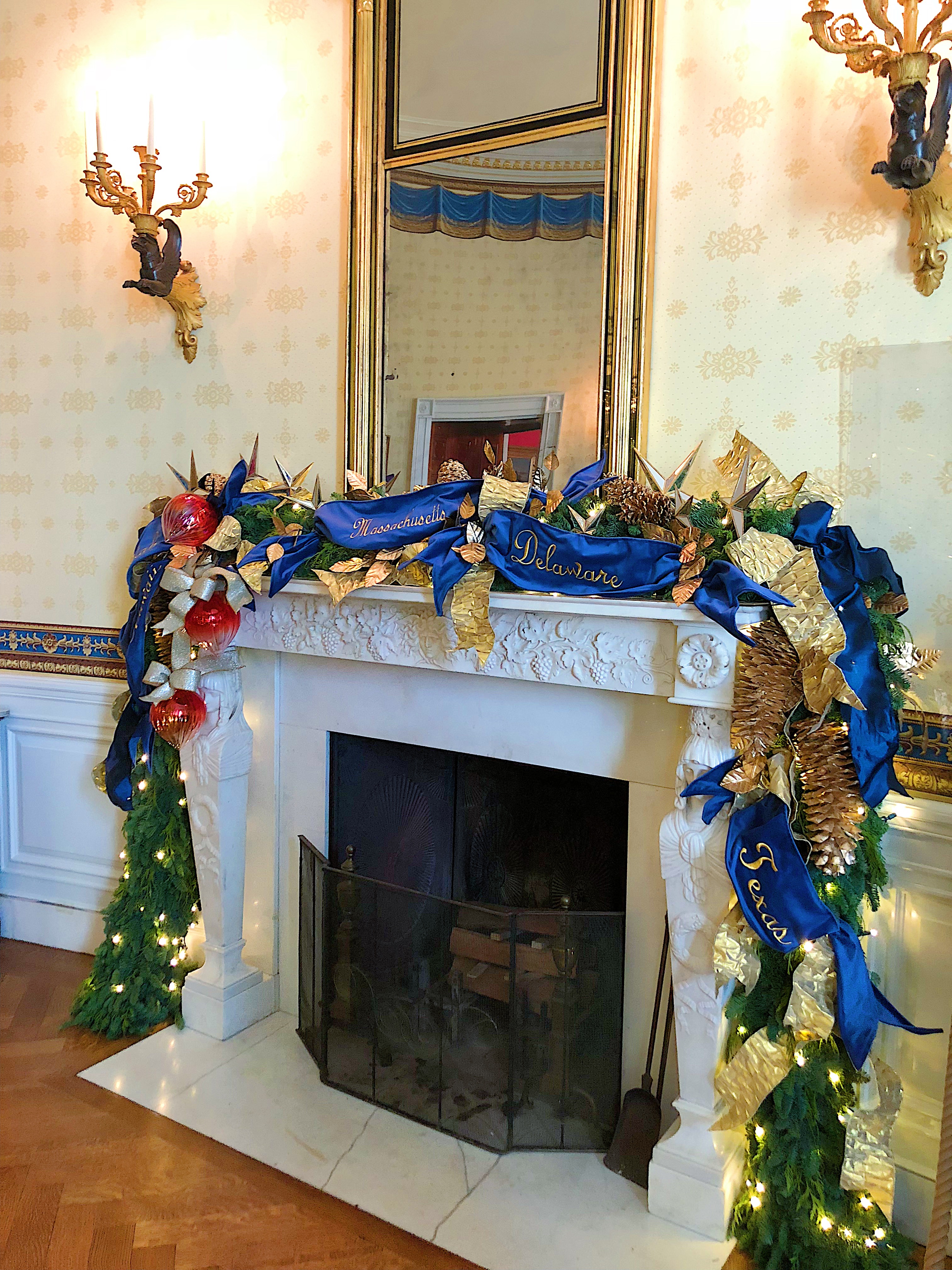
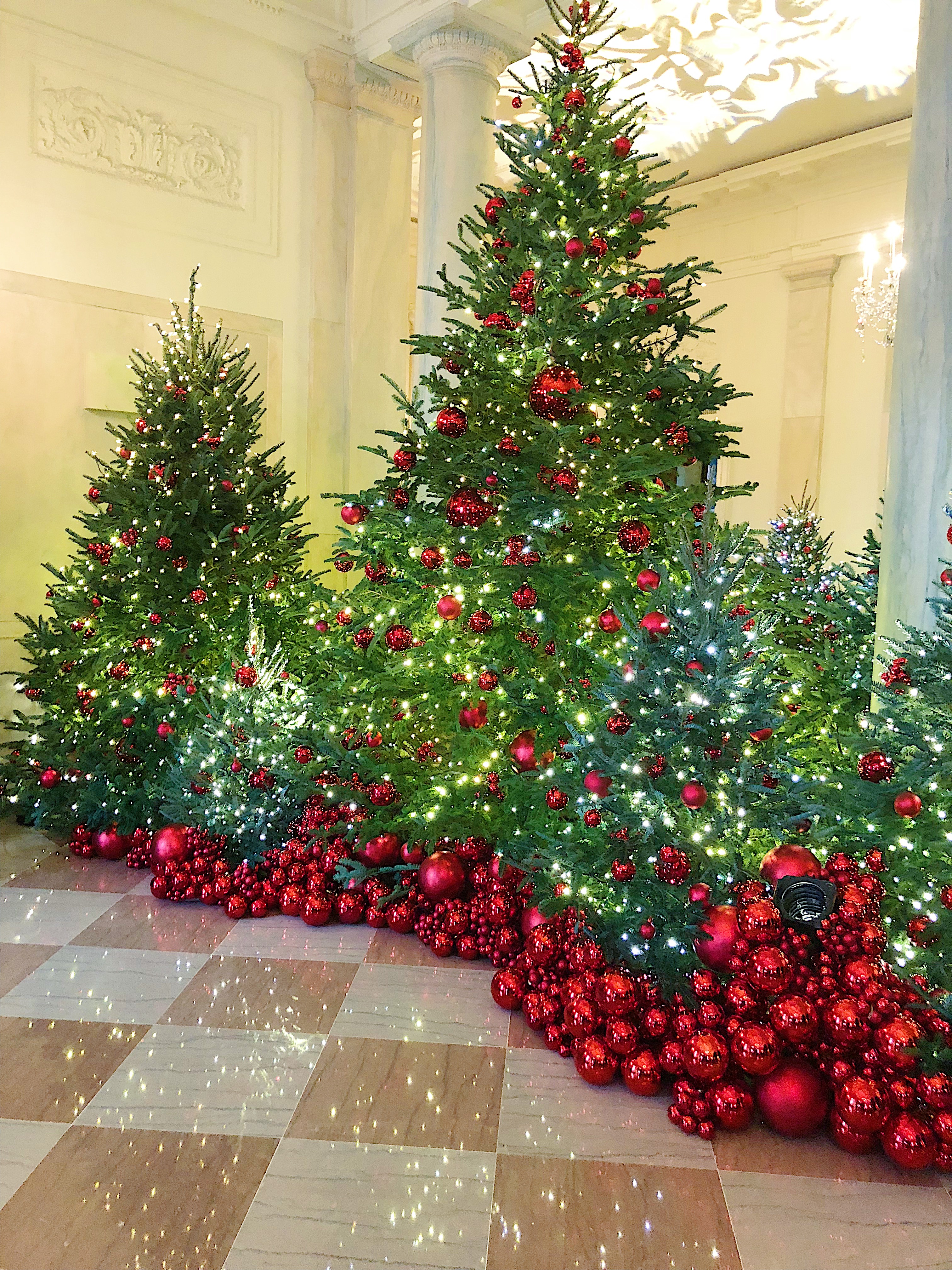
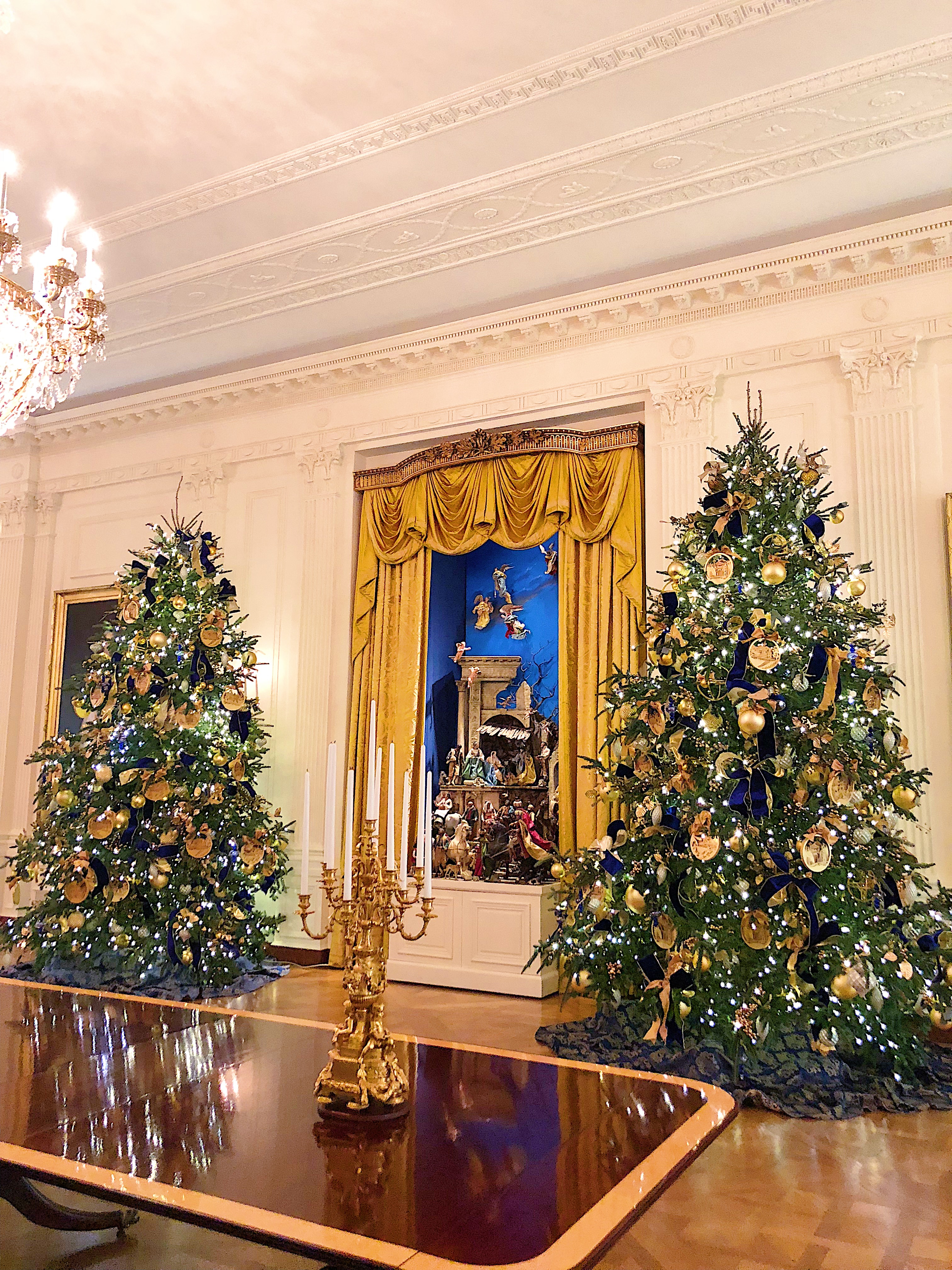
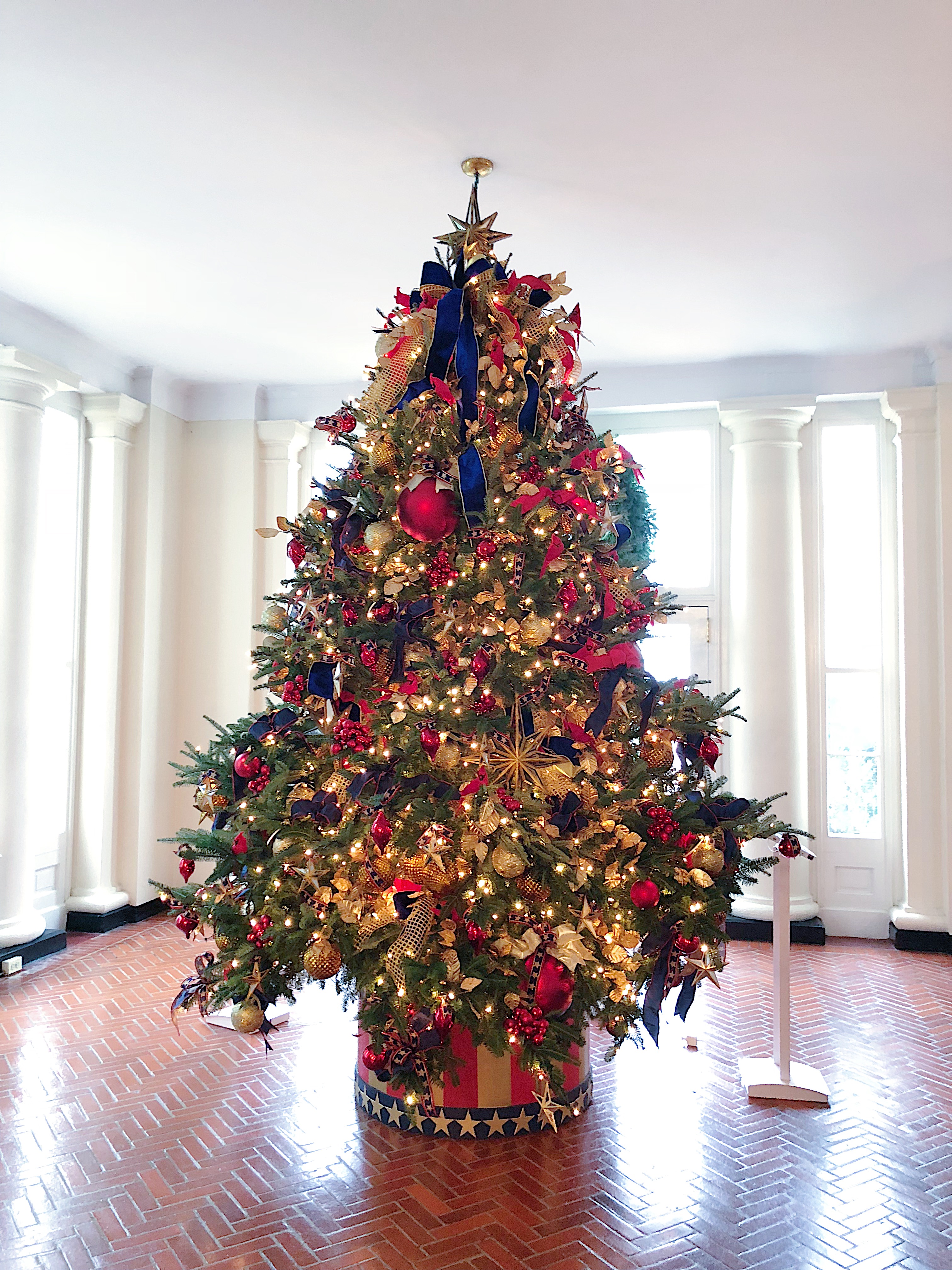
According to the White House, Mrs. Trump based the color palette on the colors of the flag. Red dominates in the Grand Foyer, Cross Hall and East Colonnade. White is highlighted in the State Dining Room; blue in the East Room. All three colors come together in the Blue Room, which holds the official White House Christmas tree.
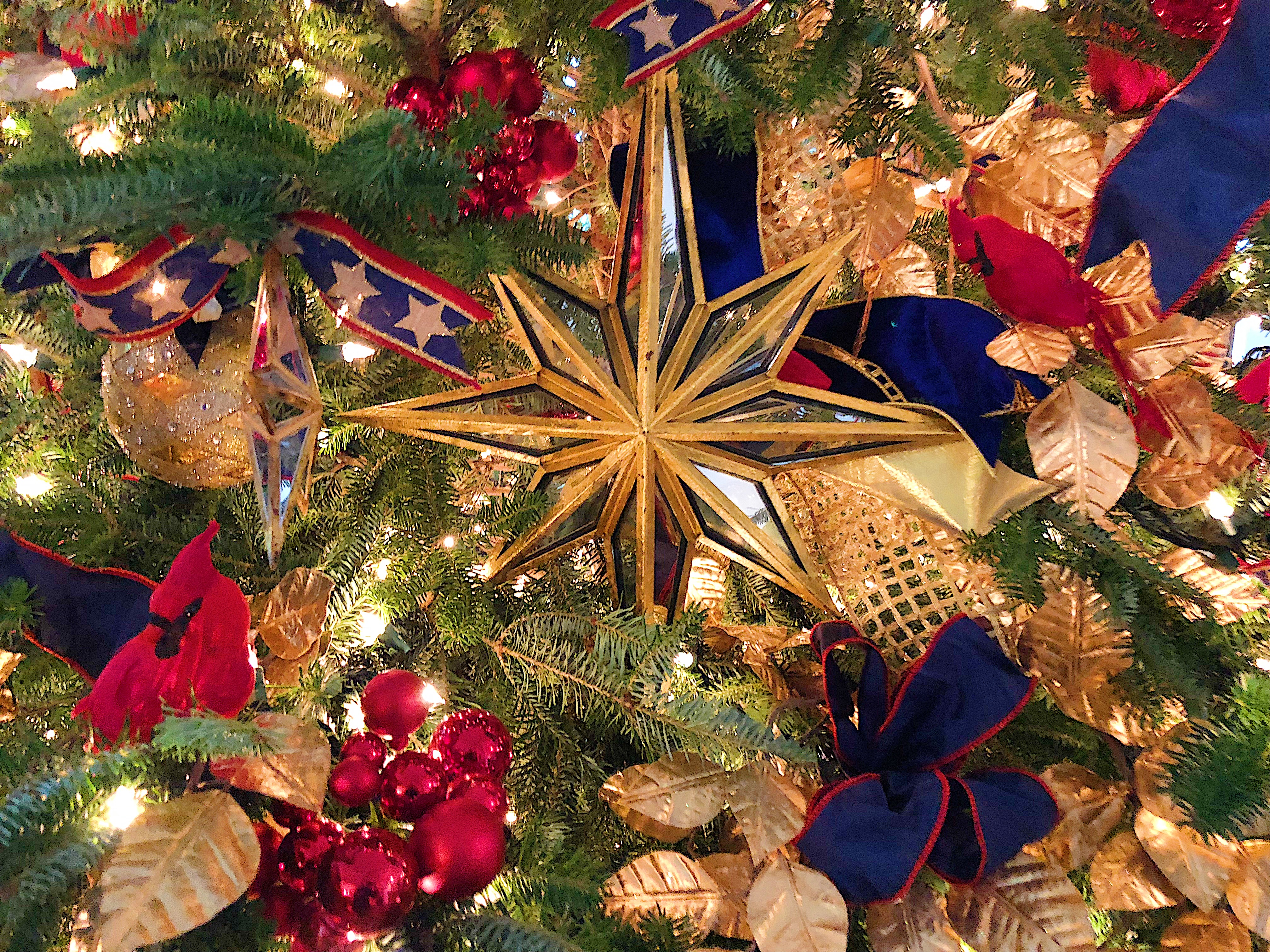
That 18-foot stunner, a Fraser fir from North Carolina, is enveloped in more than 500 feet of blue velvet ribbon that has each state and territory embroidered in gold.
Every room is filled with one attention grabber or another for the 30,000 visitors expected to tour the White House during the holiday season.
The State Dining Room showcases America’s national symbols, including the bald eagle, rose and oak tree, as well as an elaborate gingerbread house showcasing the entire National Mall.
In the Grand Foyer and Cross Hall, more than 14,000 red ornaments are clustered upon and skirted beneath 29 trees aglow in white lights. In the East Room, four custom mantelpieces showcase the skyline of a different city: New York, St. Louis, Chicago and San Francisco.
In the Green Room, an array of fruit, vegetable and grain decorations, meant to symbolize the country’s bounty and harvest, adorn a tree in the center of the room and are tucked into a garland on the mantel. The Red Room includes decorations evoking Mrs. Trump’s “Be Best” initiative, motivating children to excel.
The biggest media spotlight has been on those vivid red rows of topiary trees in the East Corridor, which connects the East Wing and West Wing. Carruth says patriotism was at the heart of the decorating decisions.
“The color that Melania chose was red to represent patriotism and bravery and blood that has been shed [for freedom],” he says. “It makes perfect sense because the Gold Star tree is around the corner. It’s a whole story as you enter and walk through.”
The Gold Star Family Tree, adorned with gold stars and patriotic ribbons, is decorated by Gold Star families, those who have lost someone in service to the country.
Carruth helped decorate the Gold Star tree after finishing his initial tasks with Team Blitzen (they’re all named for reindeer).
“My focus this year was the vestibule, the entrance to the West Wing,” he says. “I did four scenes and a 30-foot garland and two live arrangements with magnolia and cedar. I got to work closely with one of the White House florists doing that. It was a lot of fun.”
Last year, Carruth was part of the team that decorated the Diplomatic Room, the first room visitors see when they enter the White House, and the East Entrance. Getting to work in the West Wing meant tighter security for the decorators and fewer outside visitors to see the finished product, but Carruth deems the nerve center of the White House “the best place you could be.”
“The West Wing is seen by a lot less people, but the people who do see it are the president and official visitors and staff,” he says.
Carruth says he didn’t see President Trump during his decorating hours at the White House, though other volunteers caught a glimpse of the commander in chief “leaving on the chopper.”
He did get a quick tour of the offices of Vice President Mike Pence and Chief of Staff John Kelly (neither was on-site). The biggest VIP he saw in the West Wing wasn’t a person but a place: the Oval Office, “a celebrity in itself,” Carruth says.
Like he did at last year’s thank-you reception, he found a good vantage point to see Mrs. Trump because “the room fills up quickly.” Other headliners at the reception included Kellyanne Conway, counselor to the president, and press secretary Sarah Huckabee Sanders.
He did hear a bit more political sniping among this year’s crew of volunteers than last year’s, but he says there was little time for it and even less appetite for it.
For most of the volunteers, he believes, the chance to decorate the White House is an opportunity that should transcend partisanship. Adding their personal touch to the official decor at 1600 Pennsylvania Ave. is a way to serve the country in some small way.
“It’s for the People’s House and the country,” he says of the volunteers. “They want to decorate the People’s House.”
Carruth had already had a busy decorating season before his tenure at the White House. Chatt Christmas, the company he established in 2016, boasts a growing clientele of residential and commercial customers, including Bluff View Art District and Rock City in Chattanooga and Crave Golf Club in Pigeon Forge, Tennessee.
This year, with his 2017 White House credentials, he picked up another two dozen customers, including Ruby Falls, where he was tasked with lighting the exterior of the historic castle and the outdoor Christmas tree at Christmas Underground. He also joined the design team at The Great Christmas Shop (known in the summer as The Great Backyard Place) to create the backdrop for Santa Claus and lead decorating clinics.
The business has been so successful he’s planning a name change from the seasonal-sounding Chatt Christmas to the all-encompassing Carruth Concepts to highlight his year-round design work. He also runs the pop-up beverage company Sleepyhead Coffee.
Carruth Concepts, he says, will be “kind of the umbrella for all this freelance work that I’ve been doing.”
And he’s hopeful that he can get a third invitation to the White House. He has kept in touch with friends he’s made and was especially grateful for the interaction with the White House staff, which he believes could help move his application “to the top of the pile” in coming years.
Contact Lisa Denton at ldenton@timesfreepress.com or 423-757-6281.
About those trees
The red topiary trees in the East Corridor mark the second year of high-concept designs credited to first lady Melania Trump, a former fashion model.In 2017, the first family’s first year in the White House, Mrs. Trump chose icy white trees for the same passageway, which were described by some as reminiscent of a haunted forest or an ice queen’s frozen lair.As writer Steven Kurutz described it in The New York Times: “Last Christmas, Ms. Trump gathered icy white branches to form an archway along the East Colonnade, and then walked through the shadowy stick labyrinth wearing a floor-length cream frock dress, as if she were starring in an ad for an as-yet-released perfume: Dior Christmas.”This year’s introductory video shows a similar walk-through with Mrs. Trump dressed in black, a wardrobe choice that especially contrasts with the scarlet vision in the East Corridor. The 40 topiary trees are not adorned with ornaments, but are covered in bright red berries, requiring more than 4,000 branches to complete the look.Chattanooga designer Brandon Carruth, who has helped decorate the White House over Thanksgiving weekend the last two years, says the trees may look stark on camera but they are more striking in person.“It took 35 to 40 people the entire seven days to make those trees,” he says, explaining that an early team of volunteers did prep work before the second team arrived for after-Thanksgiving decorating.The trees started as a Styrofoam cone that was painted red. Then long garlands of red berries were snipped into small twigs that were fastened to the Styrofoam with floral pins. Even with gentle handling, the berries were prone to falling off, often leaving white marks where they’d been attached. All those white spots had to be filled in with red Sharpies.“It was a lot of hard work,” says Carruth.The choice of red trees is part of the larger palette for this year’s decorations, meant to symbolize valor and patriotism.“While they are the most controversial,” Carruth says of the trees,”they are probably one of the most important pieces in the White House this year.”Initially, the trees were picked apart by critics in mainstream and social media. Lately, they have been physically picked apart by visitors. Many areas of the White House are roped off for tours, allowing visitors to look but not enter. The East Corridor is a central part of the tours, and the trees are within reach for visitors to break off berries as souvenirs.Carruth says he made it home with a few of those berries himself, mostly unintentionally.“They were popping off while I worked on the trees,” he says. “I found them in my shirt pockets.”— Lisa Denton