
Friday, November 13, 2026Nov 13

Few states let courts take guns from people deemed a threat

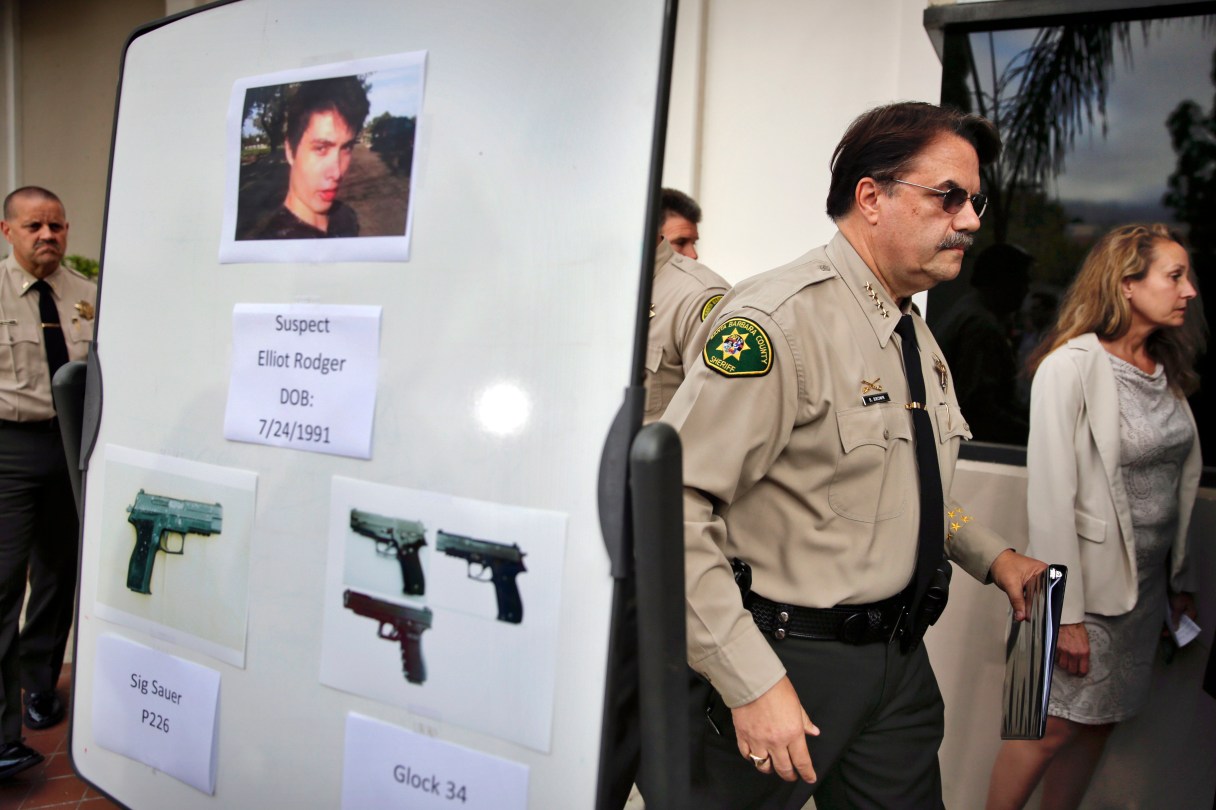
In this May 24, 2014 file photo, Santa Barbara County Sheriff Bill Brown, right, walks past a board displaying photos of gunman Elliot Rodger and the weapons he used in a mass shooting in Isla Vista, Calif., after a news conference in Santa Barbara, Calif. A growing number of states have passed laws or are considering bills allowing courts to temporarily remove guns from individuals deemed a danger to themselves or others, an intervention that advocates say stops shootings and suicides by disturbed individuals. (AP Photo/Jae C. Hong, File)
In this May 24, 2014 file photo, Santa Barbara County Sheriff Bill Brown, right, walks past a board displaying photos of gunman Elliot Rodger and the weapons he used in a mass shooting in Isla Vista, Calif., after a news conference in Santa Barbara, Calif. A growing number of states have passed laws or are considering bills allowing courts to temporarily remove guns from individuals deemed a danger to themselves or others, an intervention that advocates say stops shootings and suicides by disturbed individuals. (AP Photo/Jae C. Hong, File) In this May 24, 2014 file photo, Santa Barbara County Sheriff Bill Brown, right, walks past a board displaying photos of gunman Elliot Rodger and the weapons he used in a mass shooting in Isla Vista, Calif., after a news conference in Santa Barbara, Calif. A growing number of states have passed laws or are considering bills allowing courts to temporarily remove guns from individuals deemed a danger to themselves or others, an intervention that advocates say stops shootings and suicides by disturbed individuals. (AP Photo/Jae C. Hong, File)

SACRAMENTO, Calif. (AP) – The warnings around Nikolas Cruz seemed to flash like neon signs: expelled from school, fighting with classmates, a fascination with weapons and hurting animals, disturbing images and comments posted to social media, previous mental health treatment.

In Florida, that wasn’t enough for relatives, authorities or his schools to request a judicial order barring him from possessing guns.

Only five states have laws enabling family members, guardians or police to ask judges to temporarily strip gun rights from people who show warning signs of violence. Supporters of these measures, deemed “red flag laws” or gun-violence restraining orders, say they can save lives by stopping some shootings and suicides.

Florida, where Cruz is accused of using an AR-15 assault weapon to kill 17 people at his former high school, lacks such a law. He was able to legally own the semi-automatic rifle, even though his mother, classmates and teachers had at times described him as dangerous and threatening, and despite repeated police visits to his home.

Red flag legislation has been introduced by Democratic state lawmakers, but it hasn’t been heard during this year’s session, and its fate is uncertain in a state Legislature controlled by Republicans who generally favor expanding gun rights.