
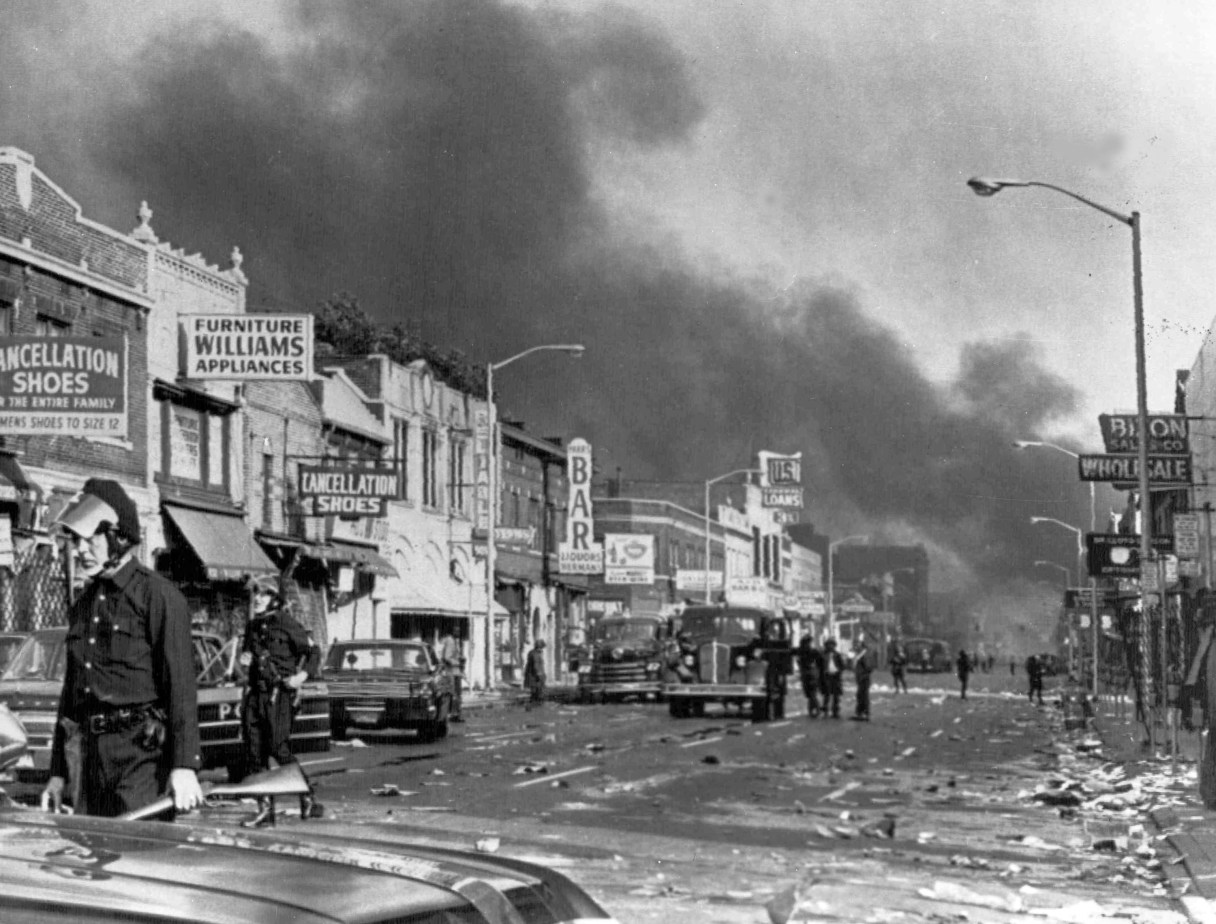
ALBUQUERQUE, N.M. (AP) – Barriers to equality are posing threats to democracy in the U.S. as the country remains segregated along racial lines and child poverty worsens, says a study examining the nation 50 years after the release of the landmark 1968 Kerner Report.
The new report released Tuesday blames U.S. policymakers and elected officials, saying they’re not doing enough to heed the warning on deepening poverty and inequality as highlighted by the Kerner Commission a half-century ago, and it lists a number of areas where the country has seen “a lack of or reversal of progress.”
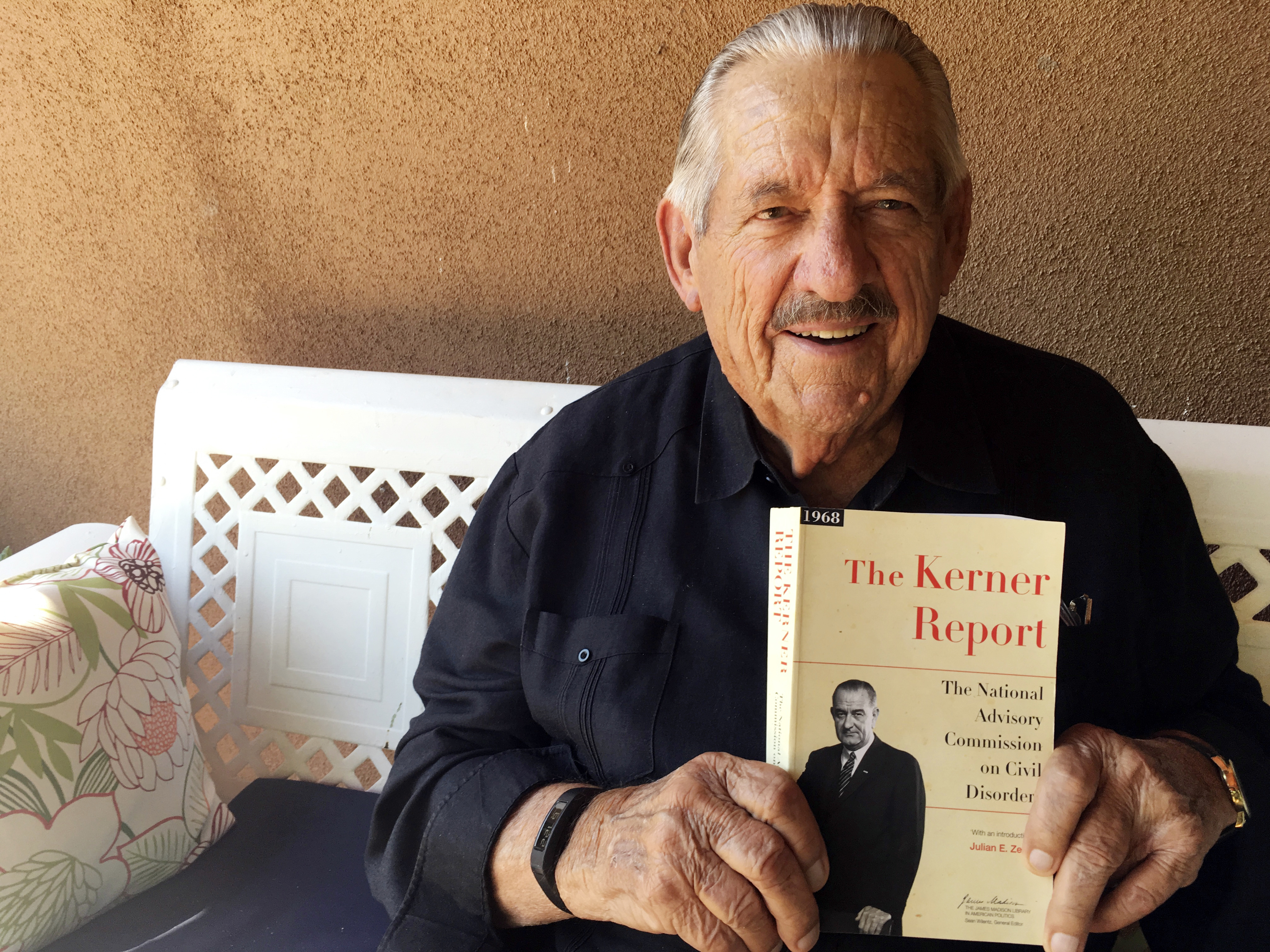 In this Aug. 31, 2017, photo, former U.S. Sen. Fred Harris, of Oklahoma, holds a copy of “The Kerner Report,” at his home in Corrales, N.M., as he discusses the 50th anniversary of the Kerner Commission, a panel appointed by President Lyndon Johnson in 1967 to examine the causes of the 1960s riots. Harris is the last surviving member of the Kerner Commission and he says he remains haunted that its recommendations on U.S. race relations and poverty were never adopted. (AP Photo/Russell Contreras)
“Racial and ethnic inequality is growing worse. We’re resegregating our housing and schools again,” former U.S. Sen. Fred Harris of Oklahoma, a co-editor of the new report and last surviving member of the original Kerner Commission created by President Lyndon Johnson in 1967. “There are few more people who are poor now than was true 50 years ago. Inequality of income is worse.”
The new study titled “Healing Out Divided Society: Investing in America Fifty Years After the Kerner Report” says the percentage of people living in deep poverty – less than half of the federal poverty level – has increased since 1975. About 46 percent of people living in poverty in 2016 were classified as living in deep poverty – 16 percentage points higher than in 1975.
And although there has been progress for Hispanic homeownership since the Kerner Commission, the homeownership gap has widened for African-Americans, the report found. Three decades after the Fair Housing Act of 1968 passed, black homeownership rose by almost 6 percentage points. But those gains were wiped out from 2000 to 2015 when black homeownership fell 6 percentage points, the report says.