

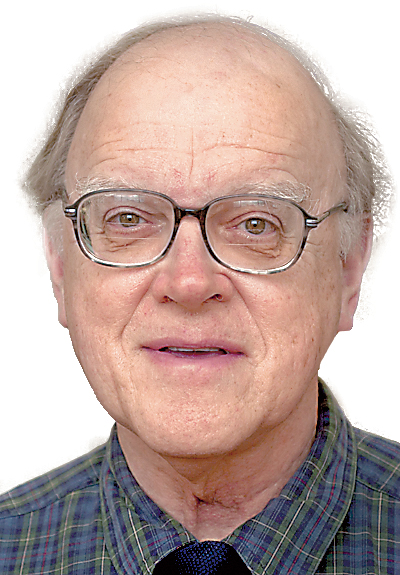
 Dr. Clif Cleaveland
When my wife and I moved to Nashville from Baltimore in 1964 to begin my medical internship and residency, we were denied the right to vote. The head of the election commission determined that we were “students” and not entitled to cast ballots in elections. I was a wage earner. We were 27 and 25 at the time. That decision was overturned three years later. Since that time, I have voted in every election for which I was eligible.
But in this era in which huge sums of money flow into political campaigns, does my vote matter? Does my opinion count when I contact my elected representatives regarding issues that also attract big donations from lobbyists and special-interest groups? Consider the clout of lobbyists and political action committees. These data are derived from the Center for Responsive Politics (www.opensecrets.org).
-Lobbying: In 2016, more than 11,000 lobbyists worked in Washington, D.C., spending $3.15 billion. The top five spenders for the year were the U.S. Chambers of Commerce, National Association of Realtors, Blue Cross/Blue Shield, the American Hospital Association and the Pharmaceutical Research and Manufacturers Association of America.
Rankings of lobbyists by sector, with 2016 expenditures in parentheses, showed health ($512 million) at No. 1, followed by finance/insurance/real estate ($501 million), miscellaneous business ($494 million), communications and electronics ($372 million) and energy/natural resources ($301 million).
-PACs: Each PAC may contribute $5,000 to a candidate’s election committee per election and $15,000 yearly to a national party committee. Donors must be identified.
Super-PACs sprang into existence after the 2010 Supreme Court decision in Citizens United vs. Federal Election Commission. A Super-PAC can accept unlimited contributions from individuals, trade unions and corporations. While prohibited from contributing money to individual candidates and political parties, super-PACs may spend unchecked amounts of money in elections for federal office to support or to attack specific candidates.
For example, the Senate Leadership Fund, a conservative super-PAC, spent almost $85 million in 2016, 97 percent directed at defeat of Democratic candidates. The liberal-leaning Senate Majority PAC spent more than $75 million, $11 million in support of Democratic candidates, $63+ million against Republican candidates. Super-PACs must disclose the identities of donors. A super-PAC can accept unlimited money from political nonprofit organizations, which do not have to disclose donors’ names.
-Political nonprofit organizations: These organizations cannot work directly with a political candidate or political party. They may keep the sources of their funds secret, thus earning the label “dark money.” Political nonprofits may represent educational, religious, social or scientific interests. Contributions may be taxable or tax-deductible, depending upon how the organization was established.
When the barrage of political ads begins on television or online, it is all but impossible to know where the support for the material originates. Who is behind the group briefly identified as the sponsor of an ad? It is up to the individual viewer to check the veracity of the material.
-The plight of the individual citizen-voter: When I submit an email to a representative, I may or may not receive a reply that bears any relationship to the matter that I have raised. Sometimes, I may receive a reply that suggests that someone standing at a machine simply pushes a colored button to match a tab affixed to my message. If I phone an opinion, I presume that it is duly registered. I further presume that a tally is kept regarding opinions on each side of a contentious issue. Individual calls and emails might represent drops of water that eventually form a tide.
But what is the influence of an individual communication with an elected official or a single vote when measured against the thousands of lobbyists and the hundreds of millions of dollars spent to influence the votes of those officials? Is this the reason that participation of registered voters in elections seldom exceeds 50 percent? Is this the basis for rising cynicism among voters?
Can democracy survive huge infusions of cash into political campaigns and legislative deliberations?
I wish I knew the answer.
Clif Cleaveland, M.D., is a retired internist and former president of the American College of Physicians. Email him at ccleaveland@timesfreepress.com.