
Thursday, October 29, 2026Oct 29

This story is free to read.

Stephens: Finding the way forward on Iran

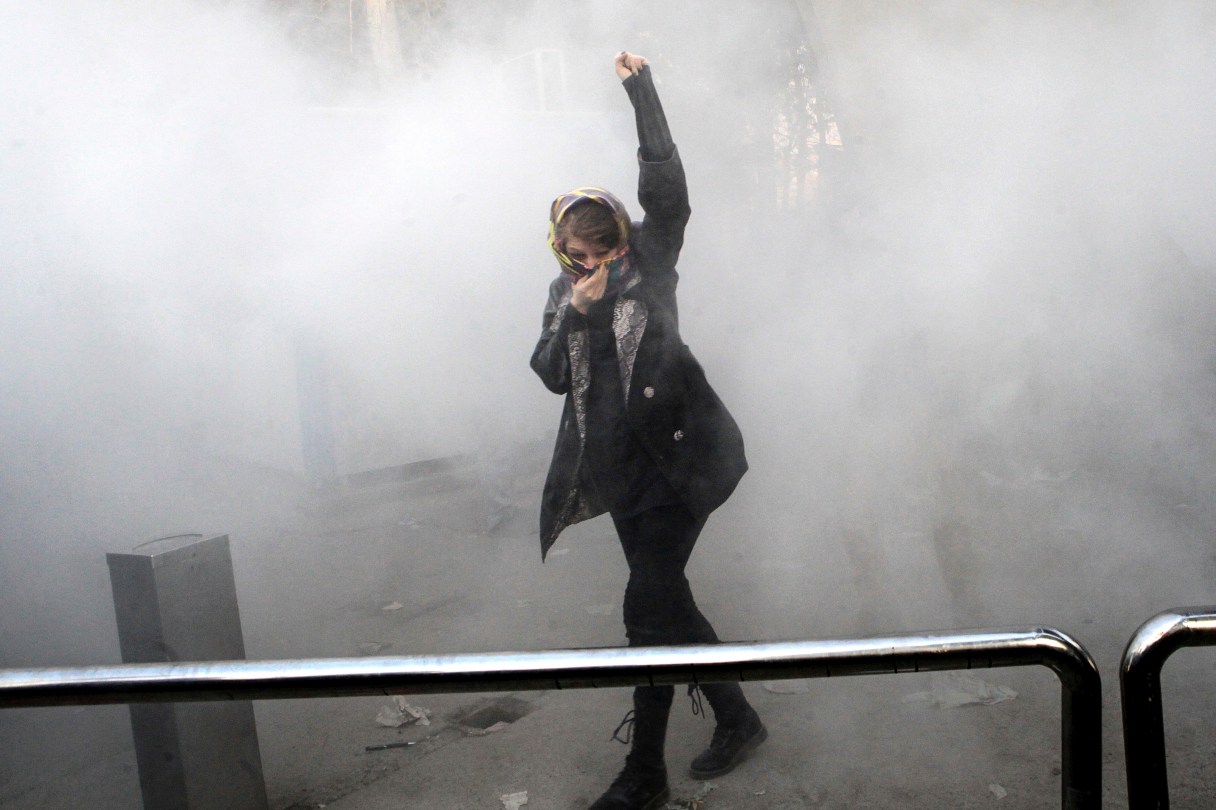
In this Dec. 30, 2017, photo made by an individual not employed by the Associated Press and obtained by the AP outside Iran, a university student attends a protest inside Tehran University while a smoke grenade is thrown by Iranian police, in Tehran, Iran. New unrest in Iran over the past 10 days appears to be waning, but anger over the economy persists. The protests in dozens of towns and cities also showed that a sector of the public was willing to openly call for the removal of Iran's system of rule by clerics -- frustrated not just by the economy but also by concern over Iran's foreign wars and general direction. (AP Photo, File)
In this Dec. 30, 2017, photo made by an individual not employed by the Associated Press and obtained by the AP outside Iran, a university student attends a protest inside Tehran University while a smoke grenade is thrown by Iranian police, in Tehran, Iran. New unrest in Iran over the past 10 days appears to be waning, but anger over the economy persists. The protests in dozens of towns and cities also showed that a sector of the public was willing to openly call for the removal of Iran's system of rule by clerics -- frustrated not just by the economy but also by concern over Iran's foreign wars and general direction. (AP Photo, File) In this Dec. 30, 2017, photo made by an individual not employed by the Associated Press and obtained by the AP outside Iran, a university student attends a protest inside Tehran University while a smoke grenade is thrown by Iranian police, in Tehran, Iran. New unrest in Iran over the past 10 days appears to be waning, but anger over the economy persists. The protests in dozens of towns and cities also showed that a sector of the public was willing to openly call for the removal of Iran's system of rule by clerics -- frustrated not just by the economy but also by concern over Iran's foreign wars and general direction. (AP Photo, File)

Last May an article in The New York Times asked, “Is Iran a democracy or a dictatorship?” After more than a week of protests in as many as 80 Iranian cities, it’s safe to say we have the answer. Again.

So much was apparent from the speed with which the demonstrations, initially about the rising price of eggs, morphed into calls for “death to the dictator,” complete with the burning of images of Supreme Leader Ali Khamenei. So much was apparent, too, from the force with which the regime cracked down on what it branded “sedition.” Real democracies don’t live in fear of their own people.

It’s too soon to say whether the protests have been stamped out, at least for now. But it’s not too soon to start rethinking the way we think about Iran.

For the most part, Western attention focuses on what Iran has – centrifuges, ballistic missiles, enriched uranium – as well as what it does – fund Hezbollah, assist Bashar Assad, arm the Houthis, or imprison the occasional British or U.S. citizen. Administrations of both parties have spent most of their Iran energies trying to cajole or coerce Tehran to relinquish and desist, without much success.

Not nearly enough attention, however, goes to the question of what Iran is.