
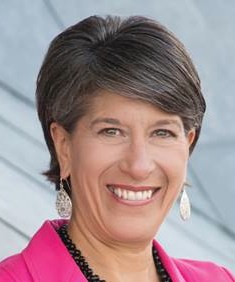
Carol Dweck is a pioneering researcher in the field of motivation. In her book “Mindset,” she addresses why people succeed or don’t and how to foster success through the power of yet.
She tells the story of a Chicago school where students had to pass a series of courses in order to graduate. If they did not successfully pass the courses, they were given the grade of “not yet.” Dweck thought that was brilliant.
“If you get a failing grade, you feel like a failure,” she says, “But if you receive a not yet, it means you are on a growth track.”
In an effort to more fully understand how children cope with challenge and difficulty, Dweck gave a group of 10-year-olds math problems that were slightly too hard for them. Some of the children said things like, “I love a challenge,” or “I was hoping this would be informative.” Dweck says they had a growth mindset because they innately understood their abilities could be developed.
Another group of students thought their inability to solve the problems was tragic. They believed their intelligence was up for judgment, and they failed. In fact, Dweck says that in one study the young students said they would cheat the next time instead of studying more if they failed. They also looked for someone who did worse than they did to make themselves feel better. Dweck refers to these students as having a fixed mindset – believing that personal qualities are carved in stone, which creates an urgency to prove one’s self over and over.