
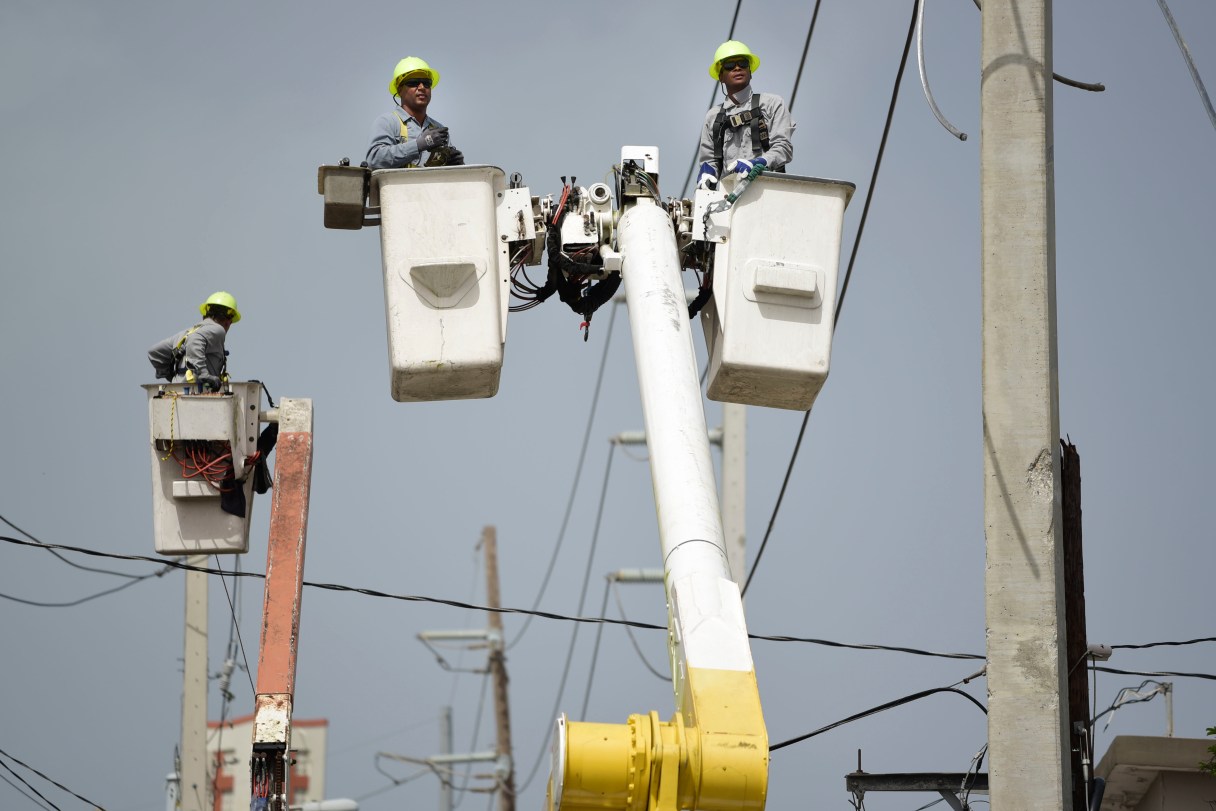
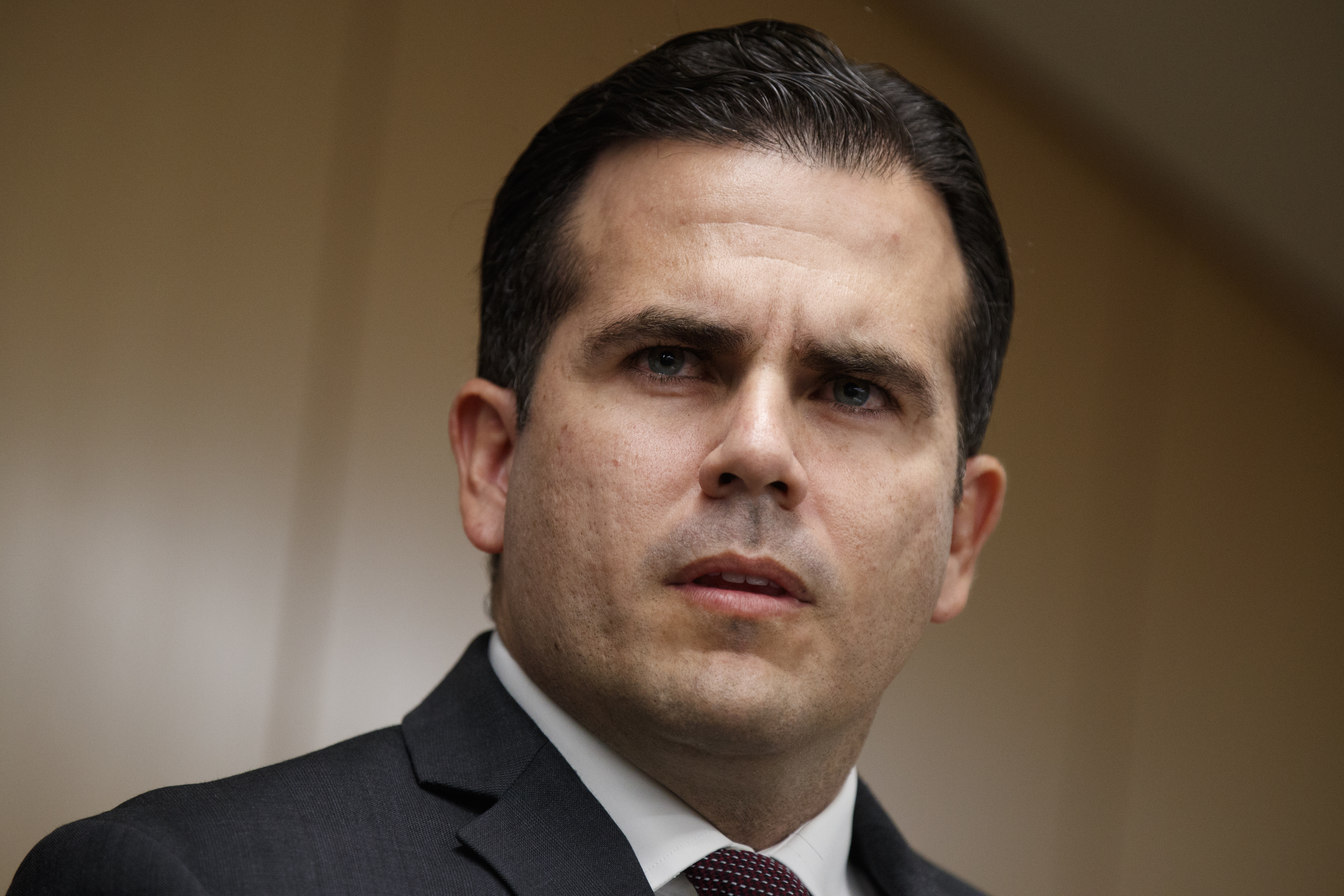
 In this Nov. 13, 2017, file photo, Puerto Rico Gov. Ricardo Rossello speaks during a news conference in Washington. Rosello said on Monday, Jan. 22, 2018, that he is privatizing the island’s government-owned power company following decades of mismanagement, corruption and blackouts. (AP Photo/Evan Vucci, File)
One of the largest public utilities in the U.S. might soon be up for sale, but many wonder who would want to buy a power company that is worth roughly half of the $9 billion debt it holds and has an infrastructure nearly three times older than the industry average.
Concerns also are growing about whether plans to privatize Puerto Rico’s Electric Power Authority will translate into more affordable electric bills and better service. People in the U.S. territory say they cannot afford another financial blow amid an 11-year-old recession and many complain about receiving high power bills after Hurricane Maria when they didn’t even have electricity.
“Some people have faith that privatization will improve everything, but it’s not a guarantee,” said Puerto Rico economist Jose Caraballo. “If a good deal isn’t hammered out, Puerto Rico can end up worse than it is.”
The power company once known as the government’s crown jewel has seen a reduction in employees and a drop in the demand for energy amid a deep economic crisis and recent austerity measures. The agency now has some 5,800 employees and serves nearly 1.5 million customers with infrastructure that is roughly 45 years old, which officials say caused frequent power outages before the hurricane and an island-wide blackout in September 2016 that lasted a couple of days.
The company also has long been criticized for political patronage and inefficiency, and recently faced accusations of corruption. In June 2016, the owner of the U.S. territory’s biggest oil supplier was arrested after being charged with misappropriating $11 million in public funds. Jose Gonzalez Amador and his company, PetroWest, are accused of charging the power company a 0.5 percent municipal tax even though some municipalities granted them a lower rate or waived the tax altogether. Authorities say the charge was then passed on to consumers.