
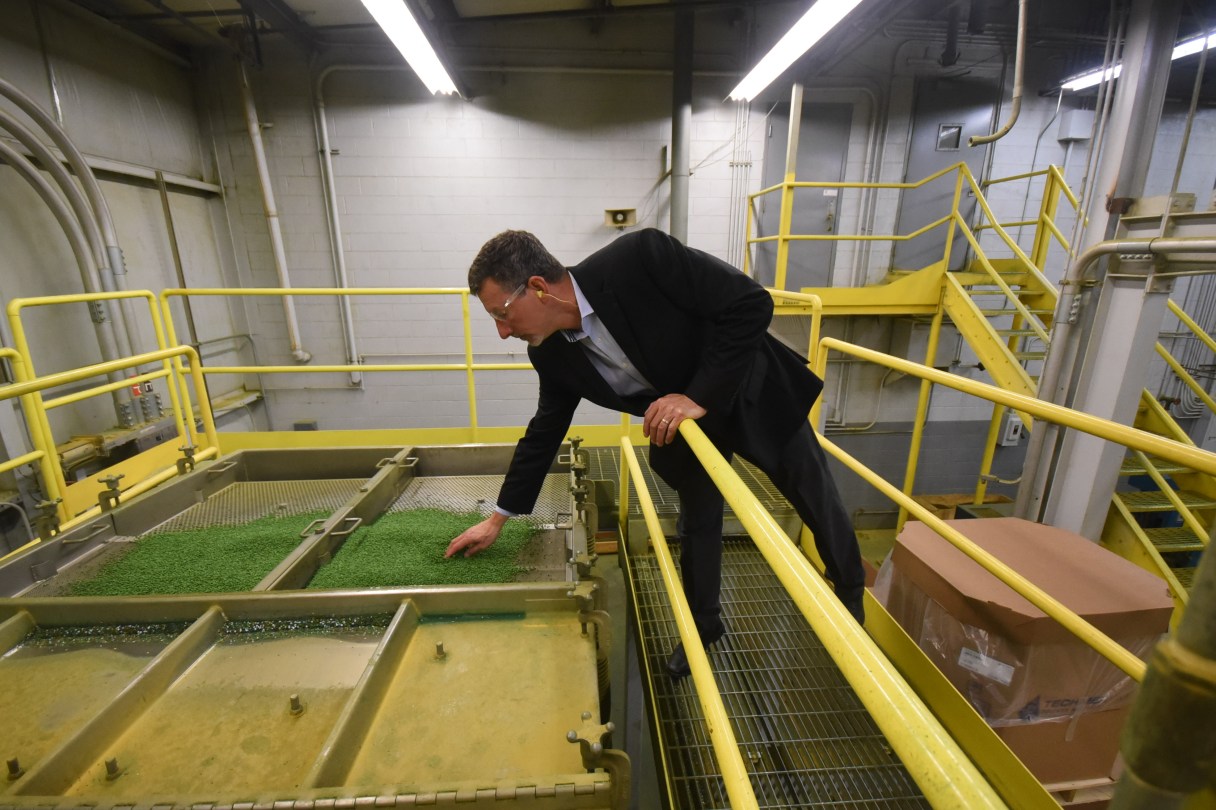
TenCate has a long history in Dayton, Tenn., where its synthetic fibers production plant operates 24 hours a day, seven days a week making upwards of 32 million pounds of yarn annually.
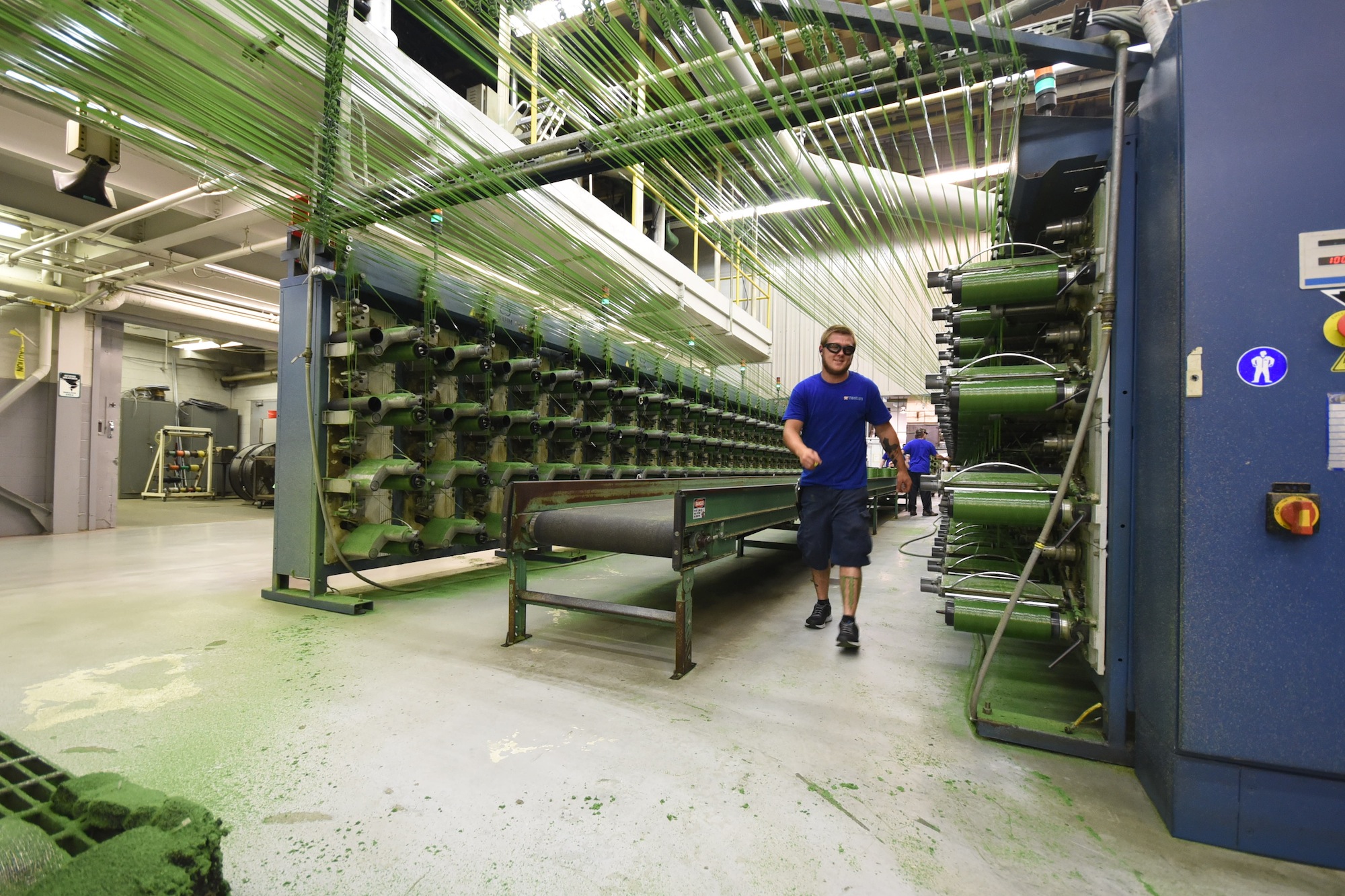 D.J. Alley works on the film line. The material is spooled on the line and used in the production of synthetic grass.
More than 30 percent of all synthetic sports fields in the United States feature TenCate yarn, according to the company. Product that doesn’t go into sports surfaces is used in synthetic grass for landscaping purposes, says Matt Stubblefield, the plant’s vice president of operations.
“People all over the world buy from us. We send it anywhere,” says Stubblefield about the Dayton factory that this spring marked its 50th year and serves as the Dutch company’s American headquarters.
Employing 225 workers, the company over the past two years has plowed about $5 million in capital investments into the facility that employs 225 people, says Stubblefield.
Last year, TenCate revenues from its Dayton site hit about $80 million, he says. The company is becoming more vertically integrated, from production of the yarn used in making synthetic grass to installation, Stubblefield says. That all helps the bottom line, he says.
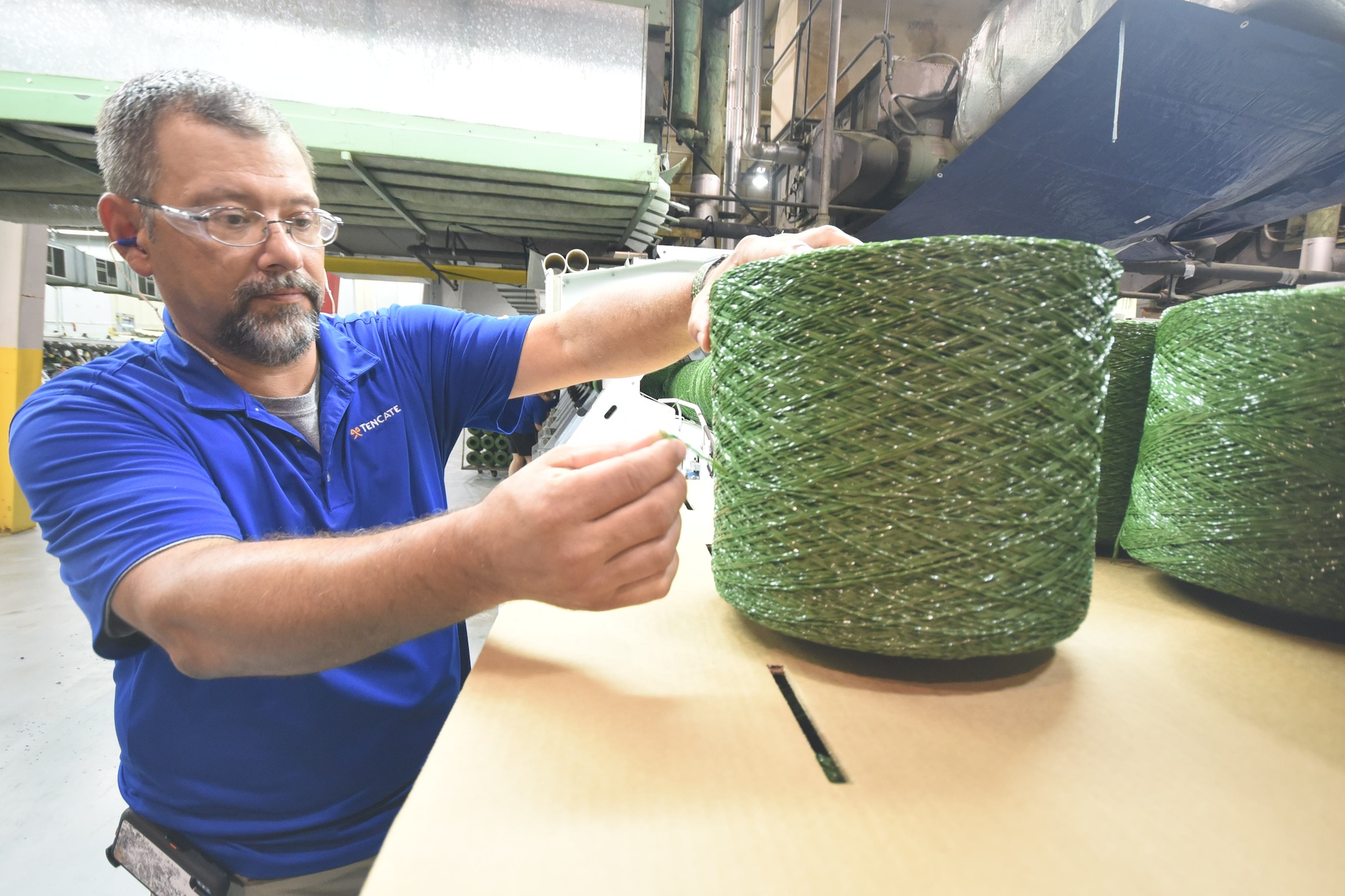 Earl Thurman, plant superintendent at Tencate, checks a spool of synthetic yarn. The plant makes upwards of 32-million pounds of yarn annually.
TenCate recently started up a new loom at the plant, which now helps the facility produce about 15 percent of its finished product, the TenCate vice president says.
Dennis Tumlin, Rhea County’s economic and community development executive director, terms TenCate a “solid company” and “a pillar” in Dayton.
“They’re still investing into the plant,” he says.
TenCate also has a Dalton, Georgia, factory. Earlier this year, TenCate bought a controlling interest in the longtime Dalton venture Challenger Industries to create the largest landscape turf business of its type in the United States.
Challenger was the largest independent manufacturer of artificial grass, serving the landscape, sports and residential markets. The company employs about 100 people at its 250,000-square-foot facility in Whitfield County.
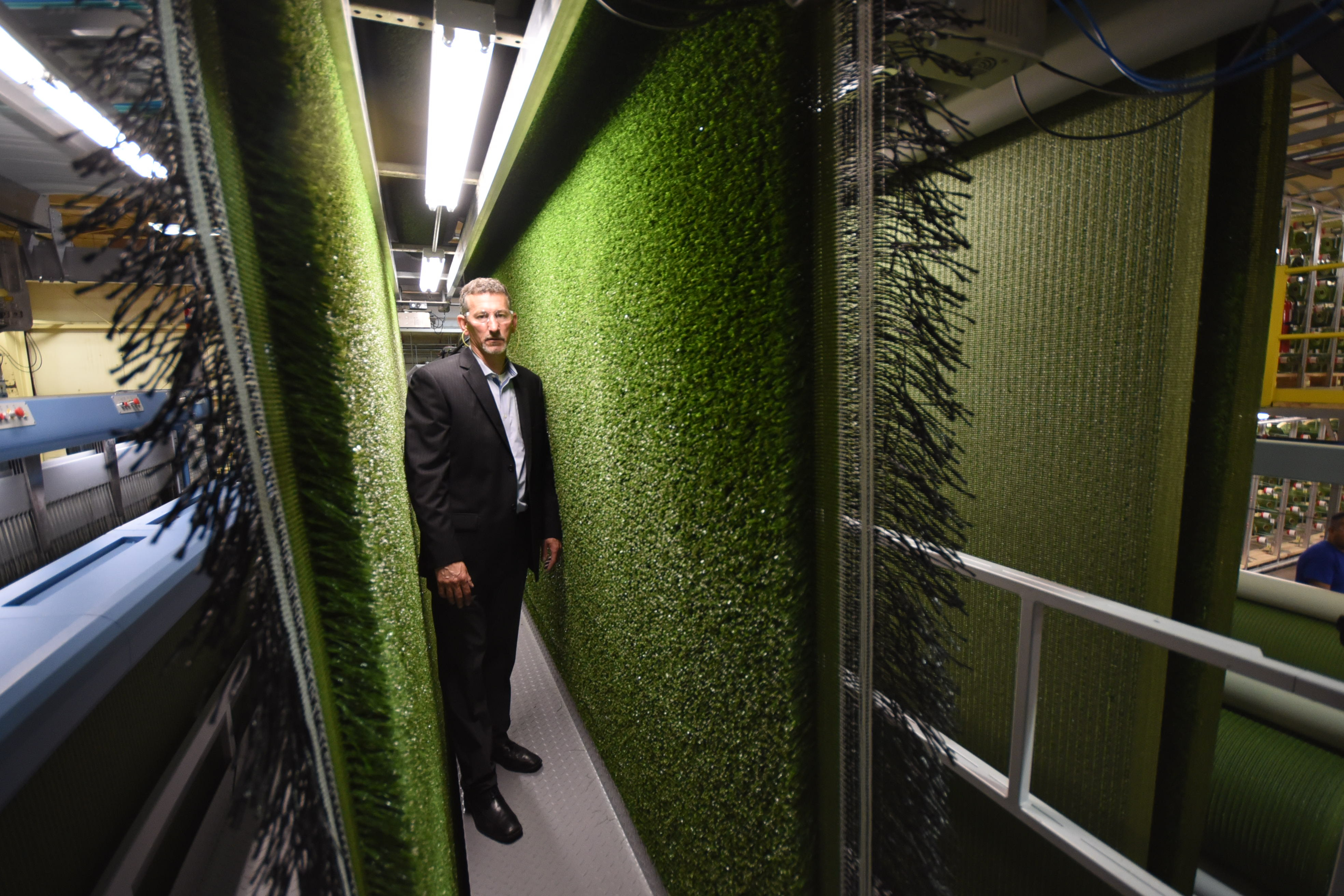 Matt Stubblefield stands between nearly finished synthetic grass inside the TenCate manufacturing plant in Dayton, Tennessee. The product is used for athletic fields and in landscaping.