
Monday, November 16, 2026Nov 16

NFL players union files grievance over anthem policy

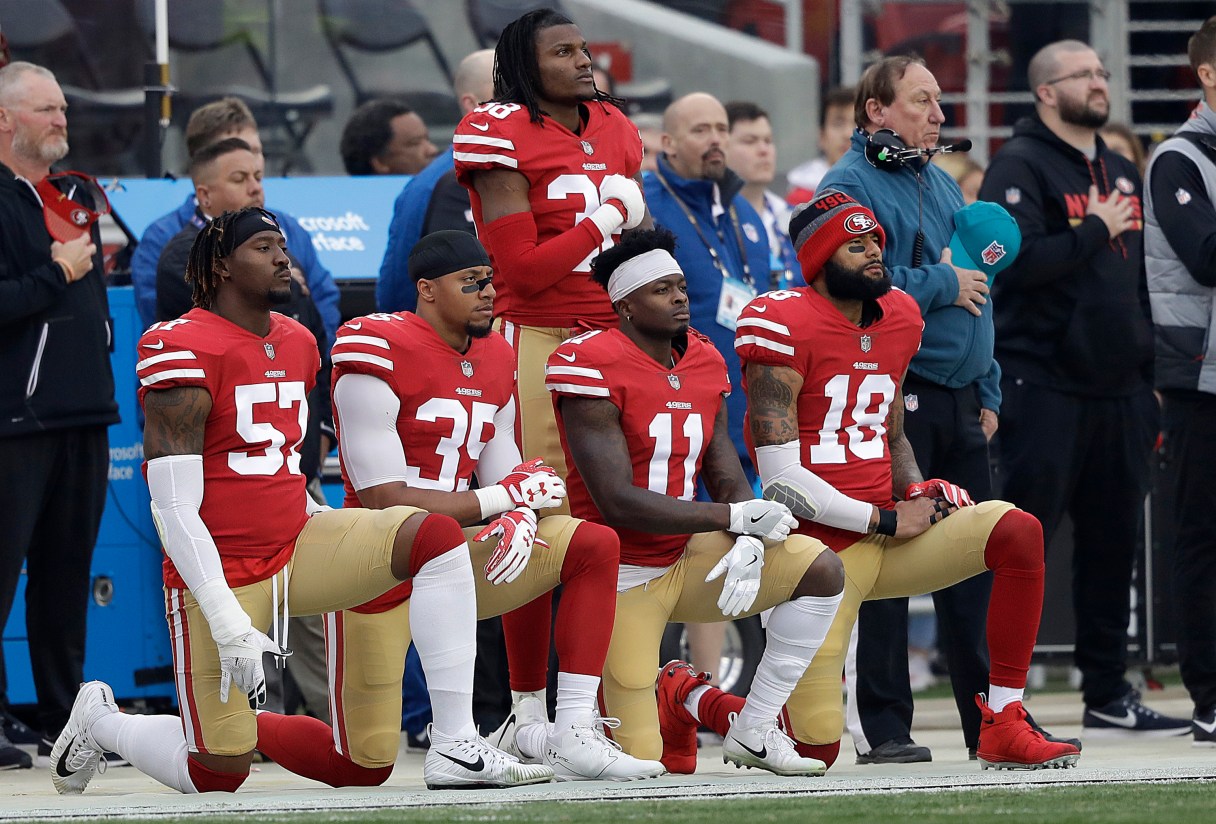
FILE - In this Dec. 24, 2017, file photo, San Francisco 49ers outside linebacker Eli Harold, from bottom left, kneels with safety Eric Reid, wide receiver Marquise Goodwin and wide receiver Louis Murphy during the national anthem before an NFL football game against the Jacksonville Jaguars in Santa Clara, Calif. The NFL Players Association filed a grievance with the league challenging its national anthem policy. The union says that the new policy, which the league imposed without consultation with the NFLPA, is inconsistent with the collective bargaining agreement and infringes on player rights. (AP Photo/Marcio Jose Sanchez, File)

NEW YORK (AP) – The NFL Players Association filed a grievance with the league on Tuesday challenging its national anthem policy.

The union says that the new policy, which the league imposed without consultation with the NFLPA, is inconsistent with the collective bargaining agreement and infringes on players’ rights.

In May, the NFL approved its national anthem policy at its owners meetings in Atlanta. The policy allows players to protest during the national anthem by staying in the locker room, but forbids them from sitting or taking a knee if they’re on the field or the sidelines.

Teams will be subject to fines if players don’t comply and will have the option of punishing players.

When the league announced the policy, Commissioner Roger Goodell called it a compromise aimed at putting the focus back on football after a tumultuous year in which television ratings dipped nearly 10 percent; some blamed the protests for such a drop. The union said at that time that it would file a grievance against any change in the collective bargaining agreement.