
 Brandon Lester
 learned a lot while attending the University of Tennessee at Chattanooga – a lot about fishing, specifically. A small-town boy from Fayetteville, Tennessee, Lester fished his first bass tournament on Tims Ford Lake when he was 16. He won it, and the $250 payday launched a passion that took him to the highest level of tournament bass fishing.
Lester is a Bassmaster Elite Series pro and a three-time qualifier for the Bassmaster Classic, “the Super Bowl of bass fishing.” He spends 10 months of the year on the road, driving all over the country to fish as part of a small and extremely competitive group of anglers good enough to make a living on this invite-only circuit.
“I’ve been from California to the East Coast, as far north as you can go without getting to Canada, and as far south as Okeechobee,” he says, while fine-tuning lures for the next day’s event at Kentucky Lake in Paris, Tennessee. “I put 30,000 miles a year on my vehicle and I love it. It’s all I’ve ever wanted to do.”
The dream of fishing professionally lured Lester to Chattanooga in 2010. After graduating Lincoln County High School, he attended community college before enrolling at UTC to pursue a degree in marketing and to fish for the school’s tournament team.
As a Moc, Lester qualified for the national championships twice and fished tournaments all over the Southeast. He also spent a lot of time downtown, walking the banks of the Tennessee River with a rod and reel. It gave him a deeper understanding of how fish relate to current and structure in a river.
“I fished that river from the aquarium all the way up to the dam,” he says. “I fished pretty much everywhere you can get down to the river from the bank.”
Lester also saw the business side of fishing at UTC. As weird as it sounds, business school is a path to professional fishing. At the pinnacle of the sport, marketing yourself to sponsors is as important as catching fish.
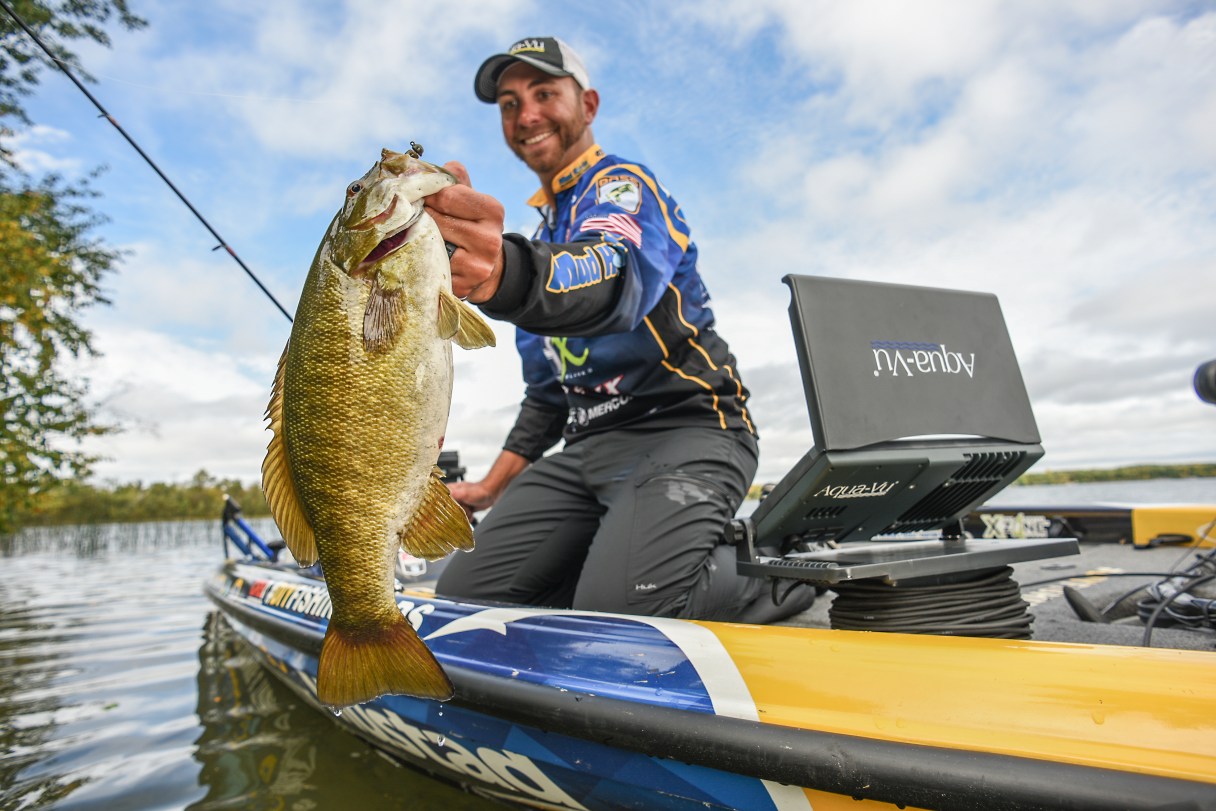
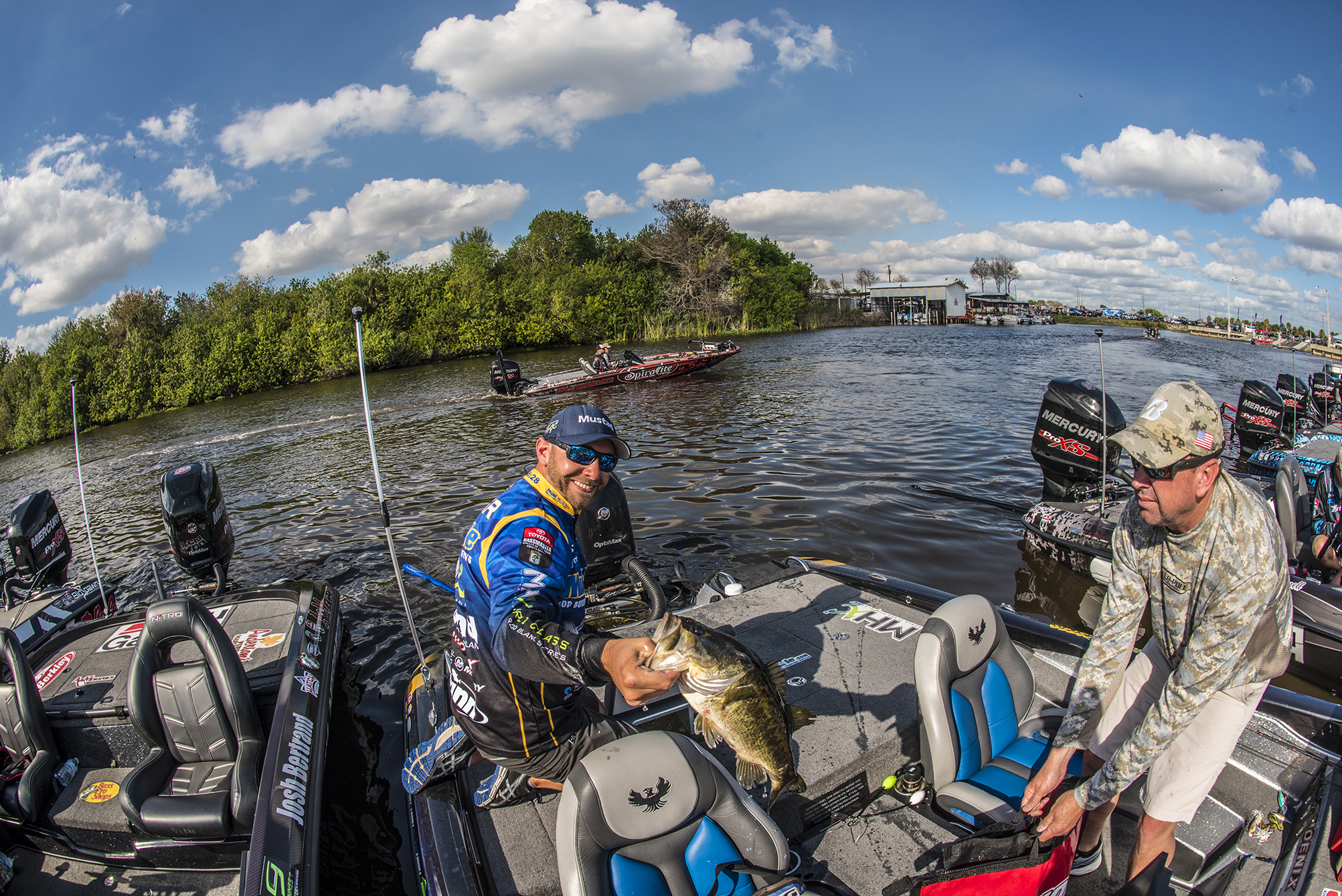
 This giant Chickamauga largemouth is a good example of why Lester ranks the lake among his favorites on the tournament circuit.
It is big business. At each Elite Series tournament, 108 anglers compete for payouts awarded based on the weight of bass they bring to the scales over several days of fishing. Each angler weighs in their heaviest five fish each day, after which the fish are released back into the water.
The top prize at each event is $100,000, and the top 50 anglers earn a check. Anglers must perform well enough to be invited back each year as well as to qualify for the Bassmaster Classic, where the top prize is $300,000.
There is a lot of money to be made, but it’s expensive to stay in the game. That’s where sponsors come in. In addition to providing boats, electronics, rods, reels and tackle, sponsors pay anglers. With a little more than $350,000 in tournament earnings since 2014, Lester relies on sponsors to keep his team afloat.
Another price tournament anglers pay is time away from family. Lester has a 6-year-old stepdaughter with his wife Kimberly, and they just welcomed a baby girl to the family this spring.
On the final day of the Grand Lake, Oklahoma tournament April 29, Lester stepped onto the stage to weigh a sack of fish for a solid sixth-place finish.
“[There’s] two things I ever wanted in my life: to be a professional fisherman and to be a daddy,” Lester told the announcer. “And I am. So I’m a very, very blessed man.”
Lester has a long season before the 2019 Bassmaster Classic March 15-17 on the Tennessee River in Knoxville. His hours spent walking the banks in Chattanooga will undoubtedly help him when he launches his boat at the big show a little more than 100 river miles upstream.
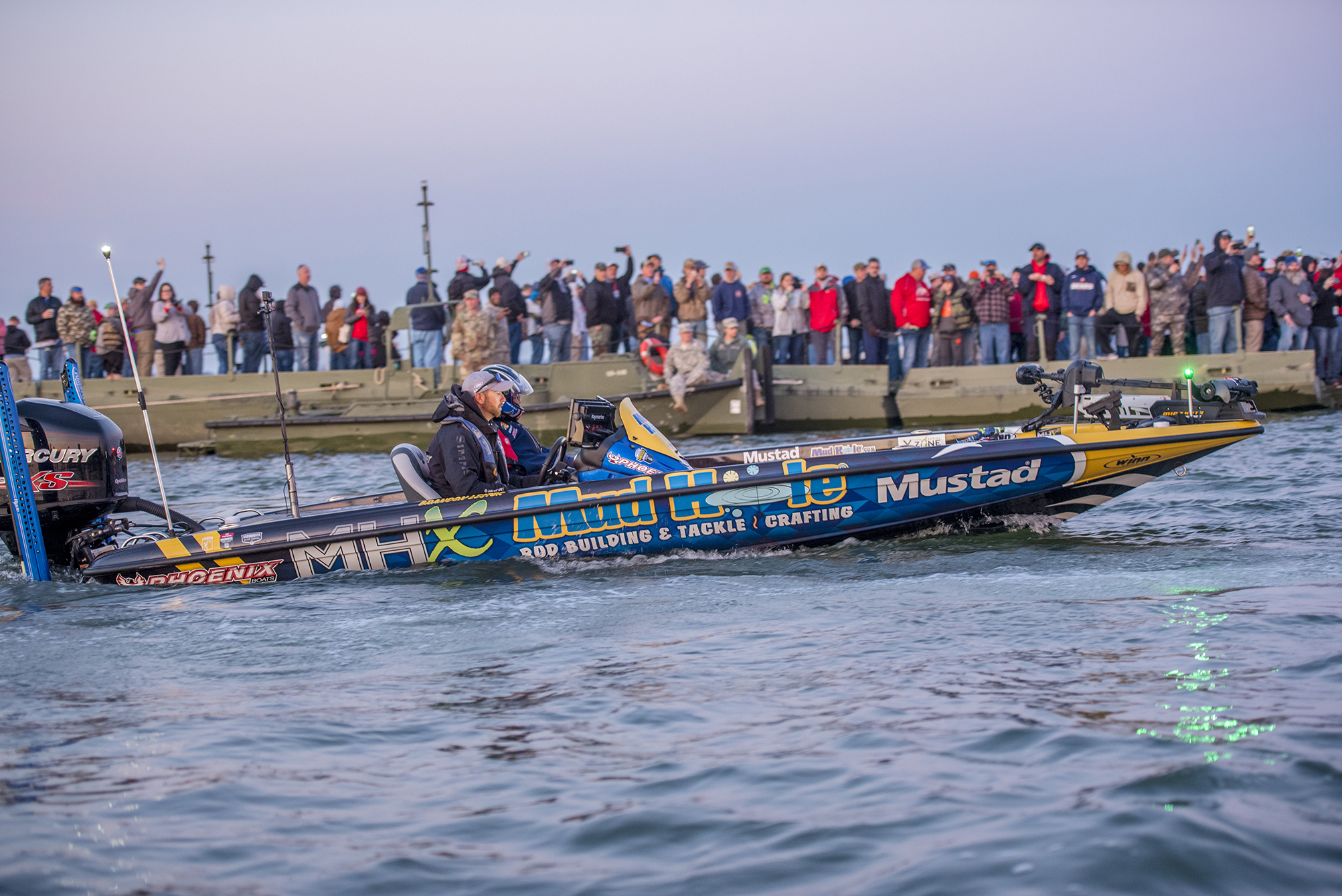 “the Super Bowl of bass fishing.”
Best Bets
Because it’s his job, Tennessee native Brandon Lester has fished all the best waters in the country. Both near and far, here are Lester’s best bets for anglers.
» Chickamauga Lake: In 1995 the state released fast-growing Florida strain largemouth bass into Chickamauga. Introducing those genetics to the existing bass population paid off big-time. Chickamauga is known worldwide as a big-bass factory. “You’ve got a chance to catch a state record on any cast,” Lester said.
» Nickajack Lake: On the river between Chickamauga and Guntersville, big largemouths are also the draw at Nickajack. The potential for big numbers of smallmouth bass is there as well. Lester likes Nickajack’s river-run feel, which reduces the dependence on sonar equipment for fishing offshore ledges. “It’s old-school, beat-the-bank fishing,” he said.
» Tims Ford Lake: This beautiful highland reservoir near Winchester, Tenn. is Lester’s home water. “It will always be special to me,” he said. “It’s where I cut my teeth.” Deep, clear and rocky, Tims Ford has great smallmouth fishing on its upper end and good largemouth fishing down around the dam. It’s also Lester’s favorite place to pitch jigs for big slab crappie in winter.
» Lake Champlain: Hard on the Canadian border, fishing Lake Champlain out of Plattsburgh, N.Y, is one of the highlights of Lester’s job. “It’s just chock full of fish. It has big smallmouths and largemouths. It’s such a healthy fishery,” he said. Champlain is also a diverse fishery, with lots of rock piles, big bays and some grass.
» Toledo Bend: Straddling the Texas/Louisiana border, Toledo Bend has received the top spot in Bassmaster’s annual Top 100 list several times. It receives a ton of fishing pressure with such a high profile on the scene, yet it still pumps out giant largemouths. Visiting Toledo Bend should be a pilgrimage for anglers who enjoy fishing grass, hydrilla and standing timber.