
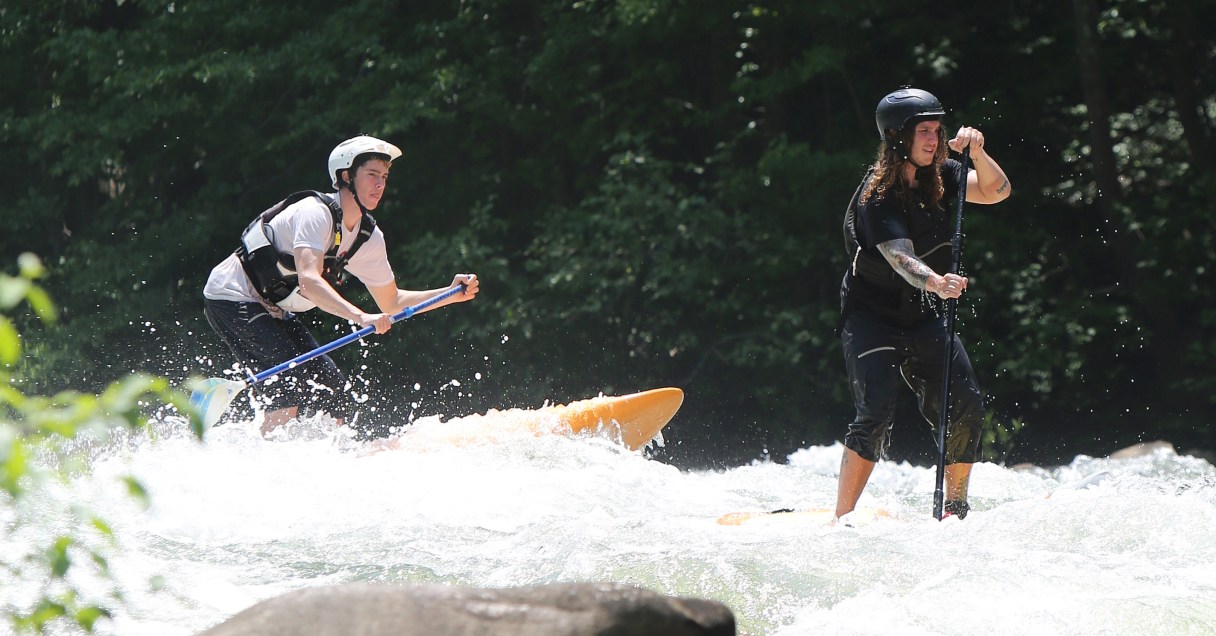
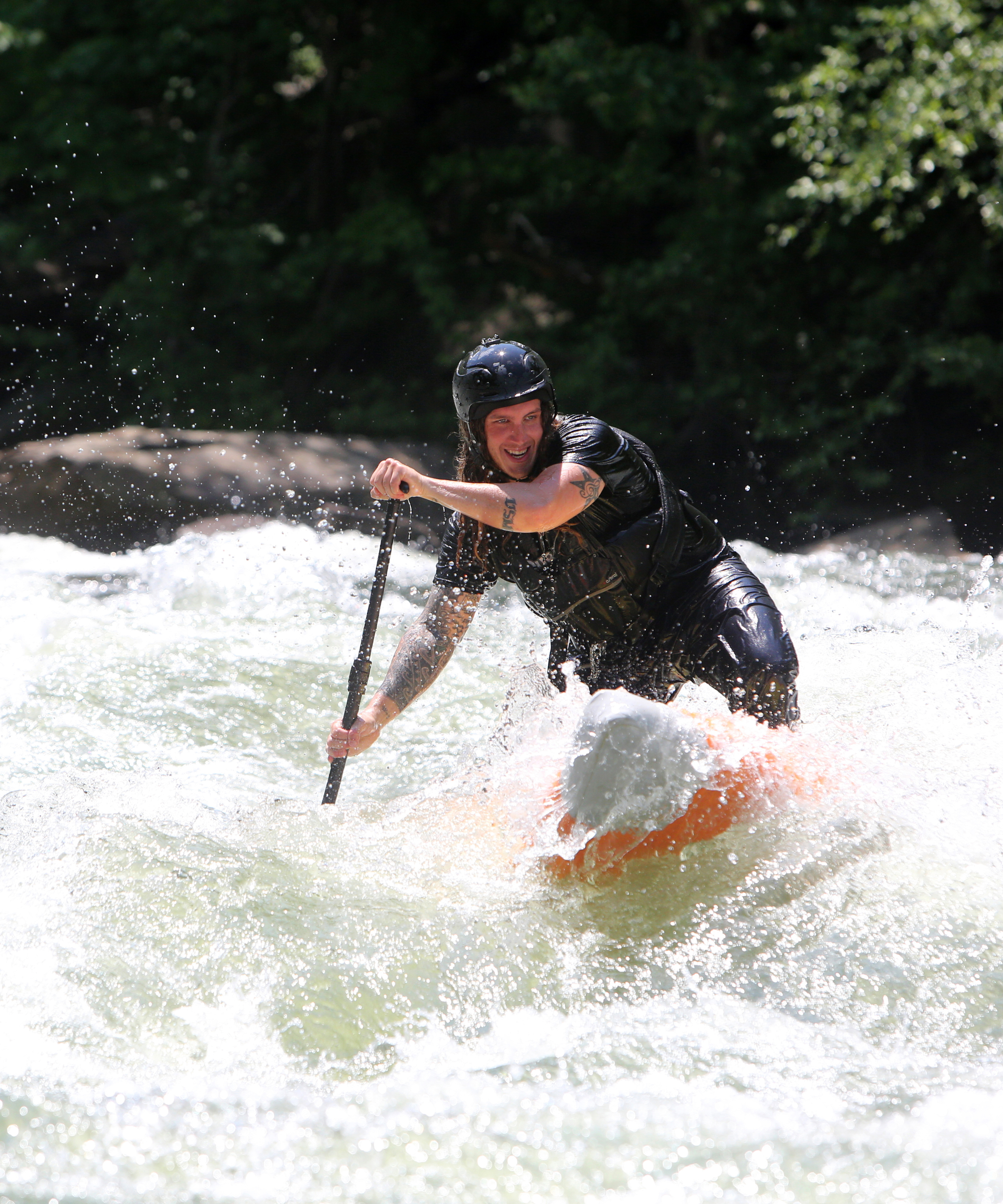
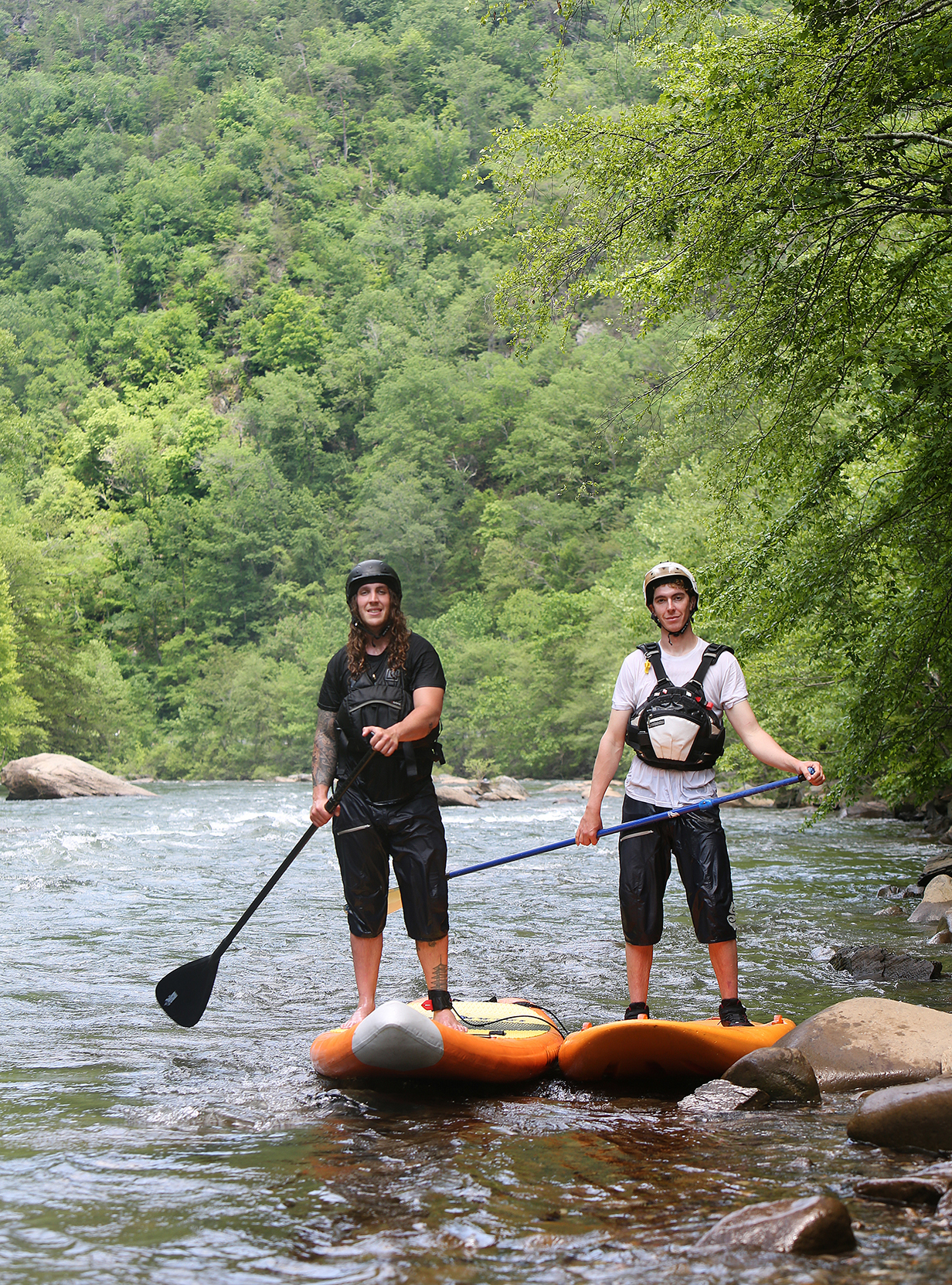
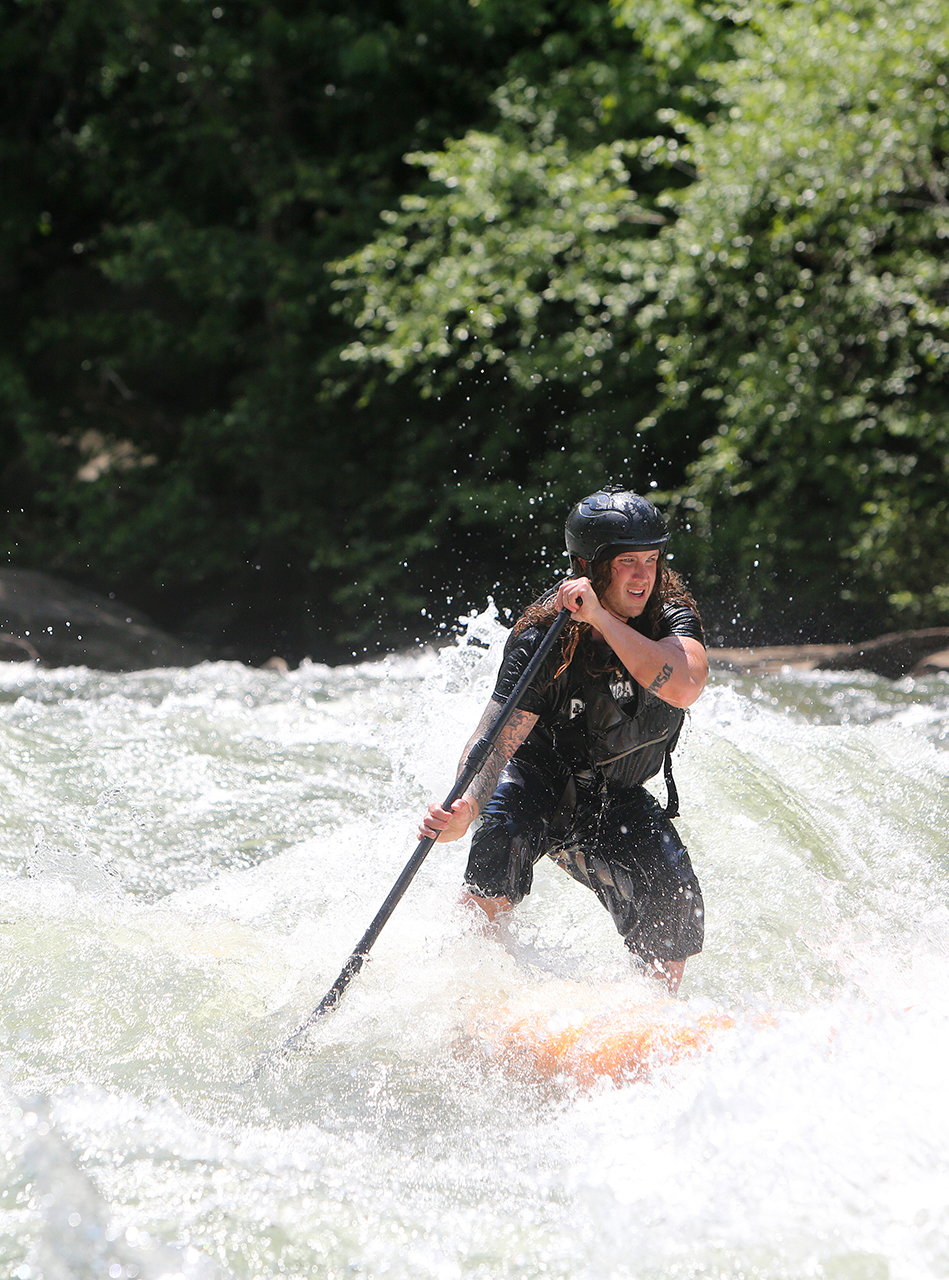
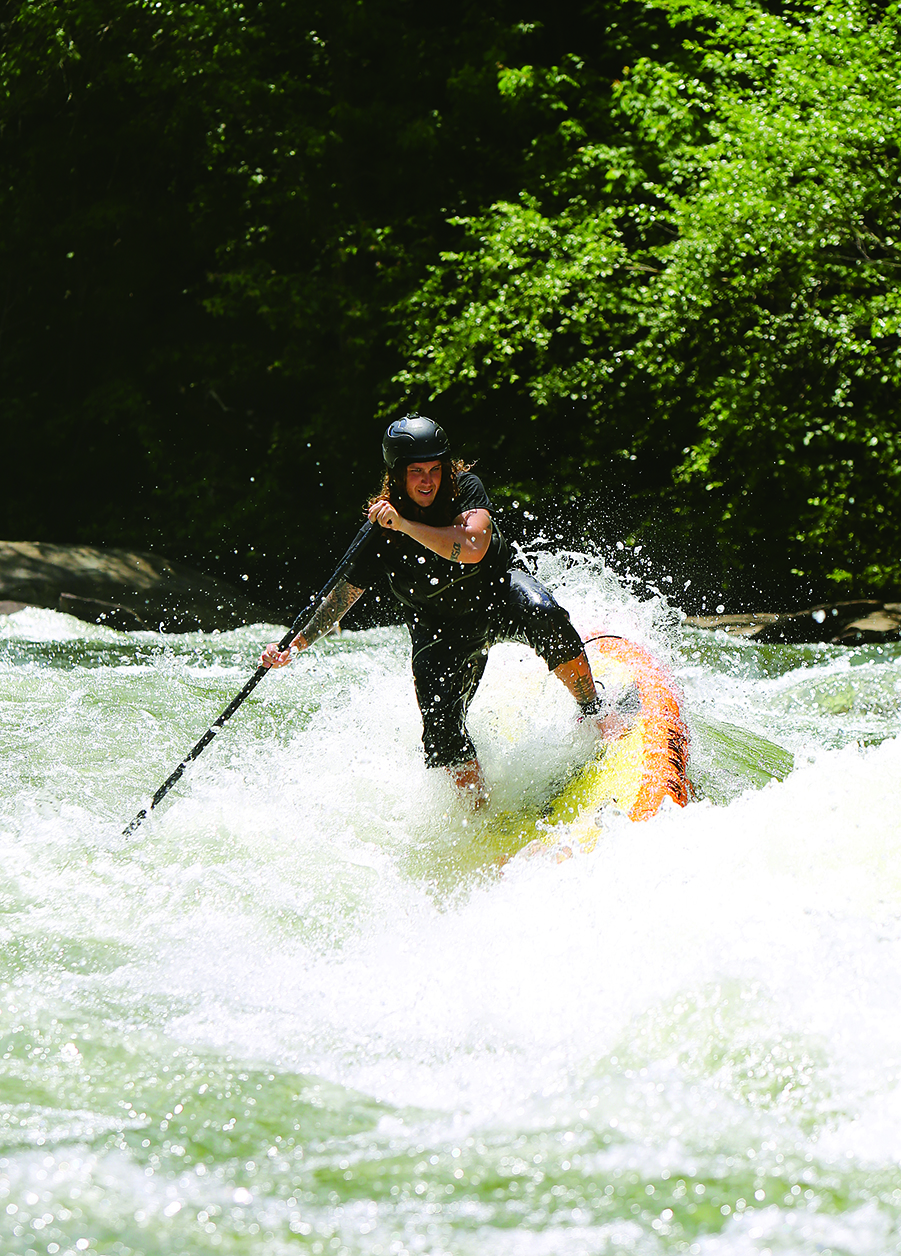
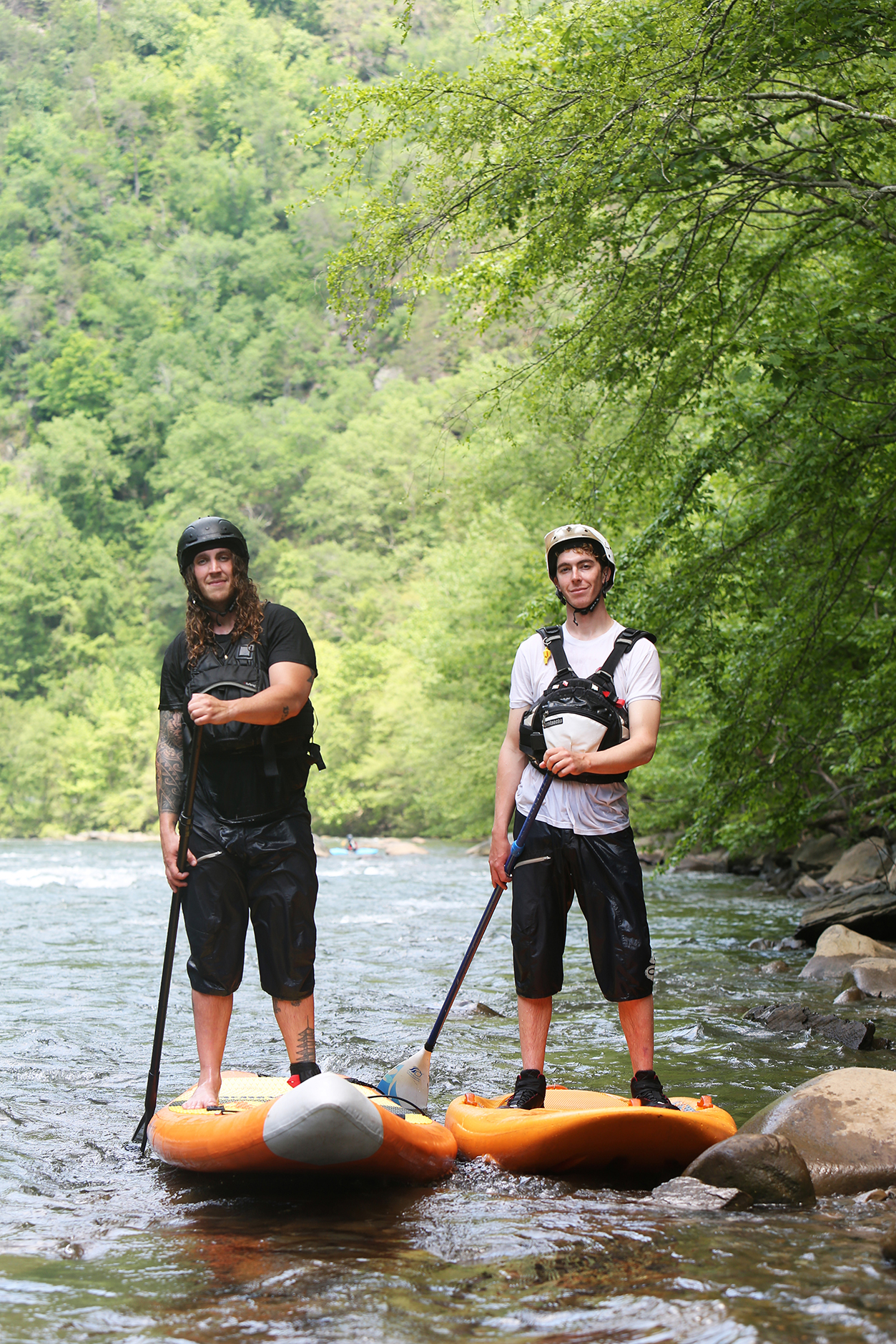
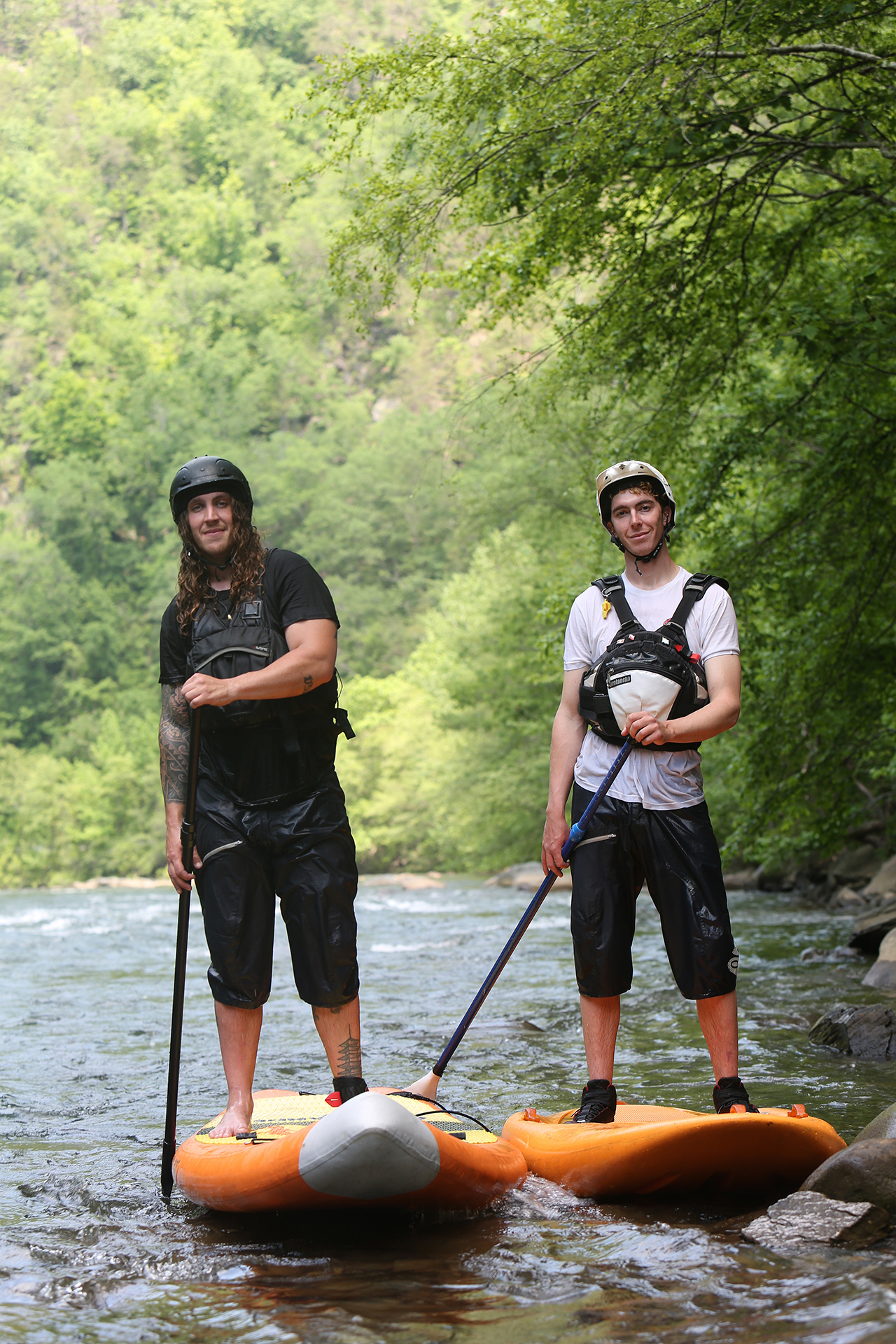
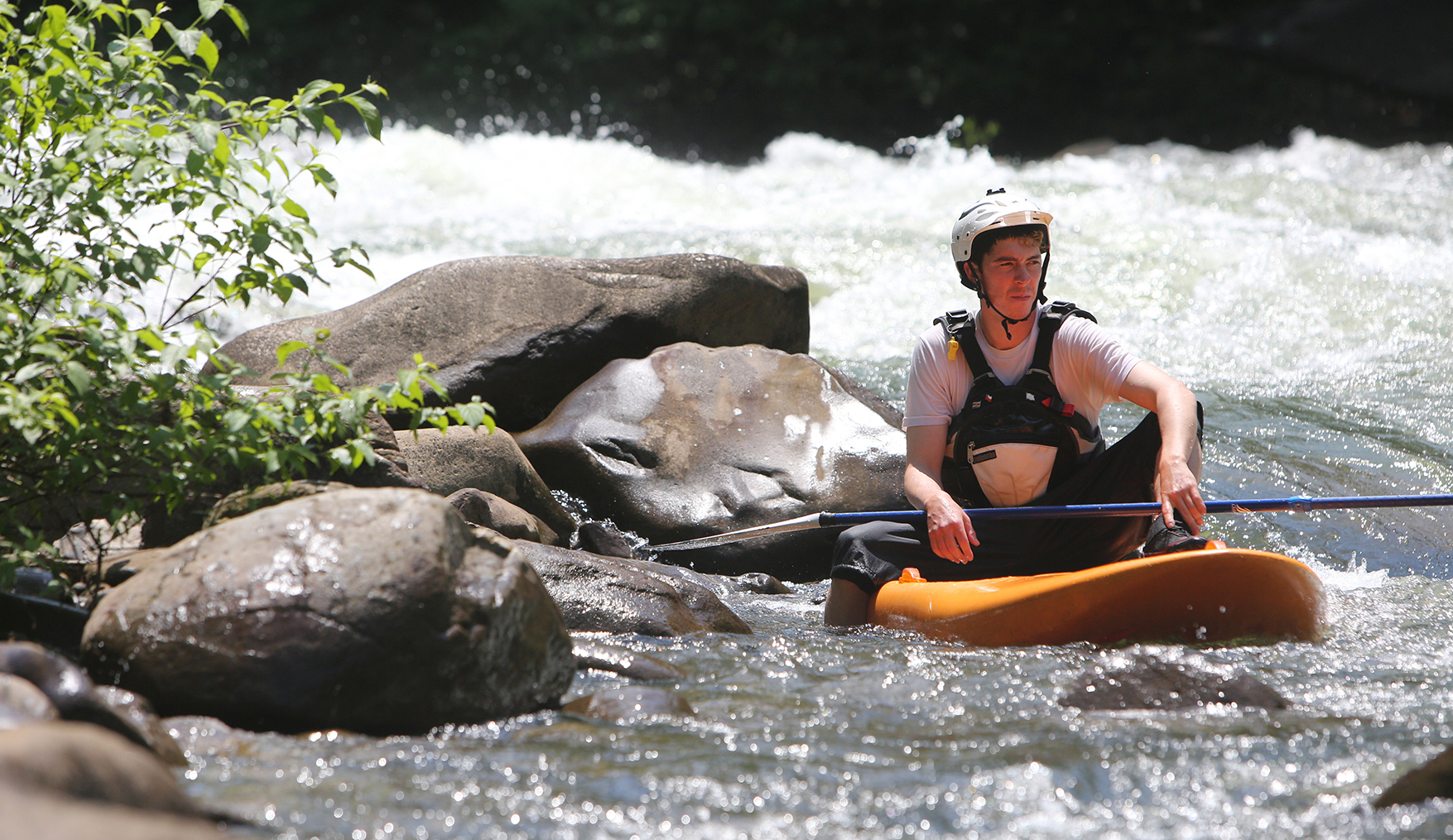
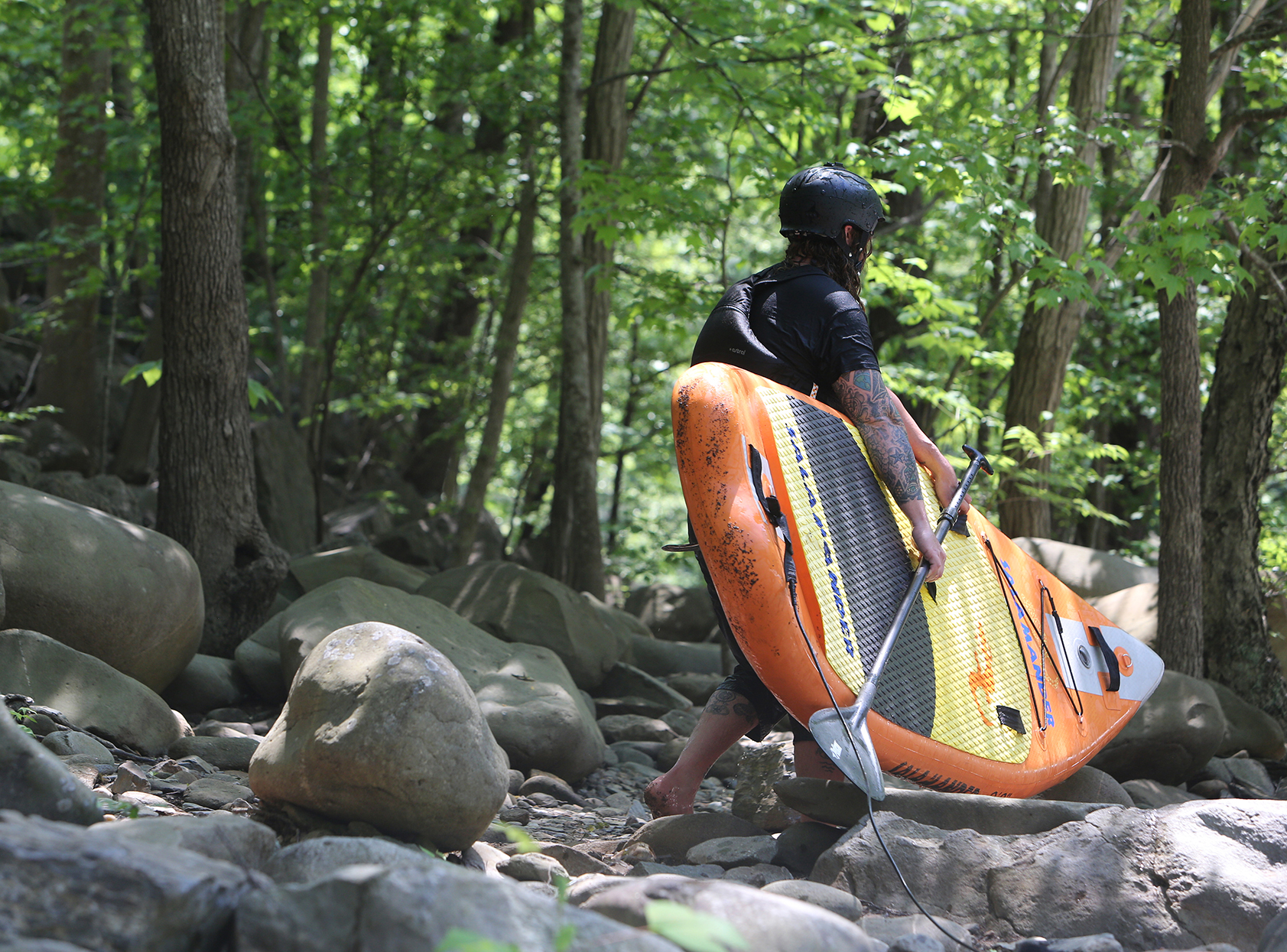
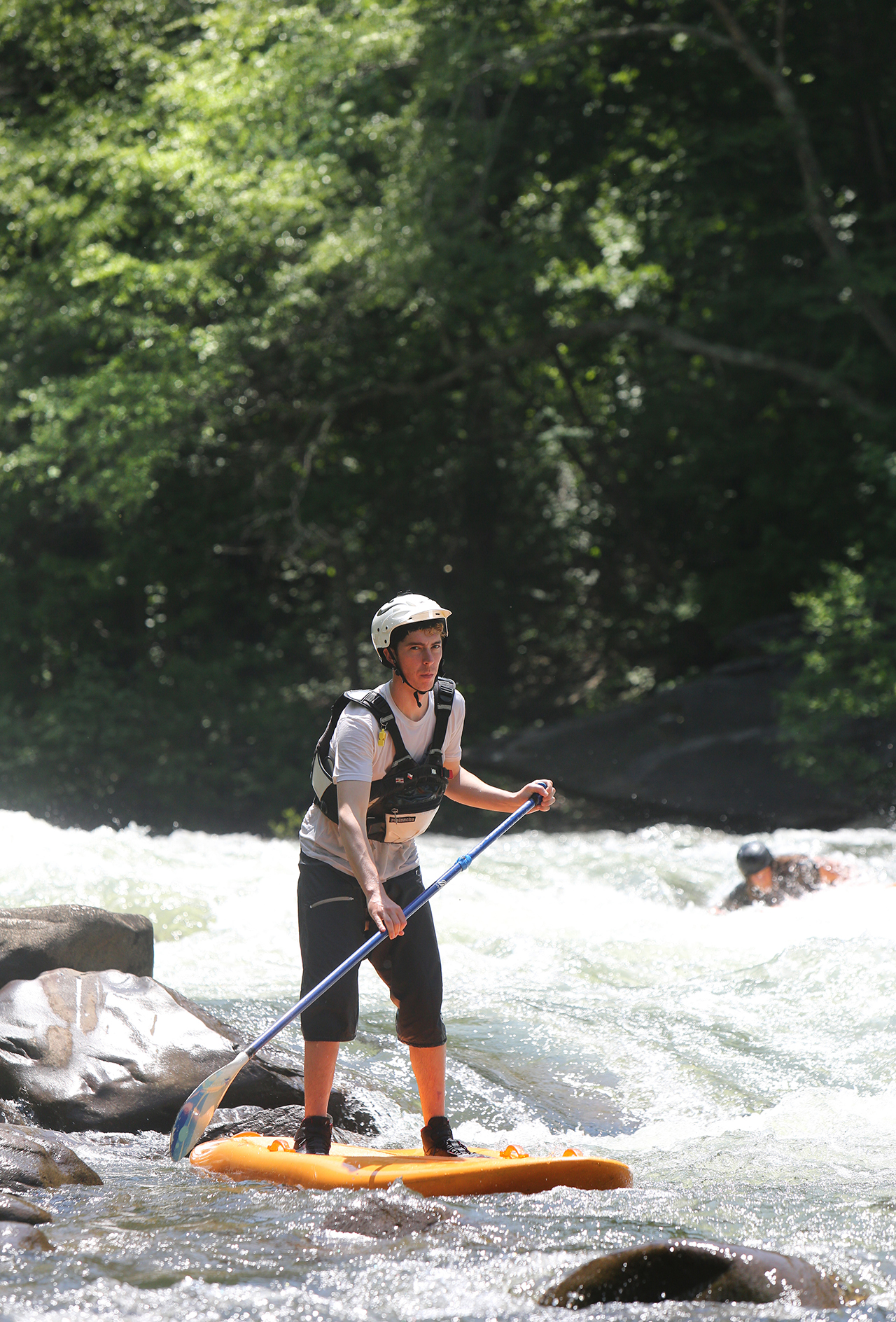
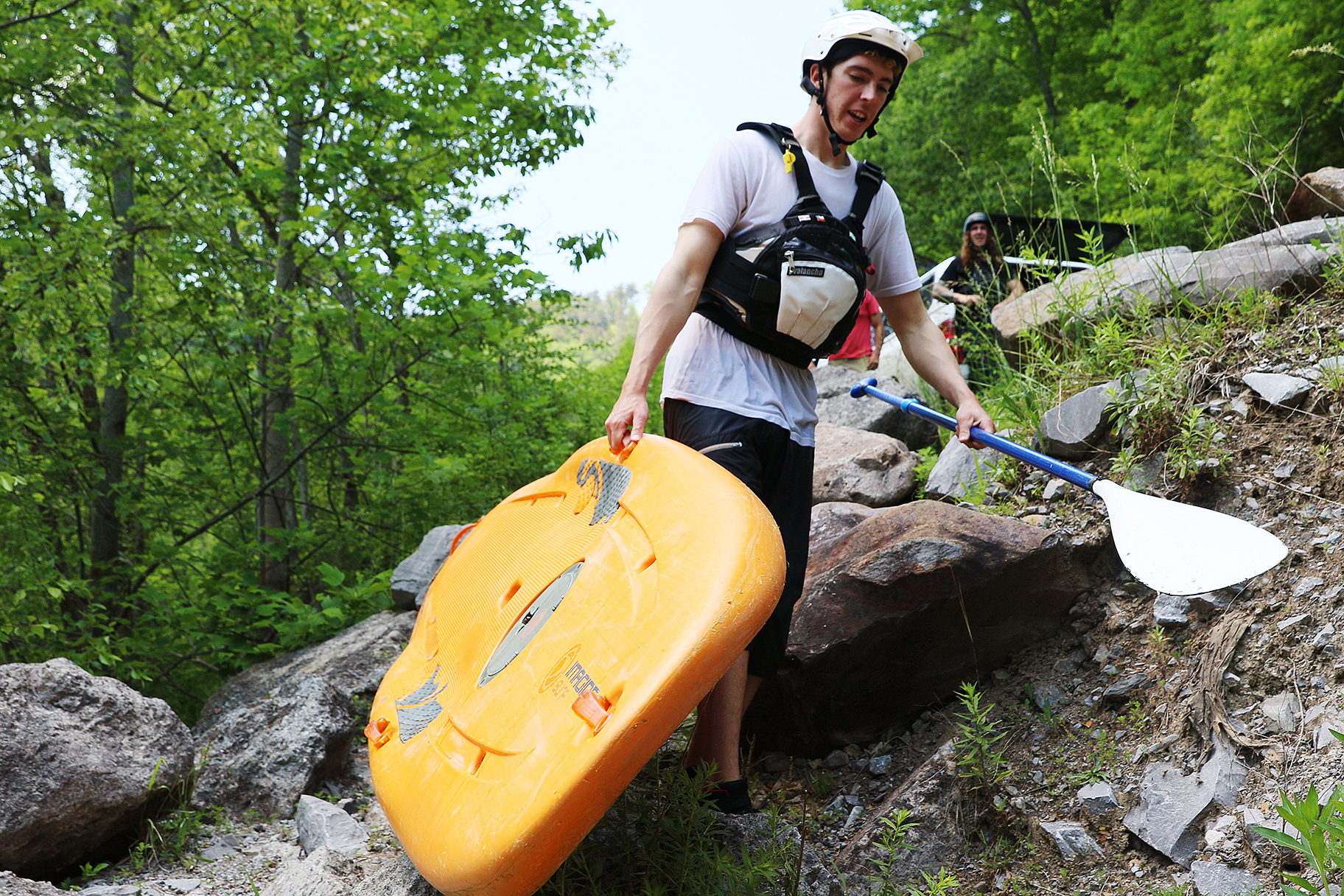
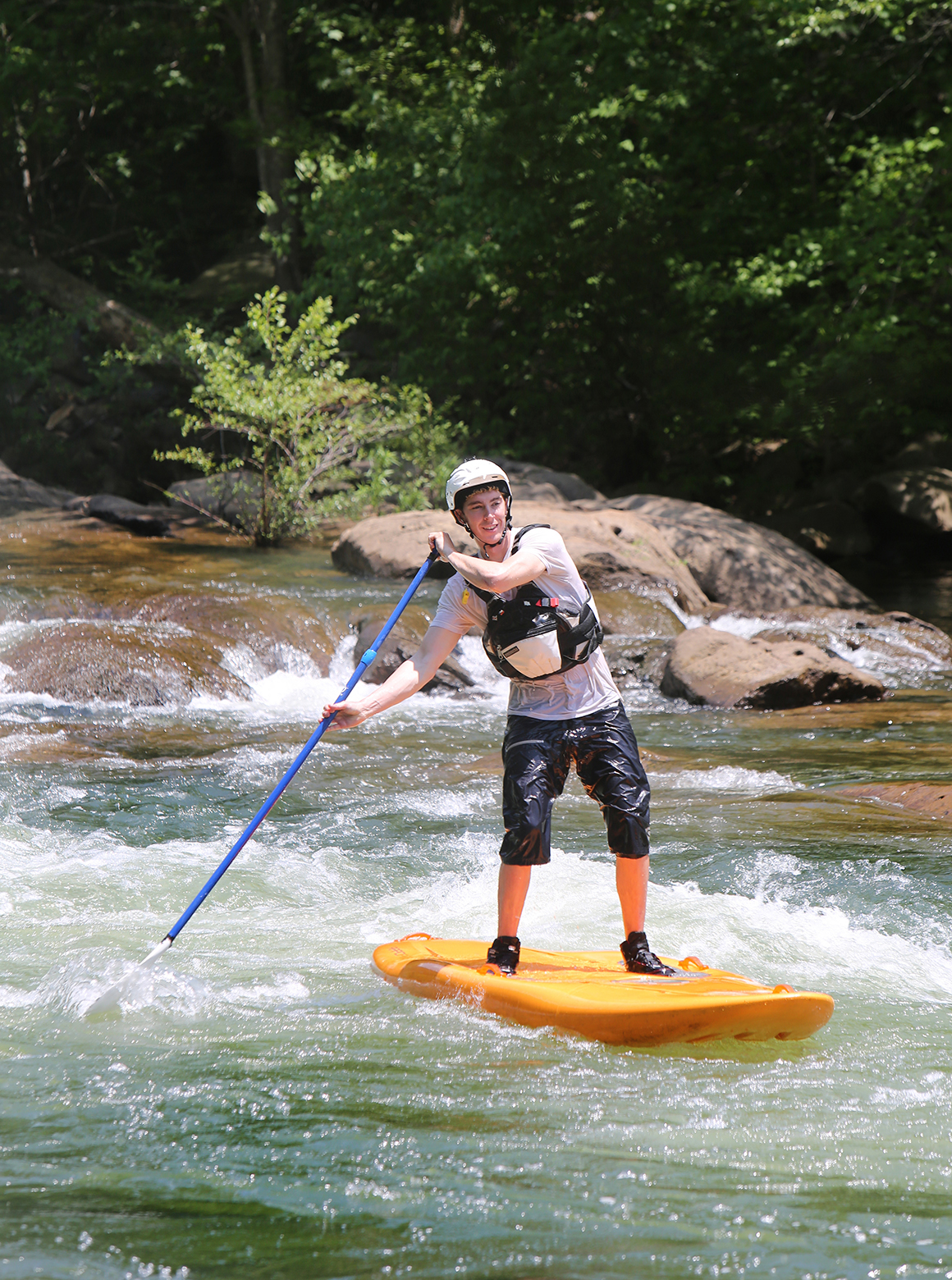
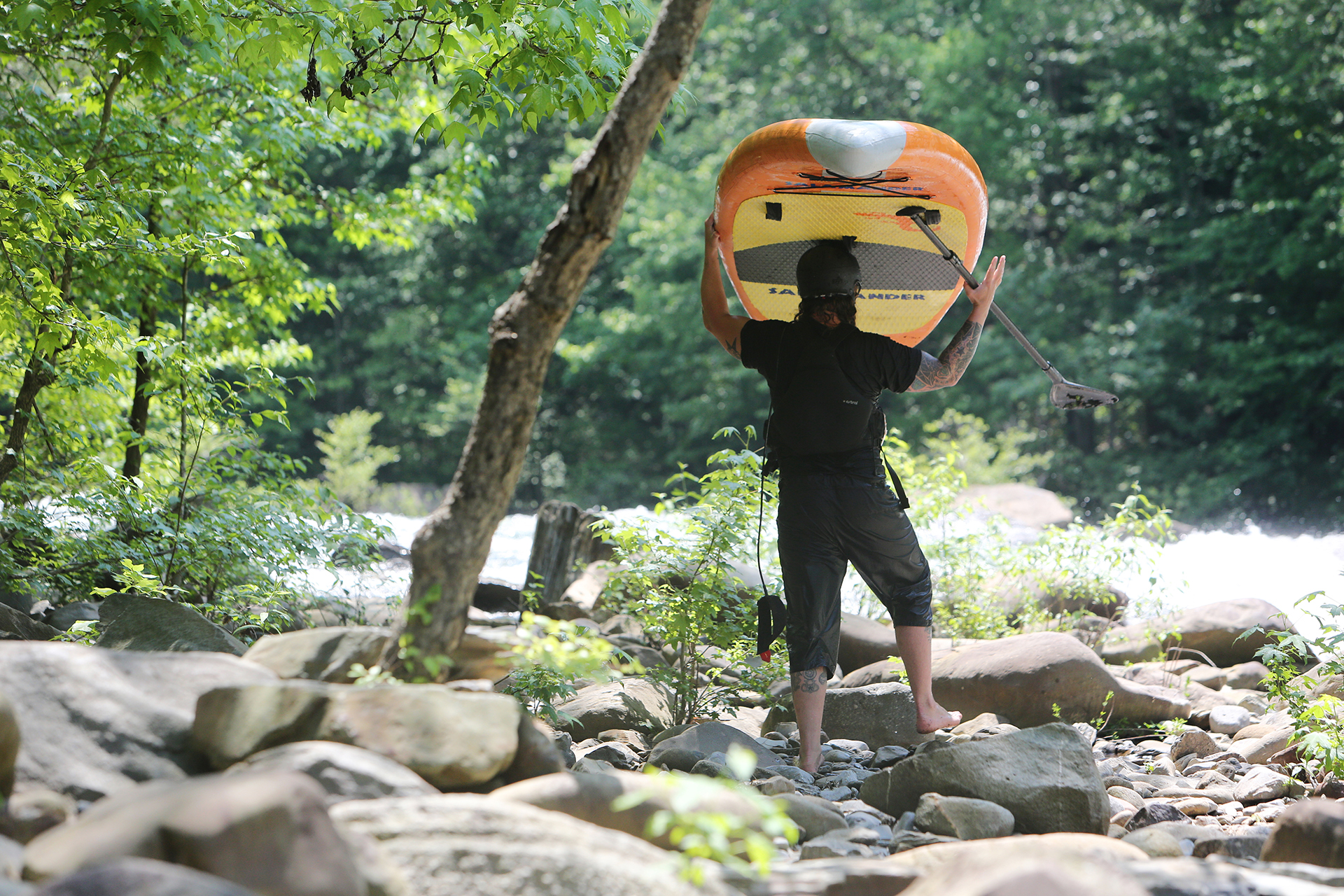
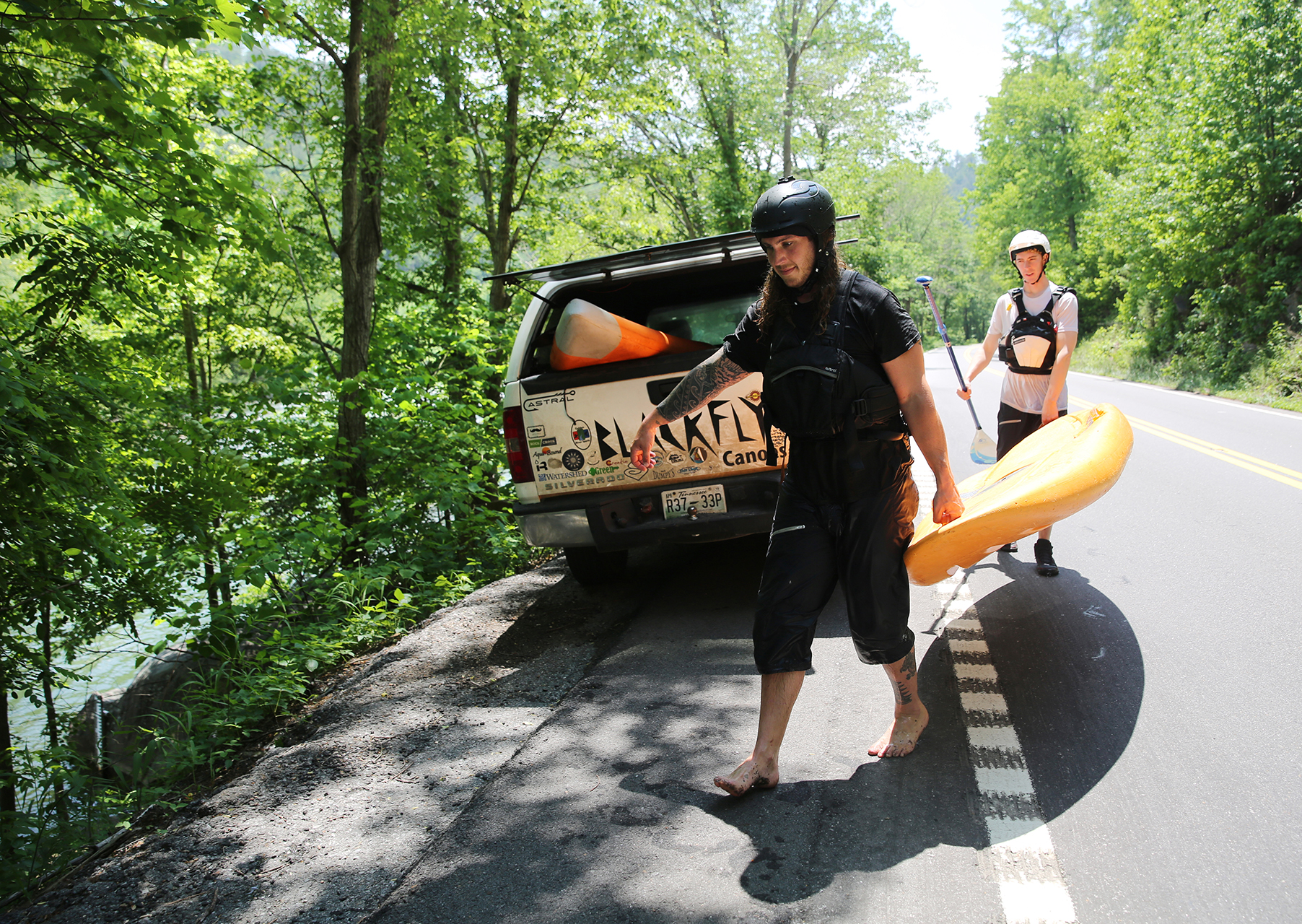
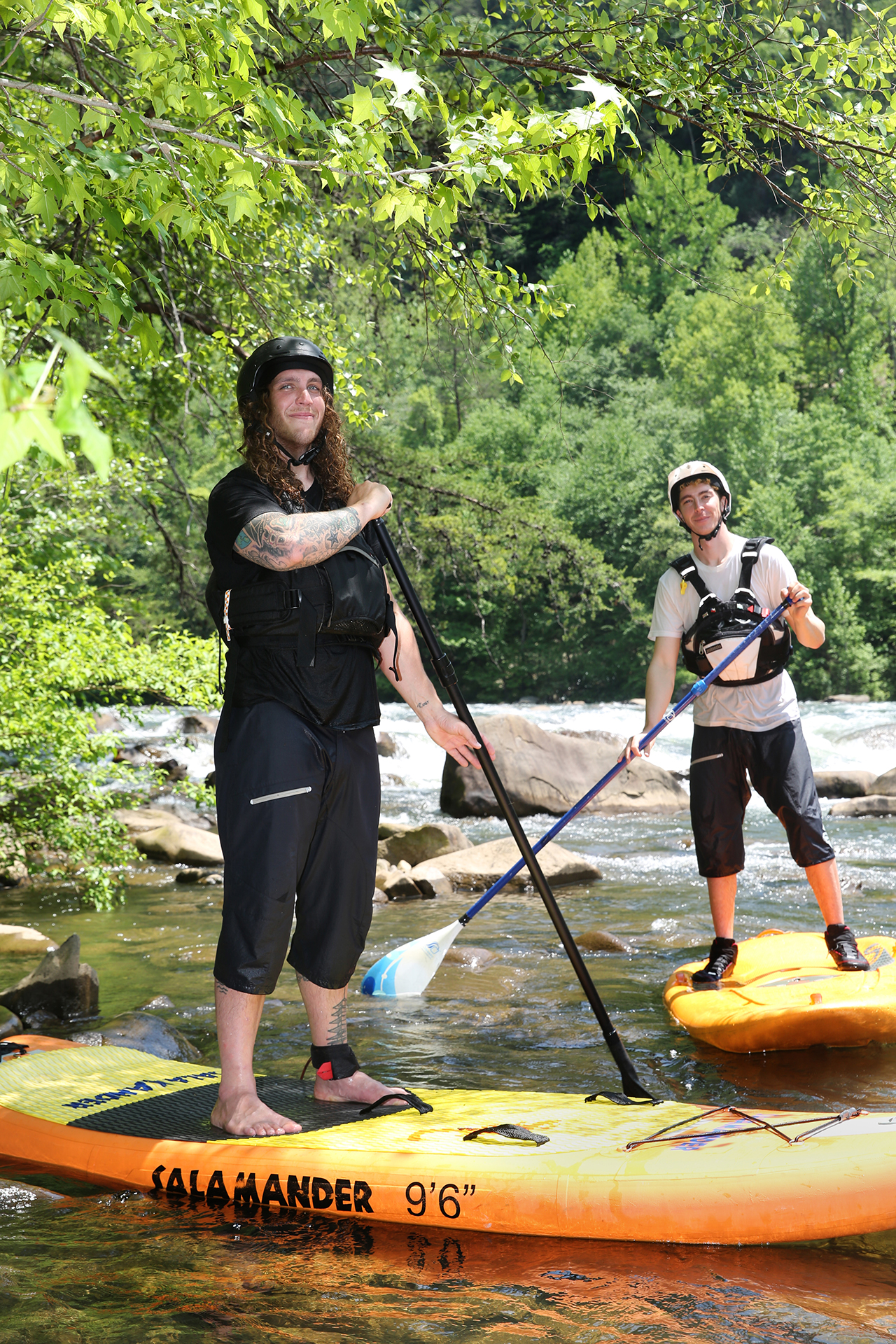
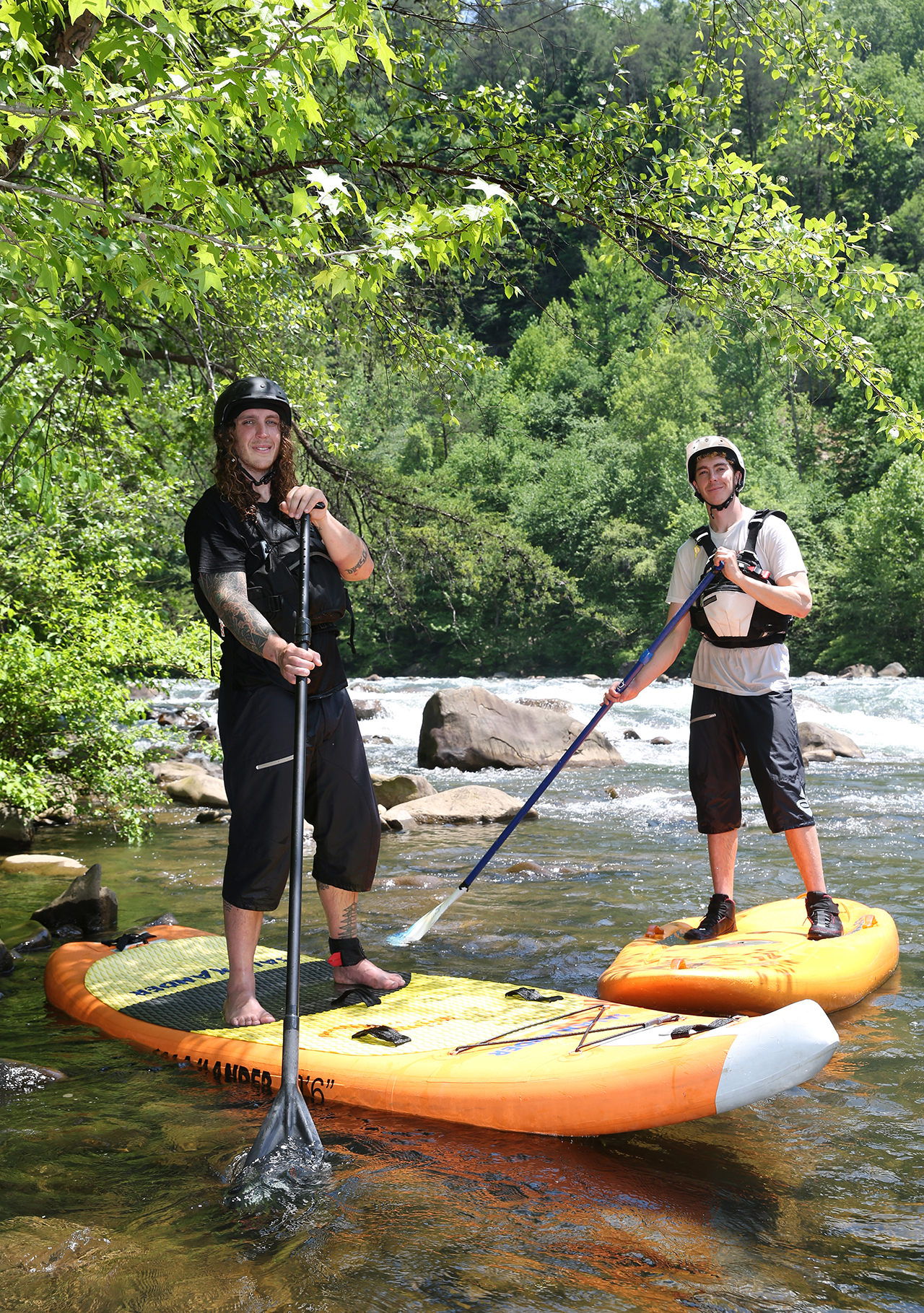
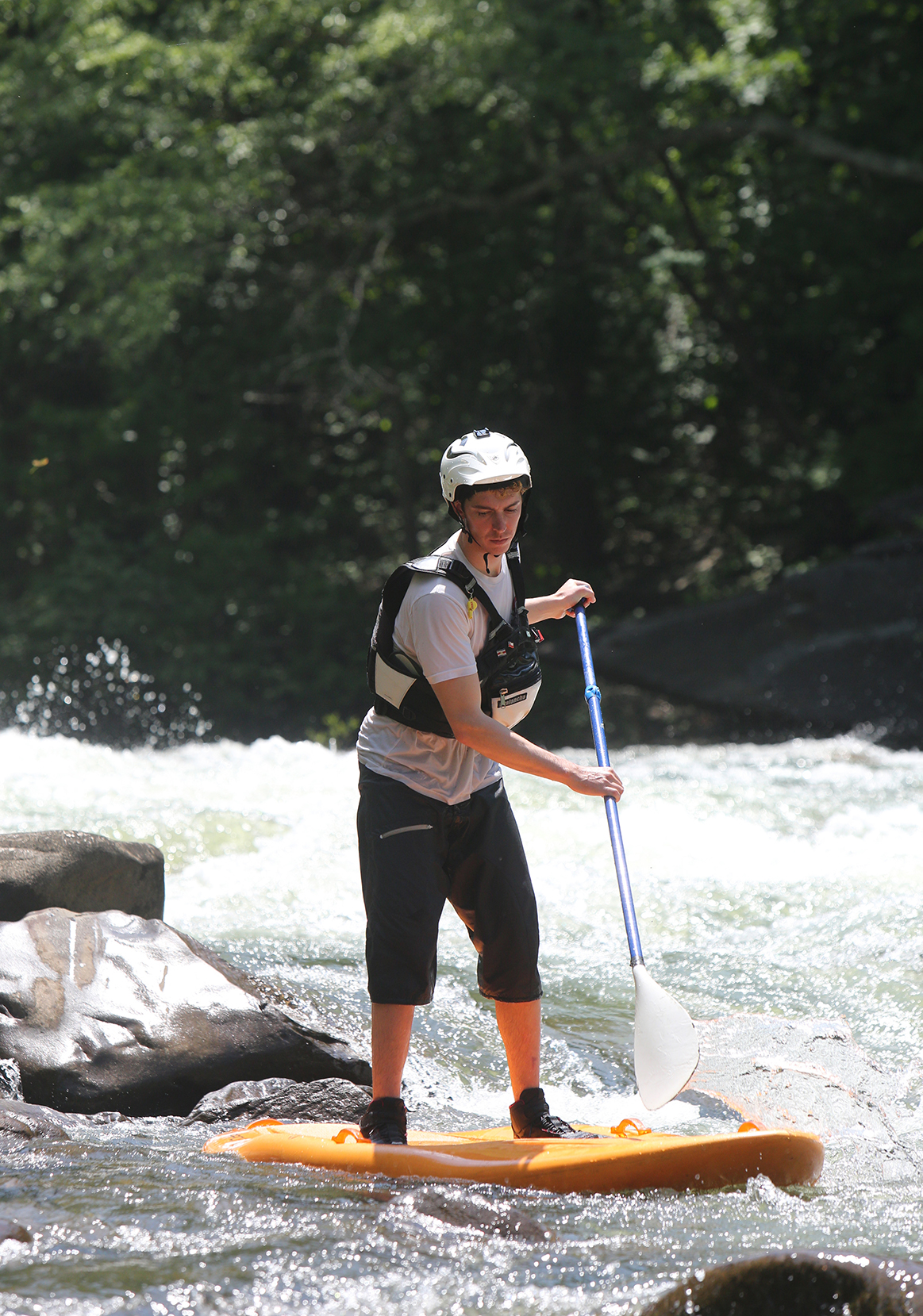
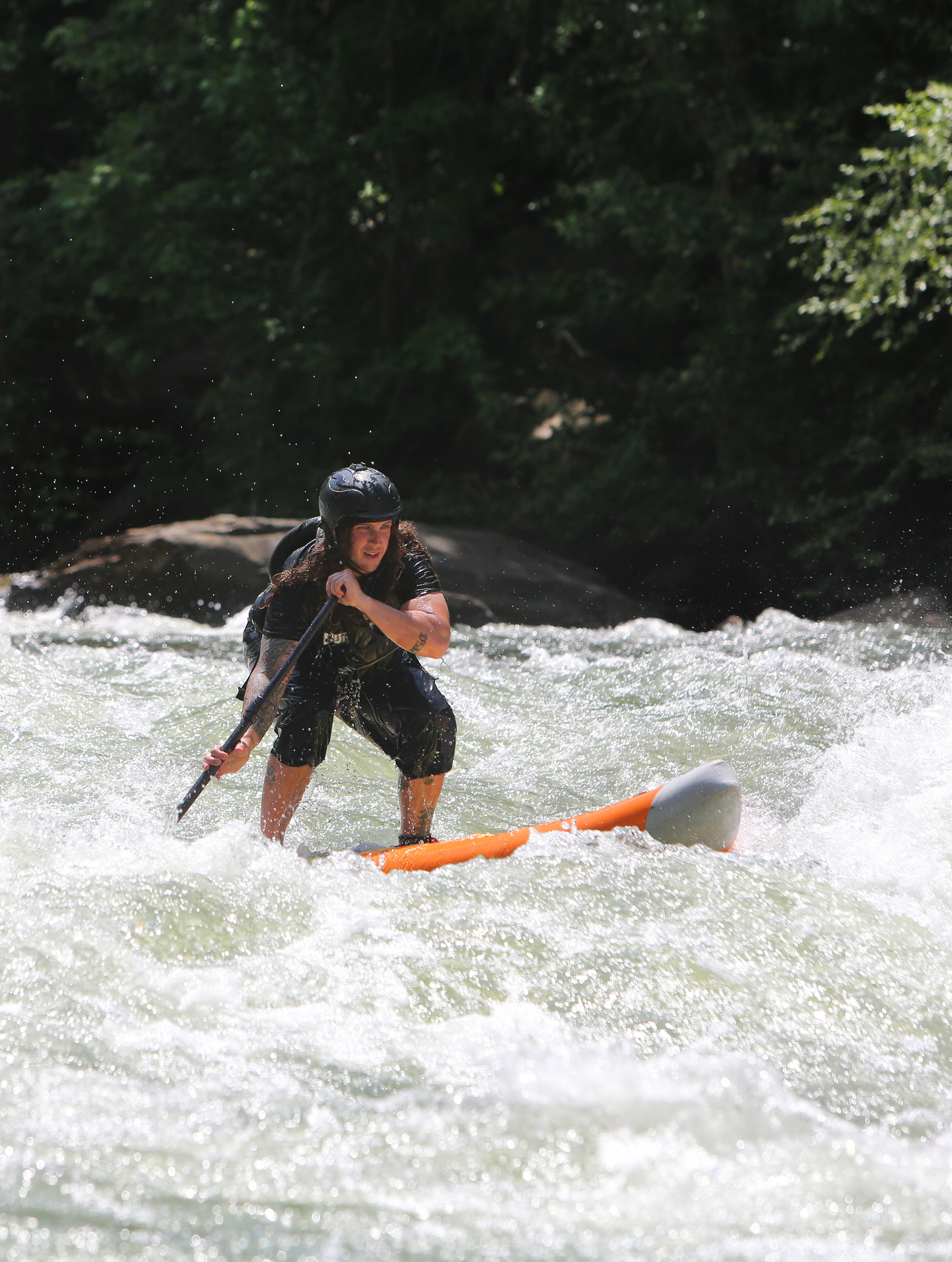
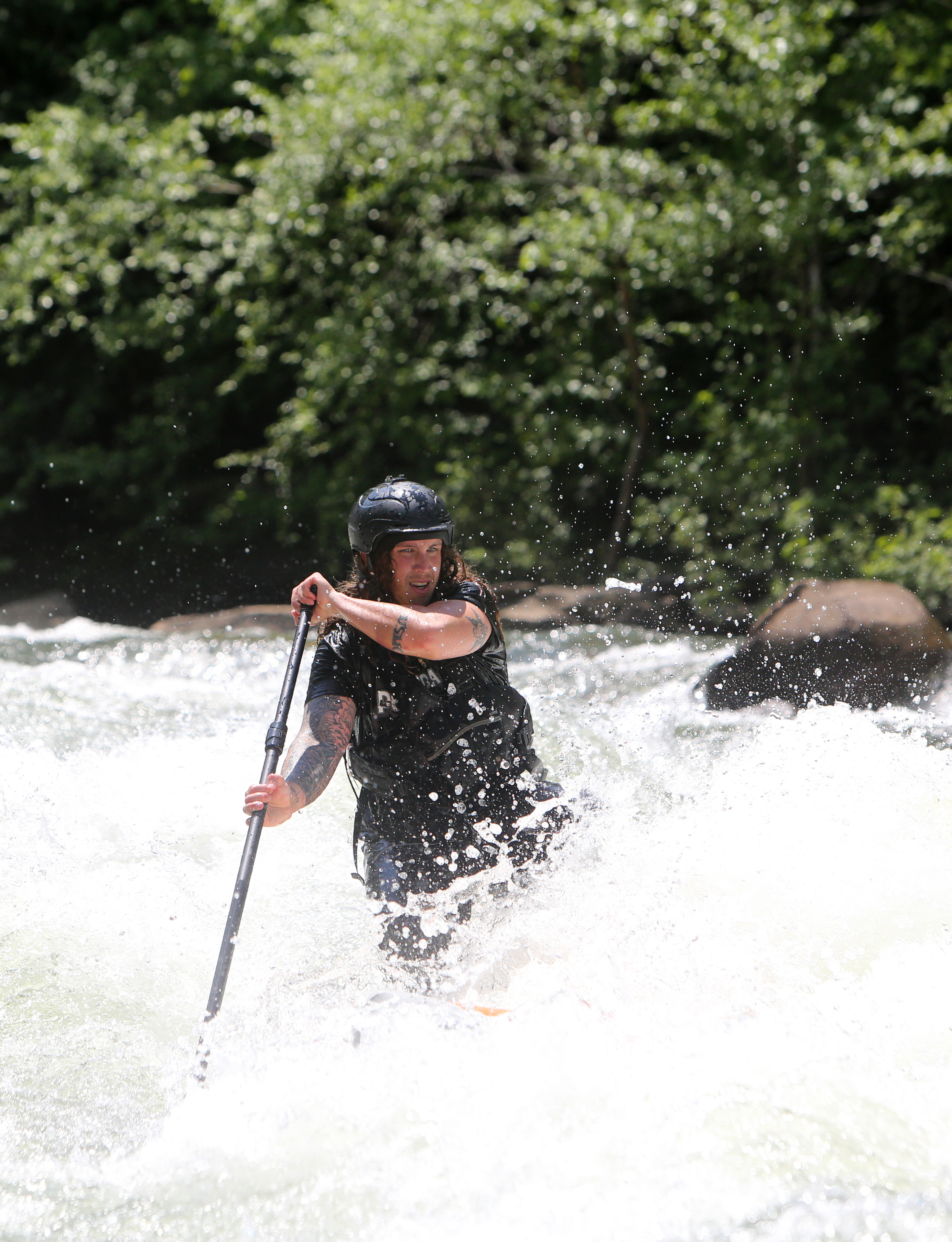
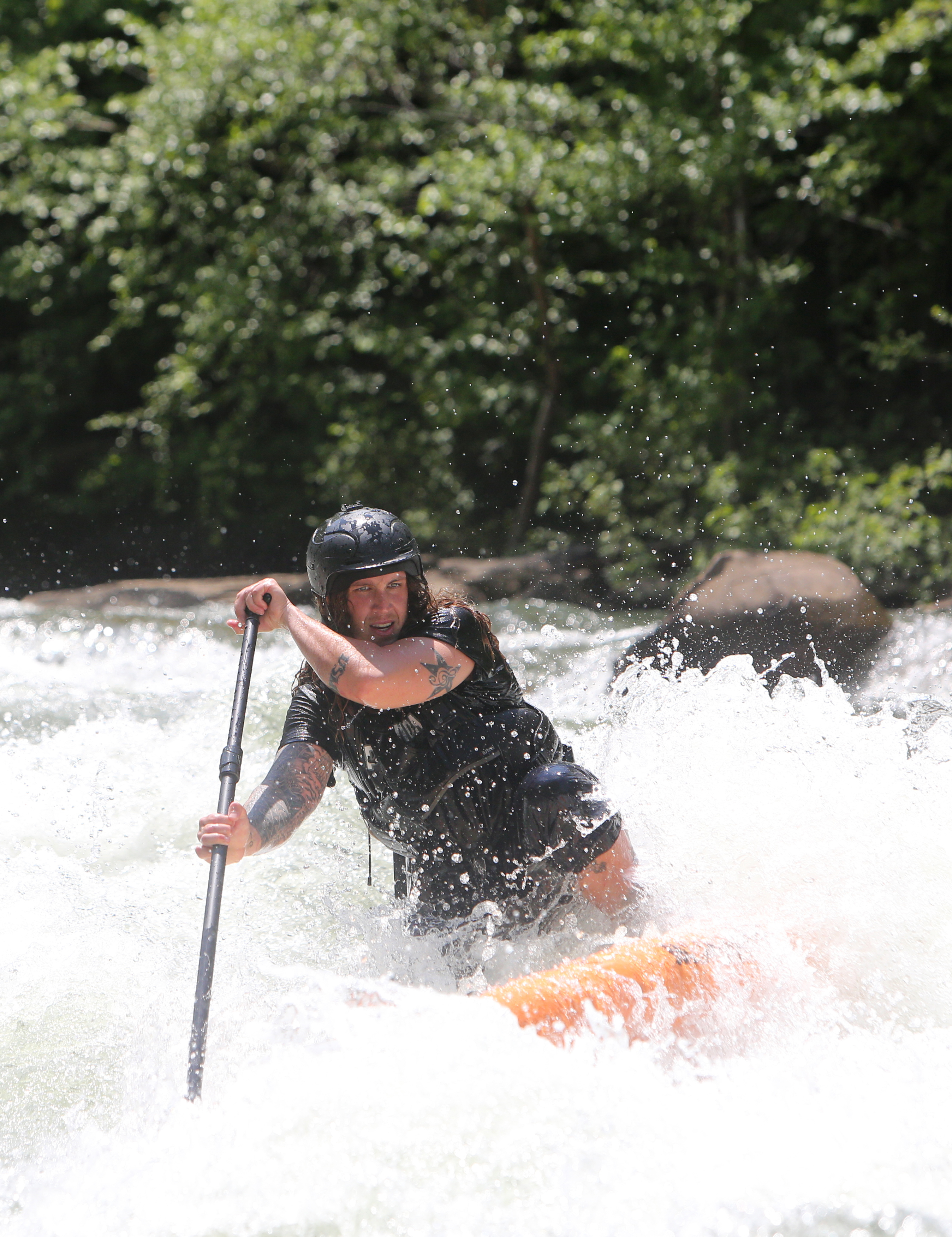
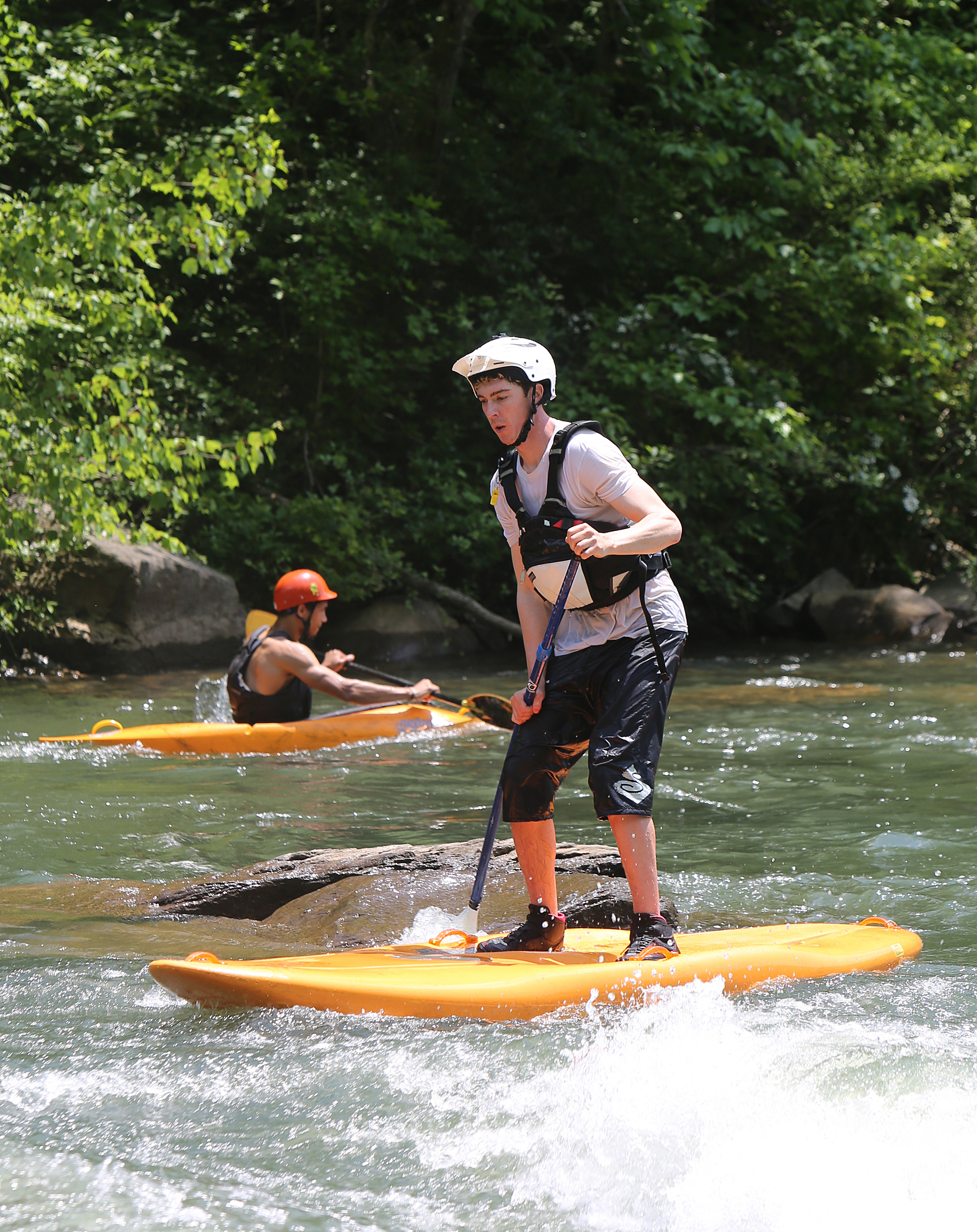
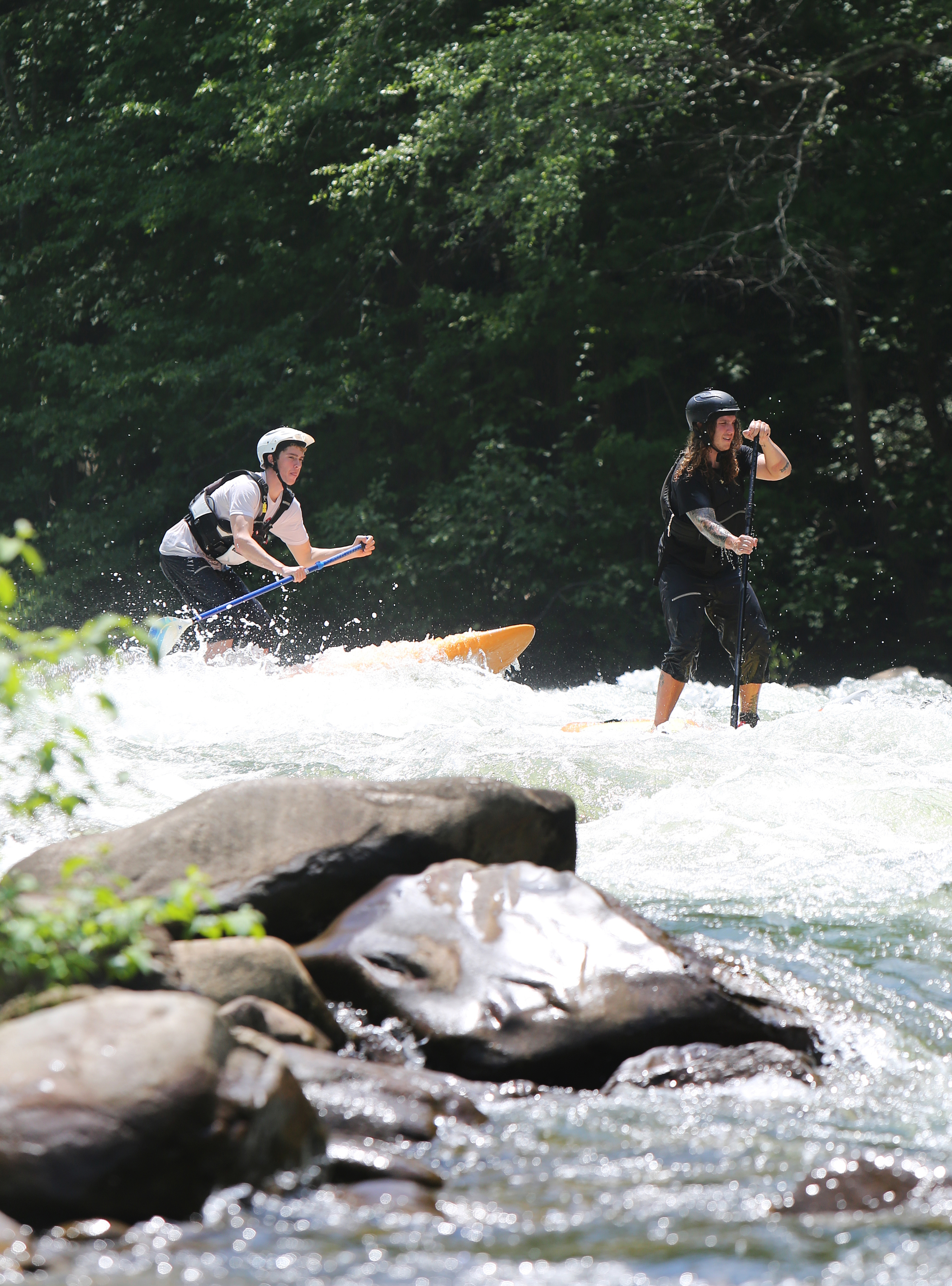
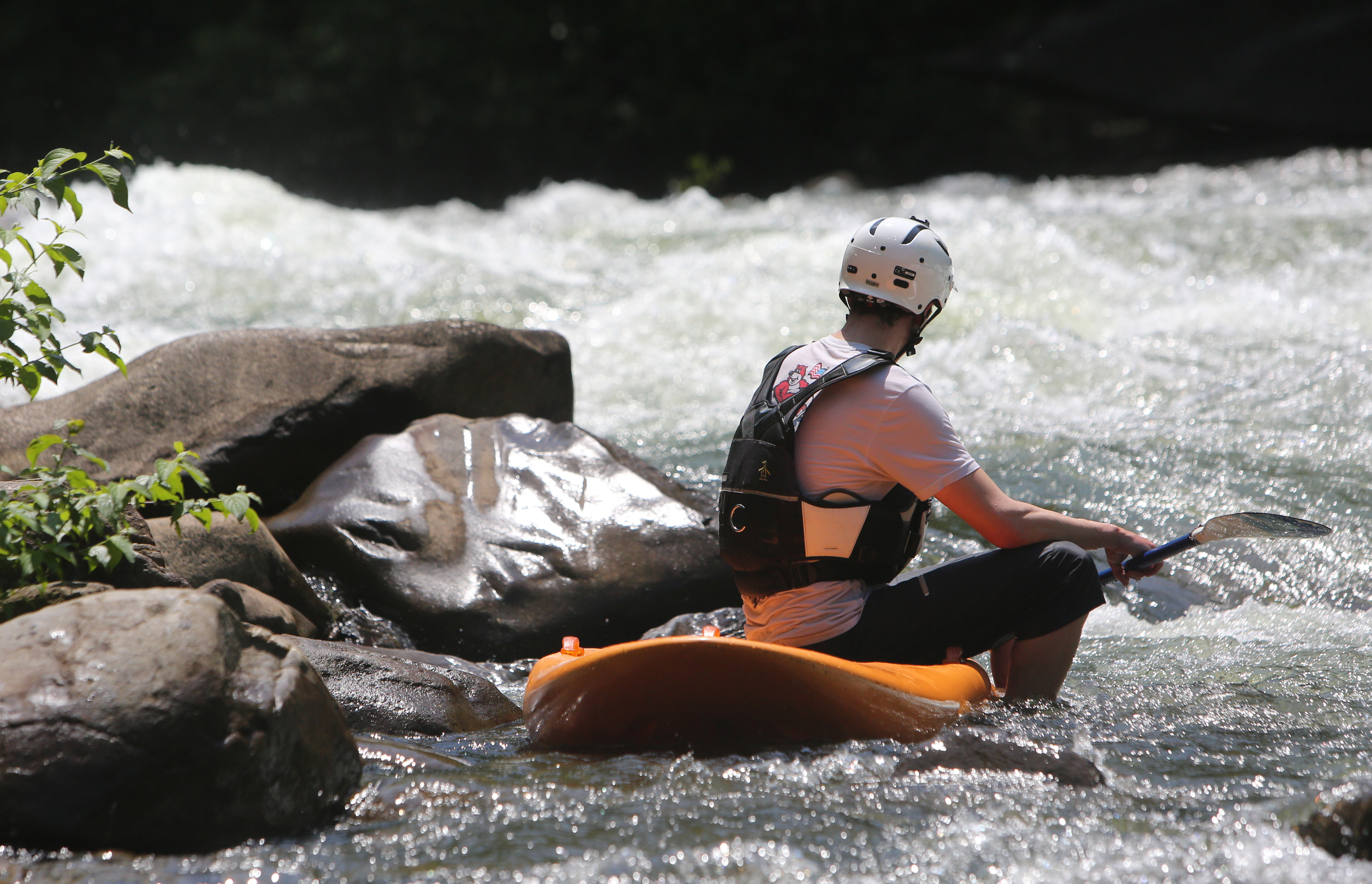
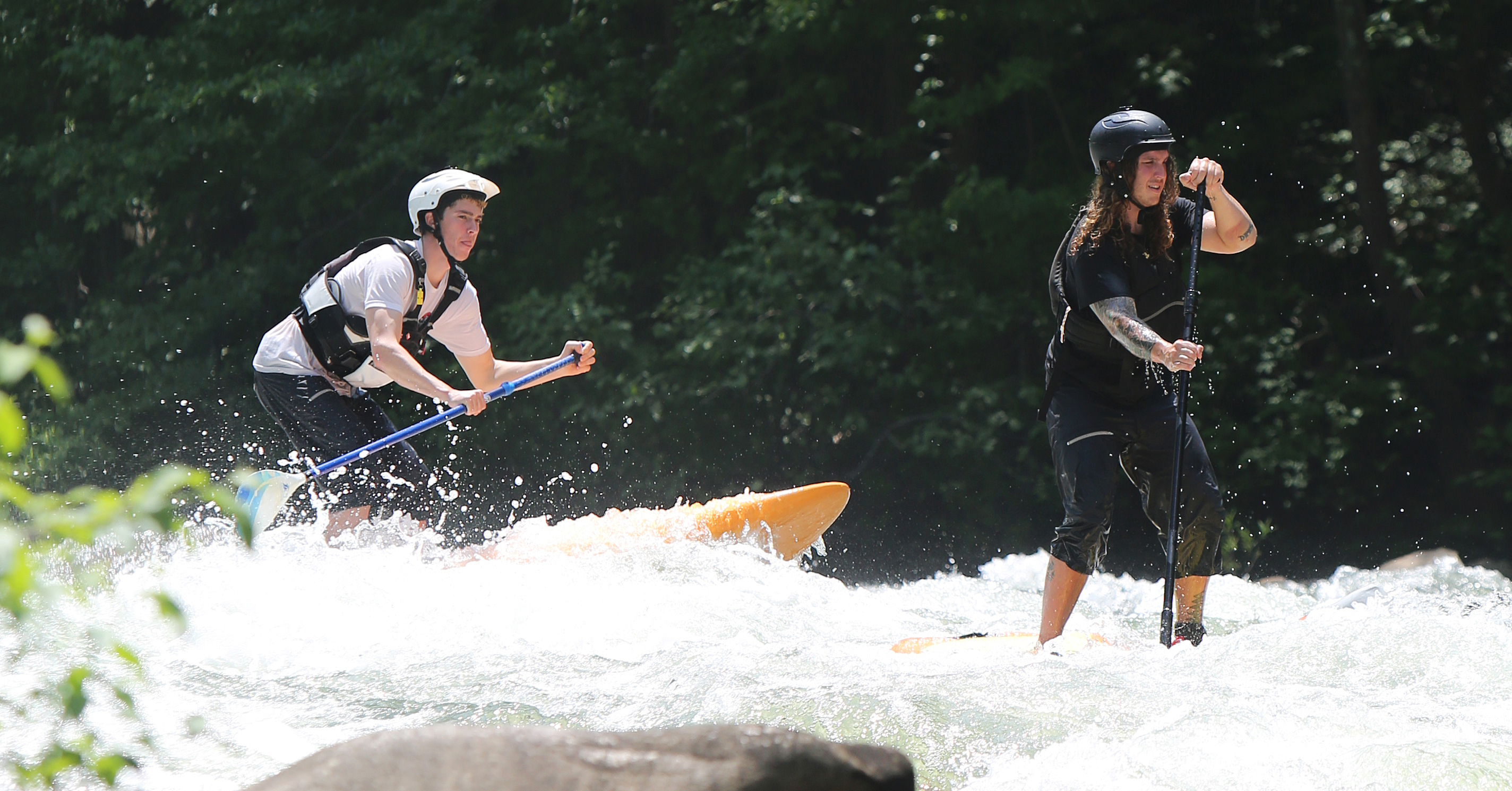
Whitewater paddlers are always scouting a fresh challenge: the next class rapid; the next big drop; a new watercraft altogether. So in 2015, when brothers and raft guides Chris and Alex Storgion returned to Tennessee after a summer spent surfing in Florida, they decided to take their stand-up paddleboards down the Class III Ocoee River.
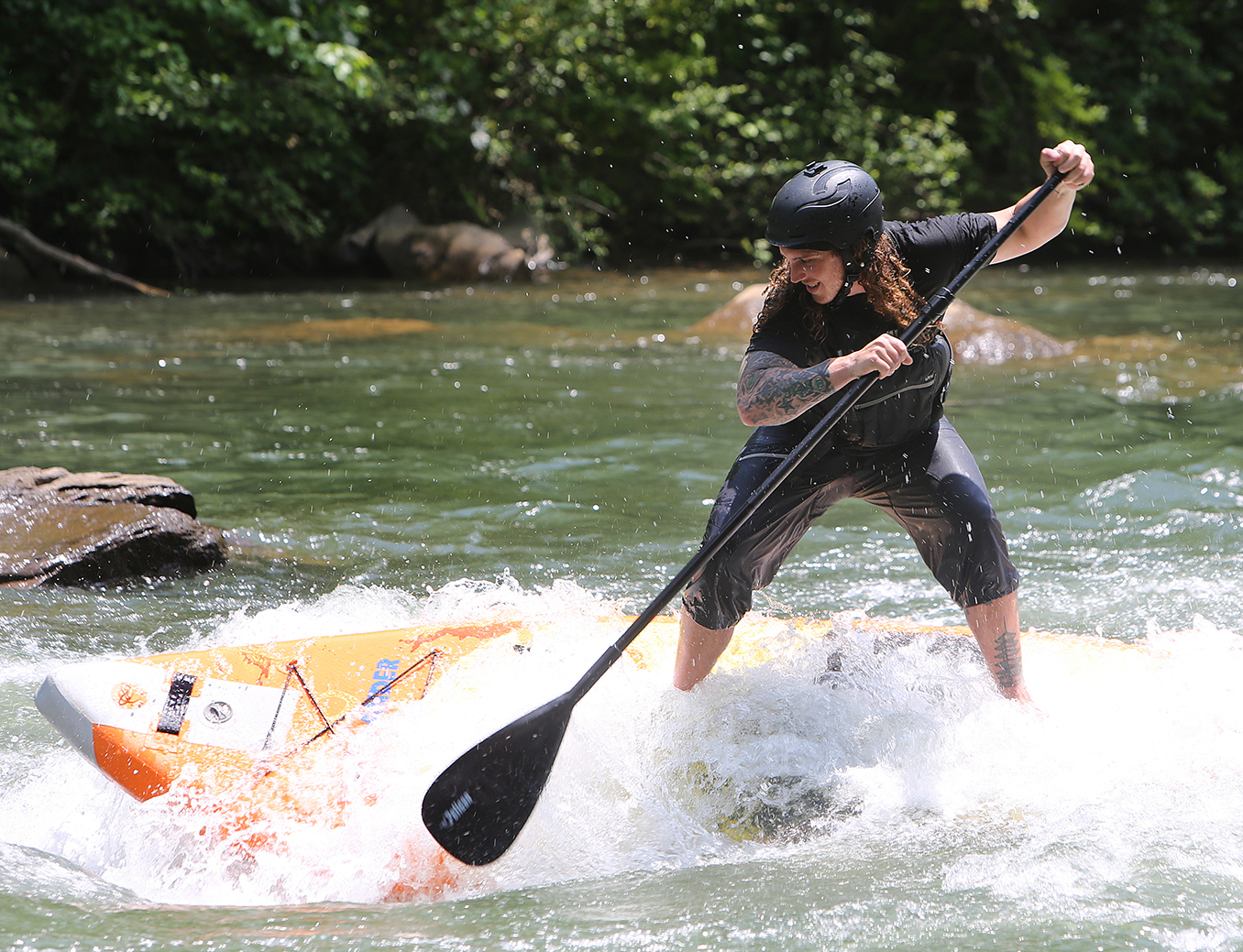
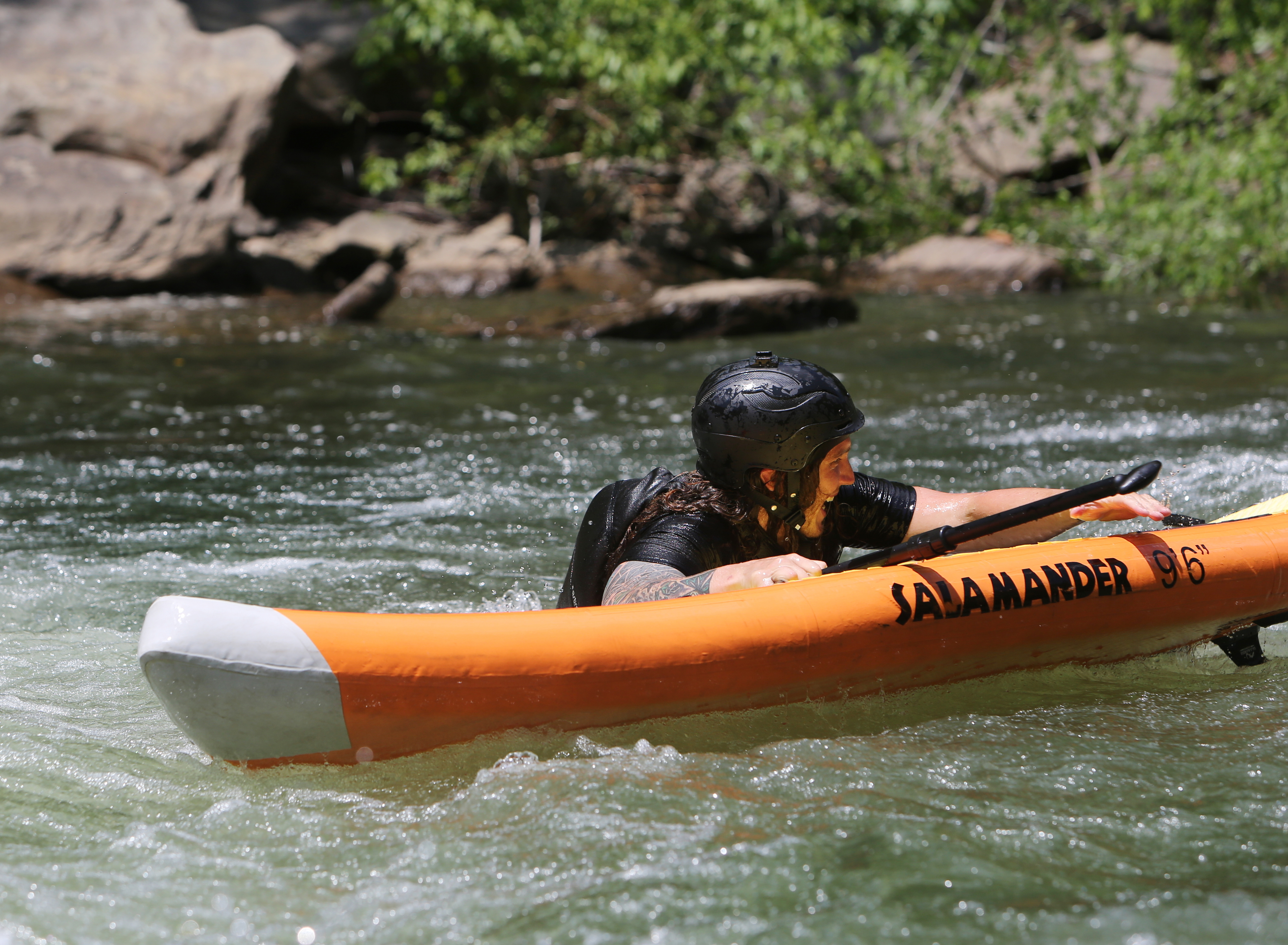
“It started as a joke,” says Chris Storgion, 24. “We knew we’d swim a lot, but by the fifth or sixth run, we progressed. We got our balance down. Then we started being able to style it.”
Whitewater paddleboarding is a relatively young sport. A 2010 article in SUP Magazine compared it to an awkward teenager, “complete with pimples and unknown potential.” Eight years later, the sport still seems to be finding itself. Companies are just beginning to design whitewater paddleboards, says Alex Storgion, 26. These specialized boards, he explains, tend to be wider, stiffer and thicker than flatwater SUPs.
“Stability is definitely No. 1,” Alex Storgion says.
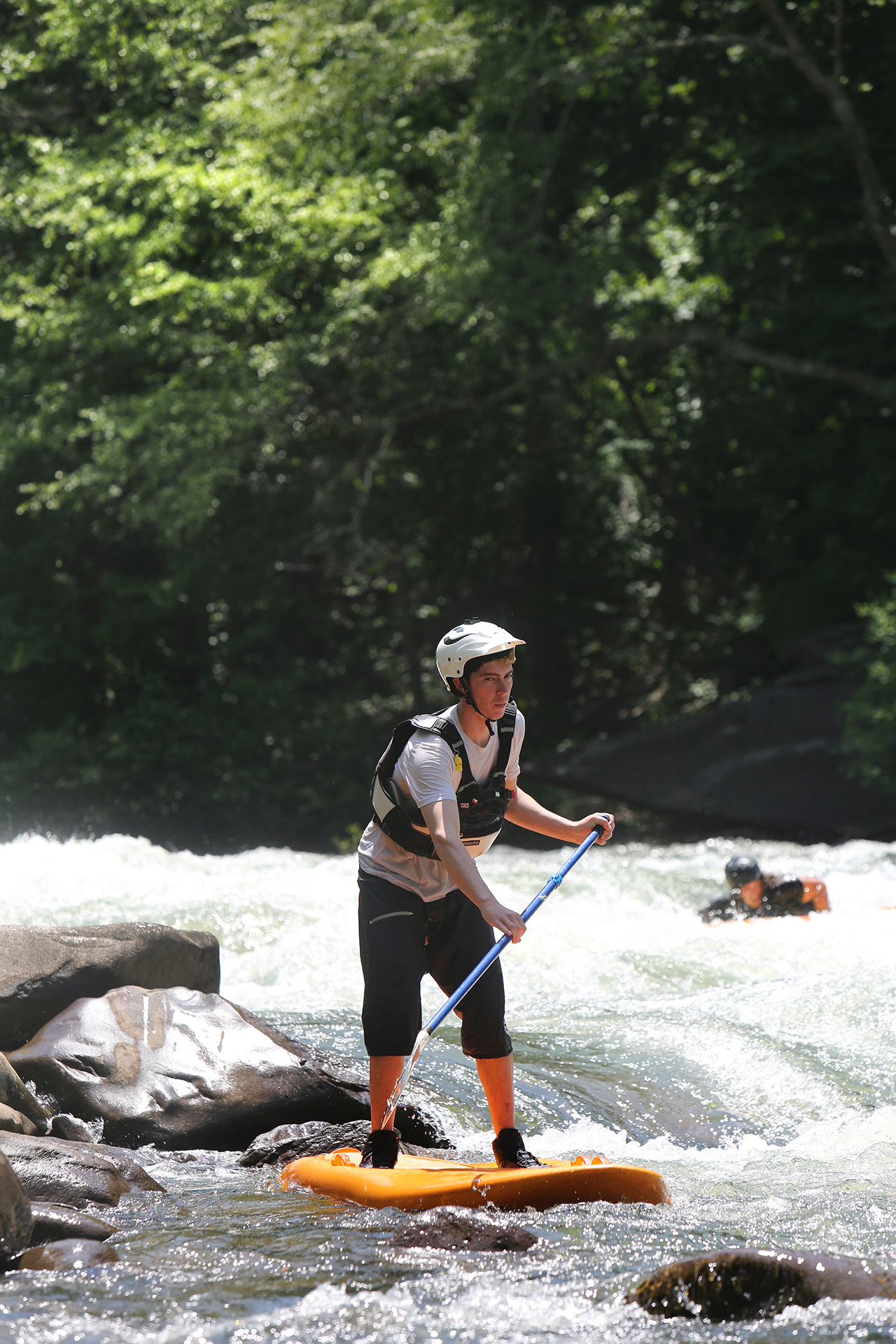
In contrast to kayaks, canoes or rafts, on a SUP, one’s center of gravity is high – which gives the paddler less stability. To compensate, the brothers learned to take a slightly squatted stance on their paddleboards.