
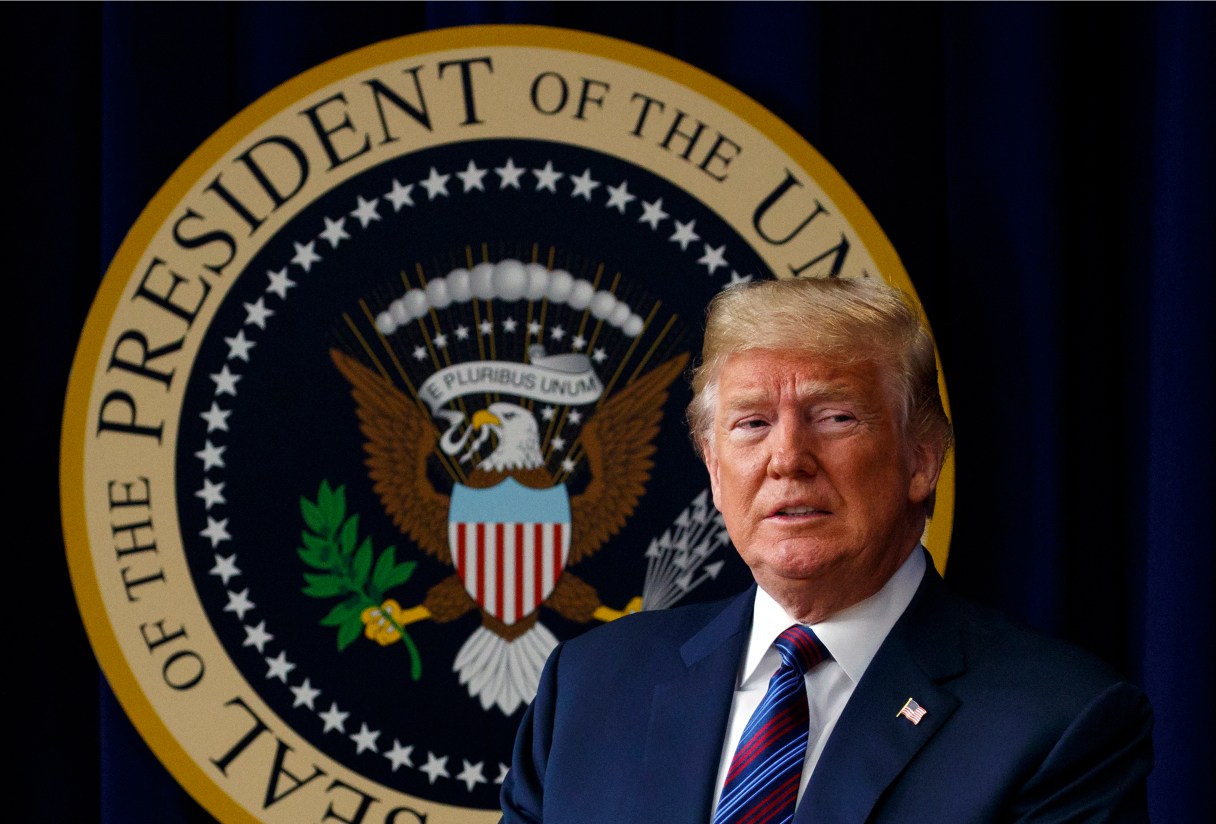
WASHINGTON (AP) – President Donald Trump claimed Monday he has an “absolute right” to pardon himself, part of an extraordinarily expansive vision of executive authority that is mostly untested in court and could portend a drawn-out fight with the prosecutors now investigating him.
No need of a pardon anyway, Trump tweeted, because “I have done nothing wrong.” In fact, his lawyers assert in a memo to special counsel Robert Mueller, it’s impossible for him to have done anything wrong in the area of obstructing justice, an issue Mueller has been investigating. That’s because, as the country’s chief law enforcement officer, Trump himself has ultimate control of the Justice Department and executive branch.
Beyond that, his lawyers have repeatedly insisted that it’s beyond dispute that a sitting president cannot be criminally prosecuted.
Trump also tweeted Monday that the Justice Department’s “appointment of the Special Counsel is totally UNCONSTITUTIONAL.”
Mueller’s investigation moves forward nonetheless, and as it does courts may have to confront questions with minimal if any historical precedent. Those include whether a president can be forced to answer questions from prosecutors, whether it’s possible for a commander in chief to criminally interfere in investigations and whether a president’s broad pardon power can be deployed for corrupt purposes.