
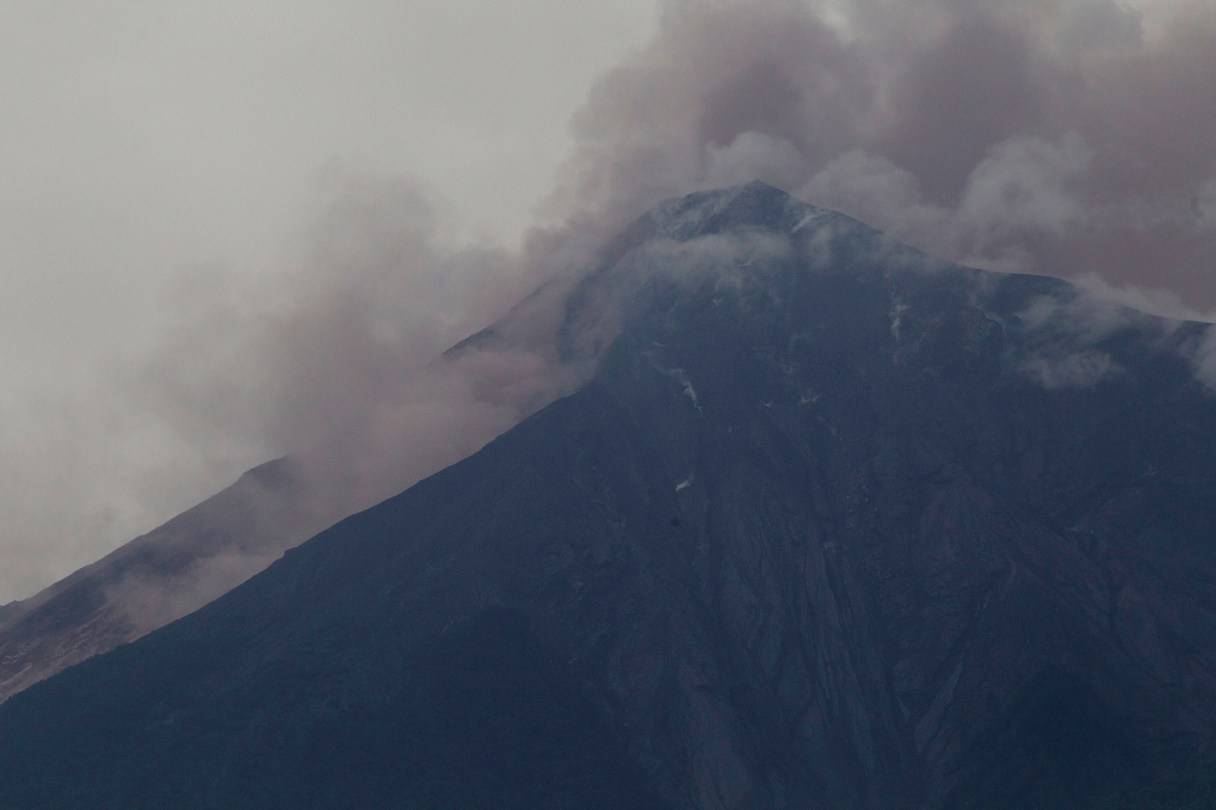
EL RODEO, Guatemala (AP) – Rescuers pulled survivors and bodies from the charred aftermath of the powerful eruption of Guatemala’s Volcano of Fire, as the death toll rose to 69 on Monday and was expected to go higher from a disaster that caught residents of remote mountain hamlets off guard, with little or no time to flee to safety.
Using shovels and backhoes, emergency workers dug through the debris and mud, perilous labor on smoldering terrain still hot enough to melt shoe soles a day after the volcano exploded in a hail of ash, smoke and molten rock.
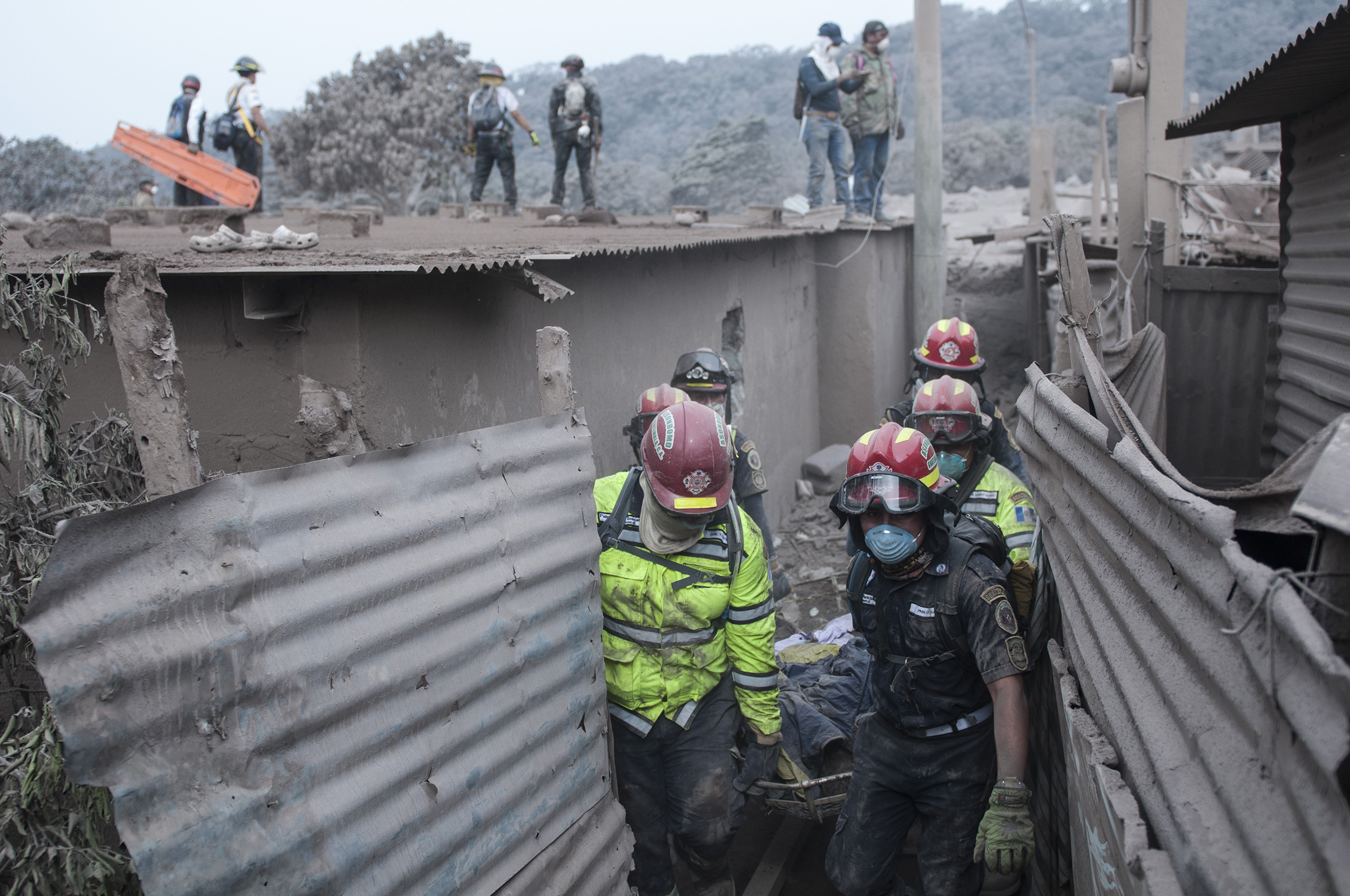 Firefighters remove a body recovered near the Volcan de Fuego, or “Volcano of Fire,” in Escuintla, Guatemala, Monday, June 4, 2018. Rescuers have found the bodies of several more victims of an eruption at Guatemala’s Volcano of Fire, and emergency workers have pulled some people still alive from ash drifts and mud flows. (AP Photo/Oliver de Ros)
Bodies were so thickly coated with ash that they looked like statues, and rescuers were forced to use sledgehammers to break through the roofs of houses buried in debris up to their rooflines to try to see if anyone was trapped inside.
Fanuel Garcia, director of the National Institute of Forensic Sciences, said 69 bodies had been recovered and 17 of those had been identified.
“It is very difficult for us to identify them because some of the dead lost their features or their fingerprints” from the red-hot flows, Garcia said. “We are going to have to resort to other methods … and if possible take DNA samples to identify them.”