
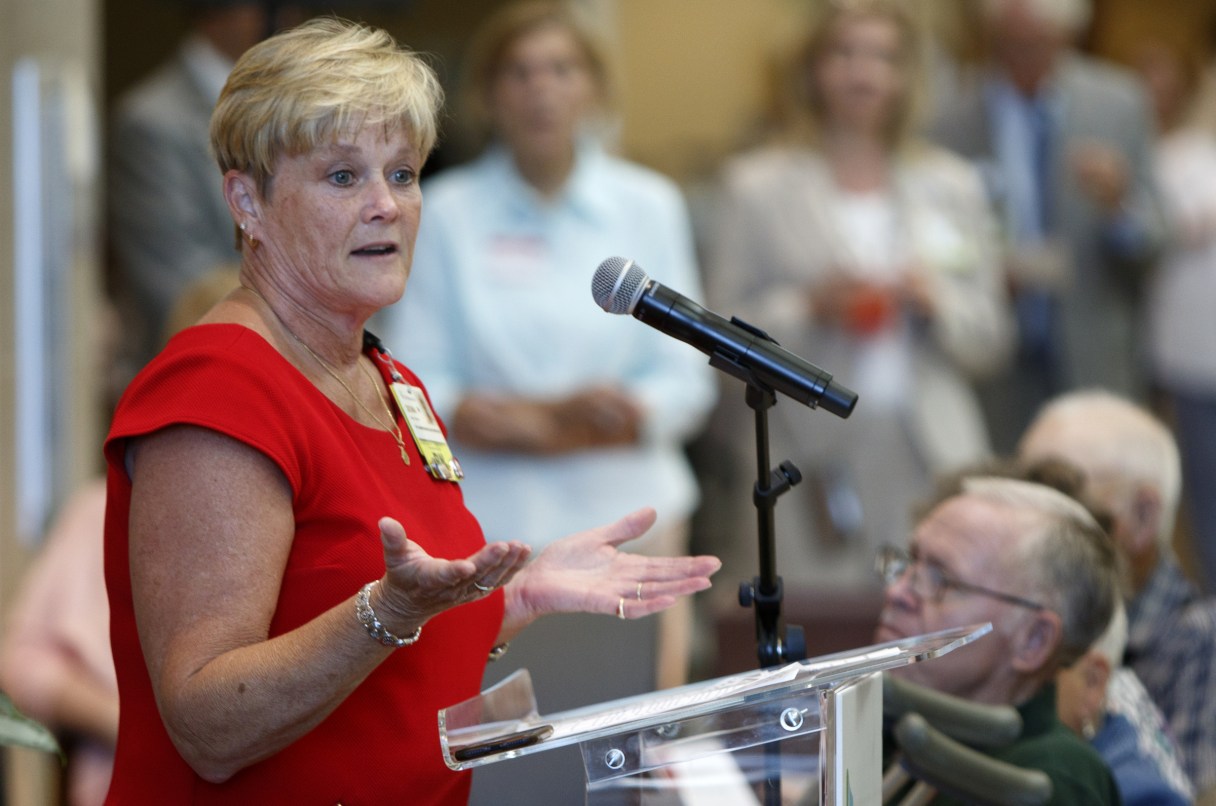
Physicians, nurses and patients got a rare opportunity to reconvene post-procedure at CHI Memorial’s Tuesday evening reunion of patients who received transcatheter aortic valve replacements (TAVR).
In the busy world of health care, it’s not often that providers get to see the outcome of their work, Mary Ann Hickman, a heart valve program nurse navigator at Memorial, said during her speech to a room full of former TAVR patients and their families.
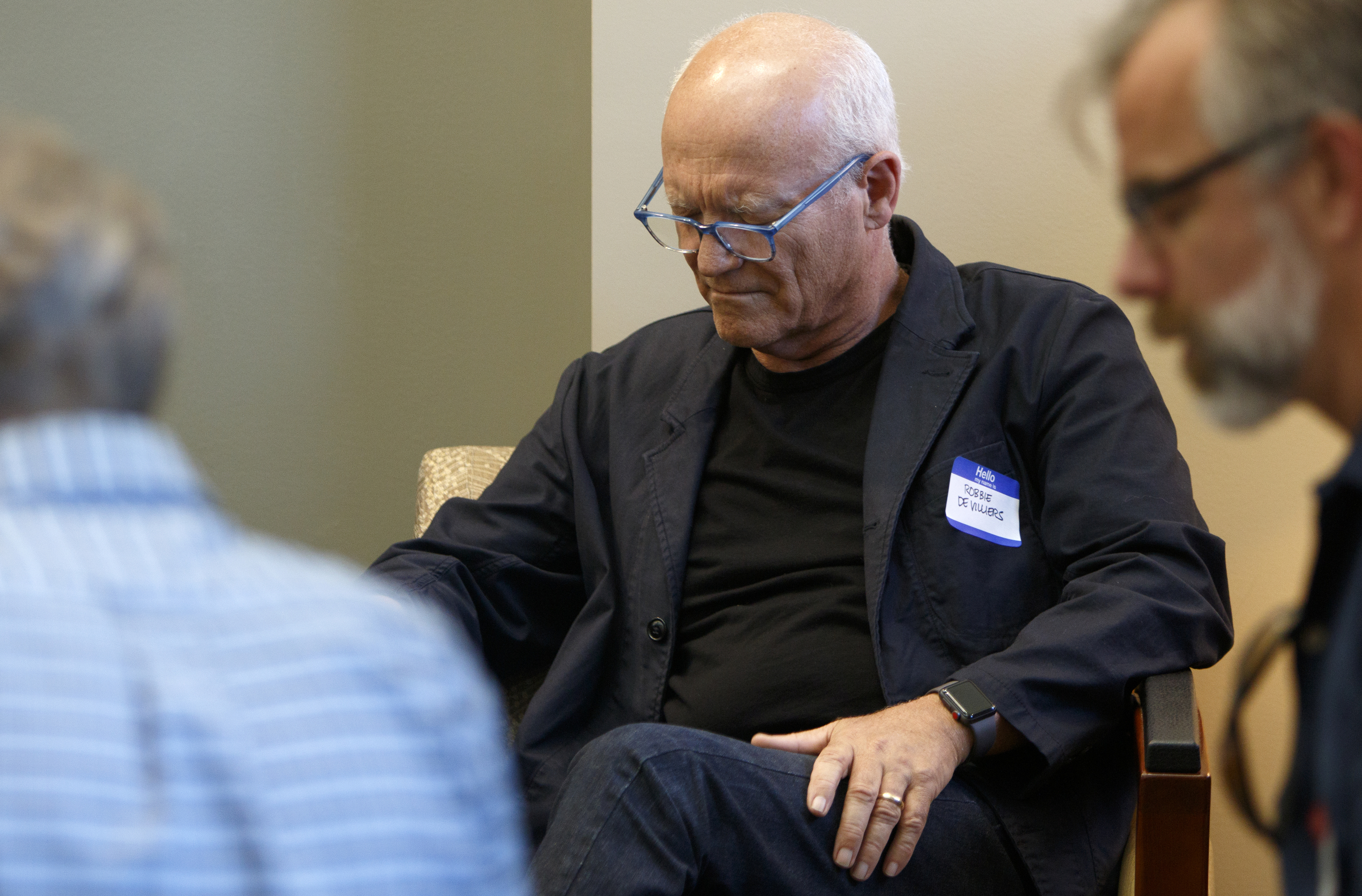 Robbie de Villiers bows his head in prayer during a transcatheter aortic valve replacement reunion at the Guerry Heart and Vascular Center in CHI Memorial Hospital on Tuesday, June 5, 2018 in Chattanooga, Tenn. The TAVR is a first of its kind procedure.
“My heart feels like it’s exploding tonight, because I just get to see the patients that were touched at Memorial,” Hickman said. “We’re here to celebrate life.”
In 2011, Memorial’s Chattanooga Heart Institute was one of 24 locations in the nation selected to perform the first-of-its-kind procedure. Today, the hospital has performed nearly 300 procedures on patients ranging from age 32 to 97.
TAVR is a minimally invasive procedure that replaces a failing aortic heart valve using a catheter inserted through the groin. Previously, open heart surgery was the only option for valve replacement, but patients who were too sick for such a serious surgery were out of luck. If the problem isn’t fixed, it causes chest pain, fatigue, shortness of breath and can lead to heart failure or death.