
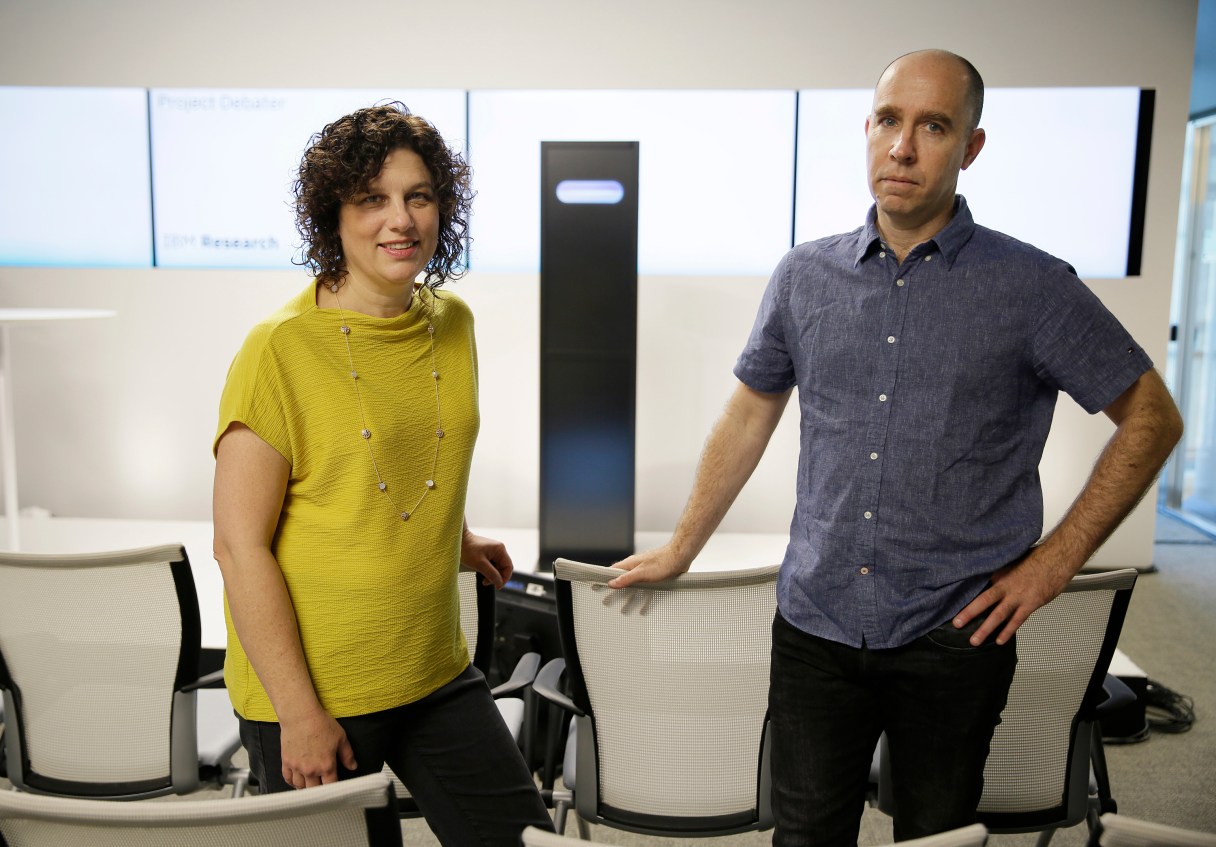
SAN FRANCISCO (AP) – An argumentative computer proved formidable against two human debaters as IBM gave its first public demonstration of new artificial intelligence technology it’s been working on for more than five years.
The new skills show that computers are getting better at mastering human language and speech.
The computer made its case for government-subsidized space research by pulling in evidence from its huge internal repository of newspapers, journals and other sources. After delivering opening arguments, the computer listened to a professional human debater’s counter-argument and spent four minutes rebutting it.
The company unveiled its Project Debater in San Francisco on Monday. IBM selected possible topics based on whether they were debatable, but neither the computer nor the human debaters knew the topic in advance. Nonetheless, the computer championed the topic fiercely with just a few awkward gaps in reasoning.
“Subsidizing space exploration is like investing in really good tires,” argued the computer system, its female voice embodied in a 5-foot-tall machine shaped like a monolith with TV screens on its sides. Such research would enrich the human mind, inspire young people and be a “very sound investment,” it said, making it more important even than good roads, schools or health care.