
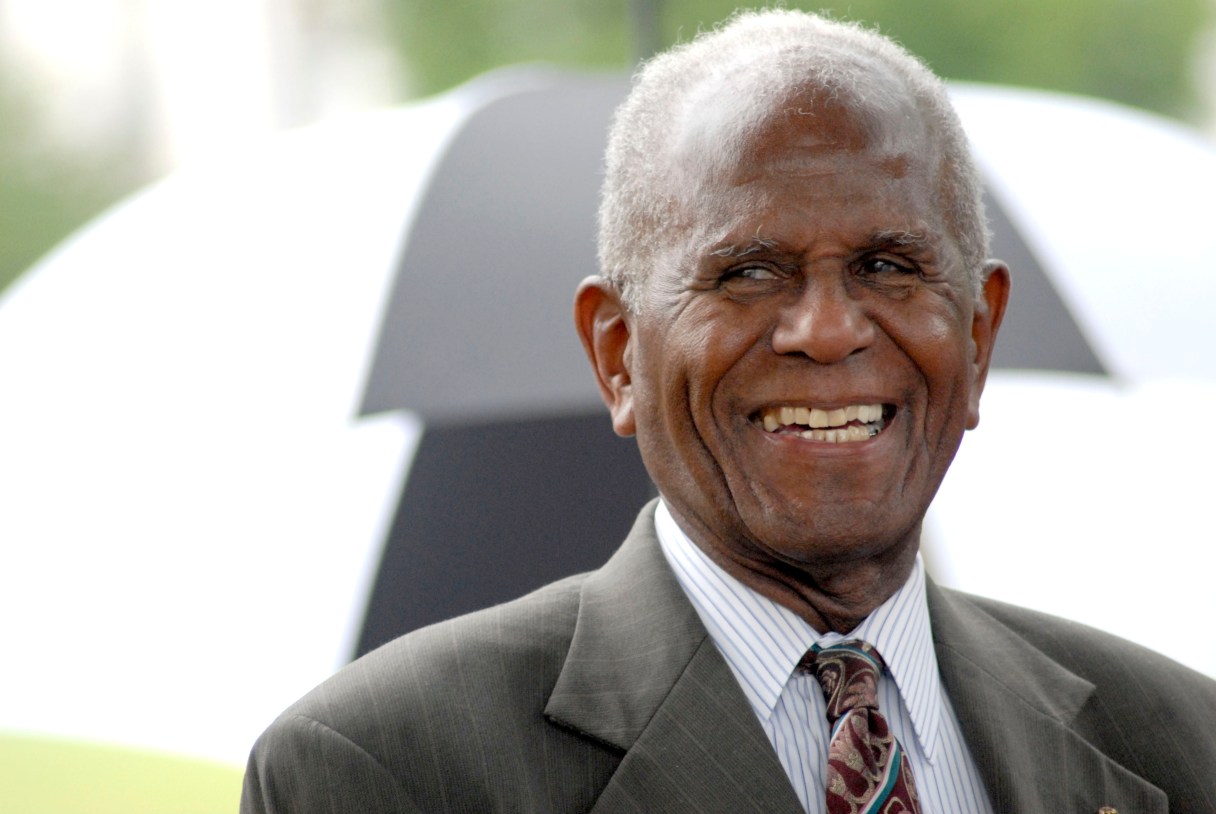
Chattanooga lost a giant last week
John Porter Franklin Sr. was a leader. A real leader.
Not a showboat, not a screamer, not a microphone grabber. Just a strong, quiet, thoughtful, mentoring kind of leader.
Franklin, who died Thursday at age 96, became the only African-American elected in a 1971 citywide vote to the old Chattanooga City Commission. Years later, he helped prove in federal court that he was the exception to the fact that citywide voting meant black residents had little chance to send representatives who looked like them to political office in our city.
One of the ways our city’s then-systematic discrimination found a showcase during the lawsuit, Brown v. Chattanooga, that challenged our then-form of government was in how Franklin was treated on the commission.
Franklin noted that when he was elected, the mayor asked him – and only him – to move his office to the basement so the commission’s assembly room could expand. Insult aside, Franklin served as Chattanooga’s Commissioner of Education for 20 years.
The lawsuit ended when a judge voided the city commission system and ordered the current council form of government, giving minorities a fair chance at representation. The first council was elected in 1990, with five whites and four blacks. Franklin opted to leave government at that point and pass the baton to new, younger leaders – some of whom he had mentored.
“He paved the way for African-Americans to get into the mainstream in Chattanooga,” then-city councilman and longtime friend Moses Freeman said in 2014 when Franklin was awarded the History Maker award by the Chattanooga History Center.
But Franklin, also a teacher, principal, coach and businessman, did more than that. He helped define humble, thoughtful leadership – and especially equity – in Chattanooga. We owe him much.
Equity is still a local goal
Speaking of equity in Chattanooga, our school leaders are grappling with it again. Today.
After voting last month to accept private funding for a national consultant to help Hamilton County’s equity task force identify ways to seek ideal educational access for all students, schools Superintendent Bryan Johnson headed off increasing school board anger Thursday by obtaining a vote to slow down, but not stop, the consulting process.
“I want to focus on the word all. All is not bilateral. It’s not political,” Johnson told board members. “But I need to ask you, is closing the opportunity gap still a priority for you?”
In recent weeks, at least two board members had balked – one believing the effort is code for more racial integration and “forced” busing, while the other has said parents and “loving on” kids is the real key to bridging educational gaps.
On Thursday, however, the majority of the board still seemed to support Johnson’s effort to seek help, learn more and craft improvements. But the compromise didn’t come without some testy dialogue:
» Board member Rhonda Thurman: “I have a big problem with that [the consultants] because that says this body has been doing things purposefully to be inequitable to students … and that is not the case. … I really don’t want to bring in anyone to come in and tell us what to do.”
» Board member Tiffanie Robinson: “This board hasn’t done this work. This school system hasn’t done this work. If it did, 25 percent of our community wouldn’t have opted to go to private schools or to charter schools.”
» Board member Kathy Lennon: “If it means stepping outside and getting the perspective of other people, than that’s what we need to do.”
» Board chairman Steve Highlander: “From my understanding of equity, it is not merely a urban issue. … It’s not racial and not urban. It’s meeting the need of every child.”
» Board member Karitsa Mosley Jones: “In every area of our district there are pockets of inequities. . ..We have to do what is right by kids … and we can’t fix their home environments but I know that we can do everything academically to know they are prepared.”
» Board member Joe Wingate: “Our charge is to provide opportunity, not to provide outcomes.”
» Board member Joe Testerman: “I do support my superintendent … I think the greatest thing he brought was the return to a focus on the way we prepare students for postsecondary. … We were educating kids, knowing we were not giving them everything they needed.”
» Board member Joe Smith: “I’m proud of our community and our business leaders and industry and how it’s stepped up.”
Real leaders never die
To borrow from a famous, tongue-in-cheek comment by Mark Twain: The rumors of former Hamilton County Commissioner Fred Skillern’s death were greatly – and fortunately mistakenly – exaggerated Thursday in an editorial about school equity on this page.
In a piece about educational equity, I – Pam Sohn, Times opinion editor – prefaced Mr. Skillern’s name with the words, “the late.” Two readers set me straight. Mea culpa.
Let me be the first to say I’m glad Mr. Skillern is alive and well.
And for the record, when I called him Friday to apologize, this former school board member said he wanted to talk about schools and education because he is very concerned that so many of our third-graders – 60 percent – can’t read at grade level. And he was quick to add that it’s not a question of race, but more of poverty and home life.
“If I was dictator, I’d try something new. I’d make kindergarten through third grade a unit, and I’d concentrate on that,” Skillern told me. And instead of celebrating high school graduations, he’d celebrate the day our third-graders learned to read at grade level.
Who can argue with that?