
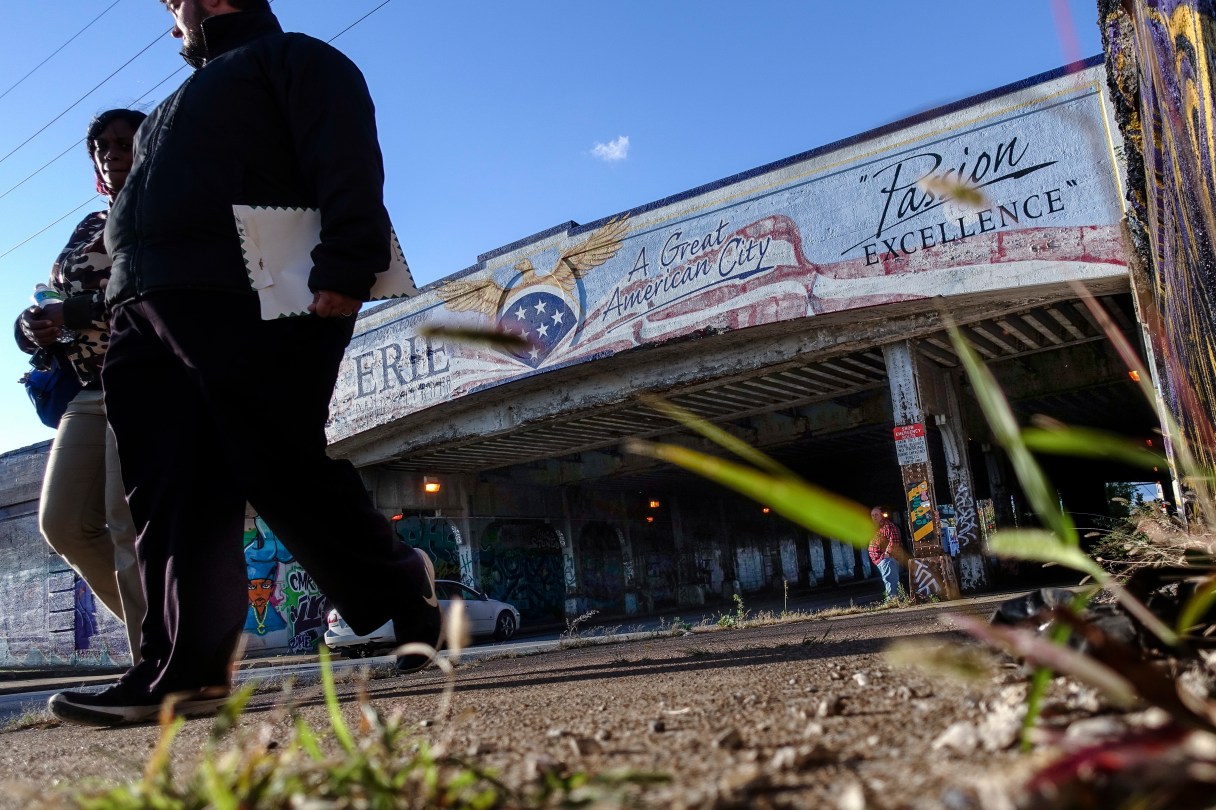
ERIE, Pa. – With the abandoned smokestacks off the bay and ramshackle factories along 12th Street, it’s easy to pin the blame for this industrial city’s plight on the loss of manufacturing jobs to China and Mexico.
Many, including President Donald Trump, hold the belief that shuttered factories are what primarily ails Erie and other aging blue-collar company towns.
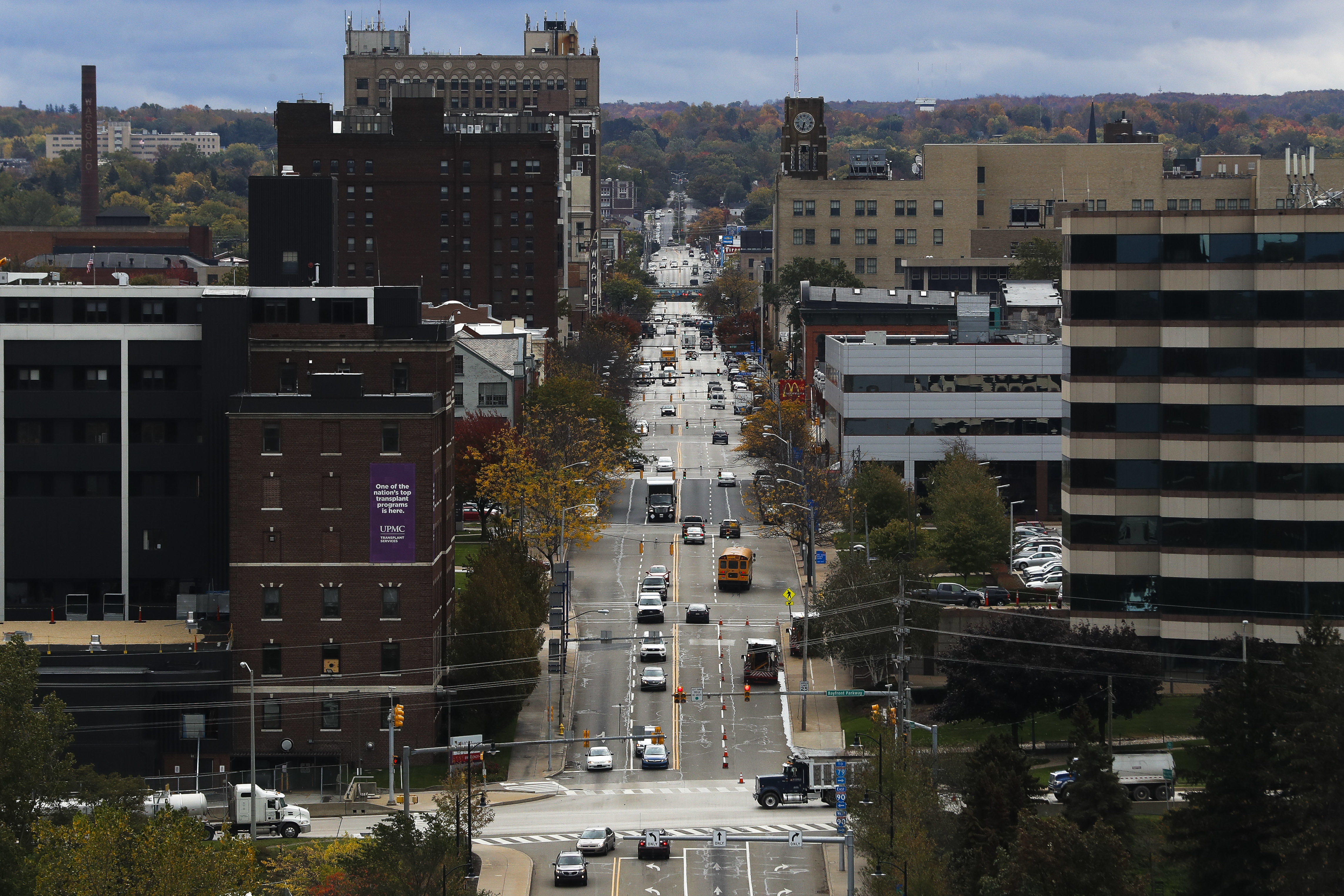 In this Oct. 24, 2017, photo, vehicles travel along State Street, the main thoroughfare through town, as seen from the Bicentennial Tower in Erie, Pa. Since 2008, Erie has suffered a hidden and potentially more devastating exodus: The loss of well-paid white-collar jobs. City leaders in Erie say it needs to retain those white-collar workers, more than it needs a return to a blue-collar past where the factories covered the east side of town in brown soot and Lake Erie was reserved for shipping instead of swimming and tourism. (AP Photo/John Minchillo)
Yet since 2008, Erie has suffered a less-known and potentially more devastating exodus of well-paying white-collar jobs. Half its CEOs – 220 jobs – have disappeared. The city has shed 8 percent of its accountants, 10 percent of its computer workers, 40 percent of its engineers and 20 percent of its lawyers, according to government data analyzed by The Associated Press.
They are the professional class jobs that buttressed Erie’s manufacturing might. And they are the type of work that has increasingly become the backbone of the U.S. economy.
After reviewing Labor Department figures dating to 2008, the AP found that a third of major metro areas – nearly 80 communities – are shedding a greater percentage of white-collar than blue-collar jobs.