
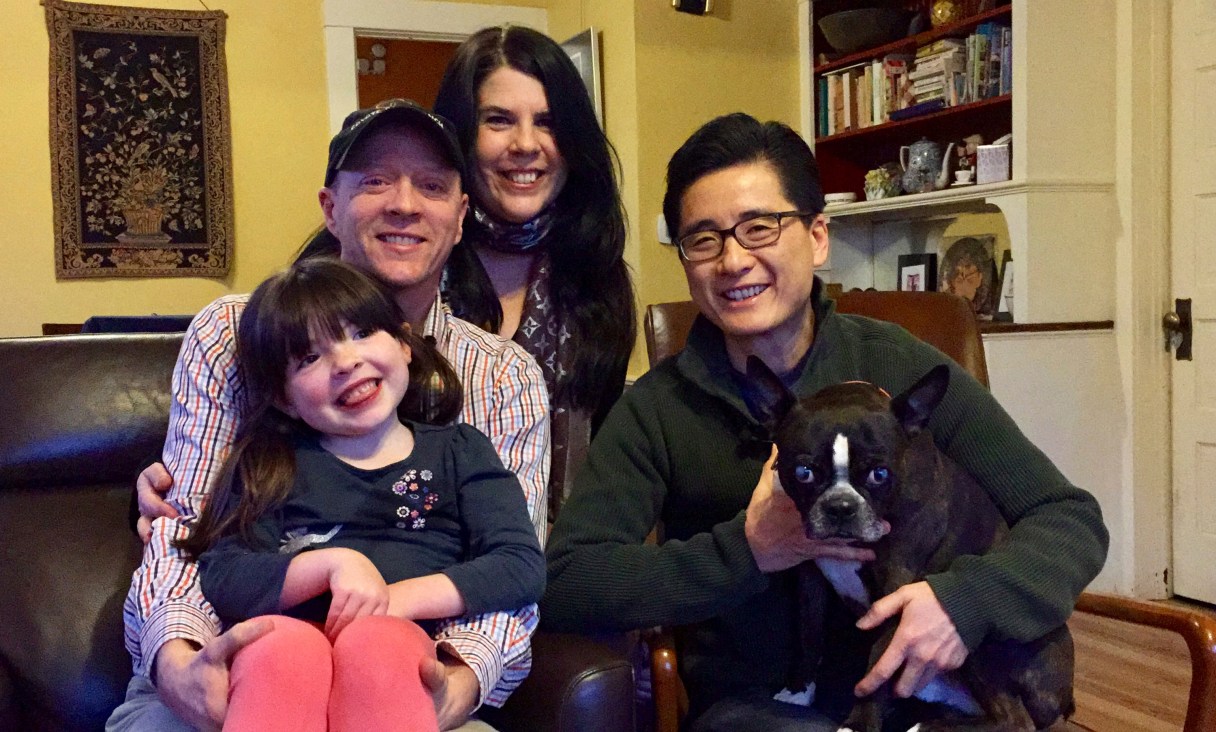
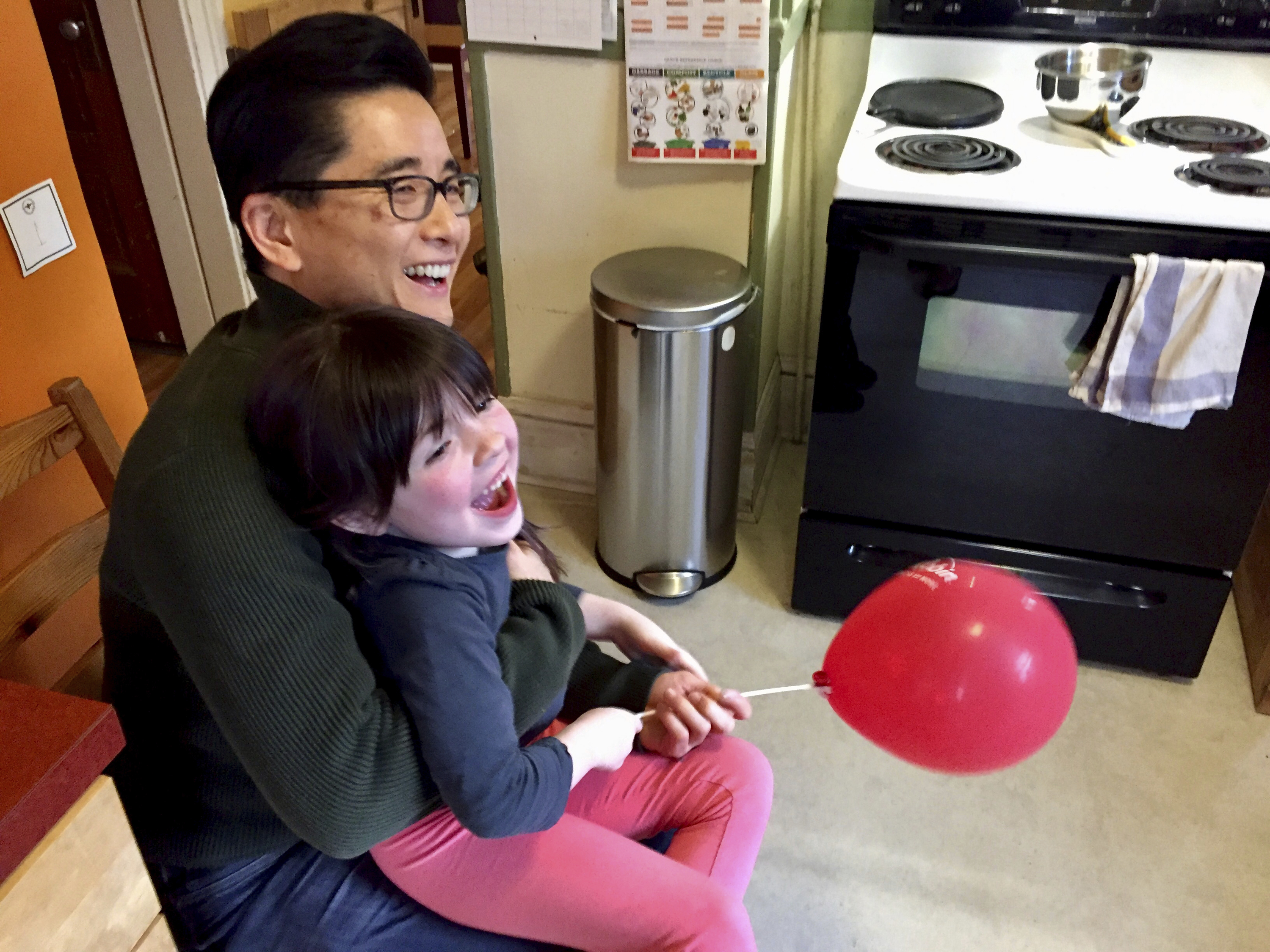
 In this March 2, 2018 photo, Yee Won Chong and Avalon LaFrance, 5, play with a balloon in the home where Chong rents a room from Avalon’s mother and her partner, Brooks Nelson, in Portland, Ore. When Chong was diagnosed with cancer and his relatives were half a world away in Malaysia, he turned to the friends he considers his “chosen family.” Nelson, a Portland, Ore., charity executive used his own sick days to accompany Chong to doctor’s appointments. (AP Photo/Gillian Flaccus)
NEW YORK- Yee Won Chong had just been diagnosed with cancer. His relatives were half a world away in Malaysia and couldn’t care for him. So he turned to the friends he considers his “chosen family.”
“There was no question,” says his longtime housemate Brooks Nelson, a Portland, Ore., charity executive who used his own sick days to accompany Chong to doctor’s appointments. “That’s what family does.”
Arrangements like theirs have quietly been gaining political recognition.
In the last two years, Arizona, Rhode Island and the three biggest U.S. cities – New York, Los Angeles and Chicago – have passed laws that let workers use sick days to care for anyone who’s like family to them. Similar laws also passed in Austin, Texas, just last month and St. Paul, Minn., in 2016. Millions of federal employees and contractors also have the benefit.
To some business interests, such laws put bosses in the awkward position of figuring out who’s the “equivalent” of family. But to Chong, the policies simply “catch up with the ways people are related to each other.”