
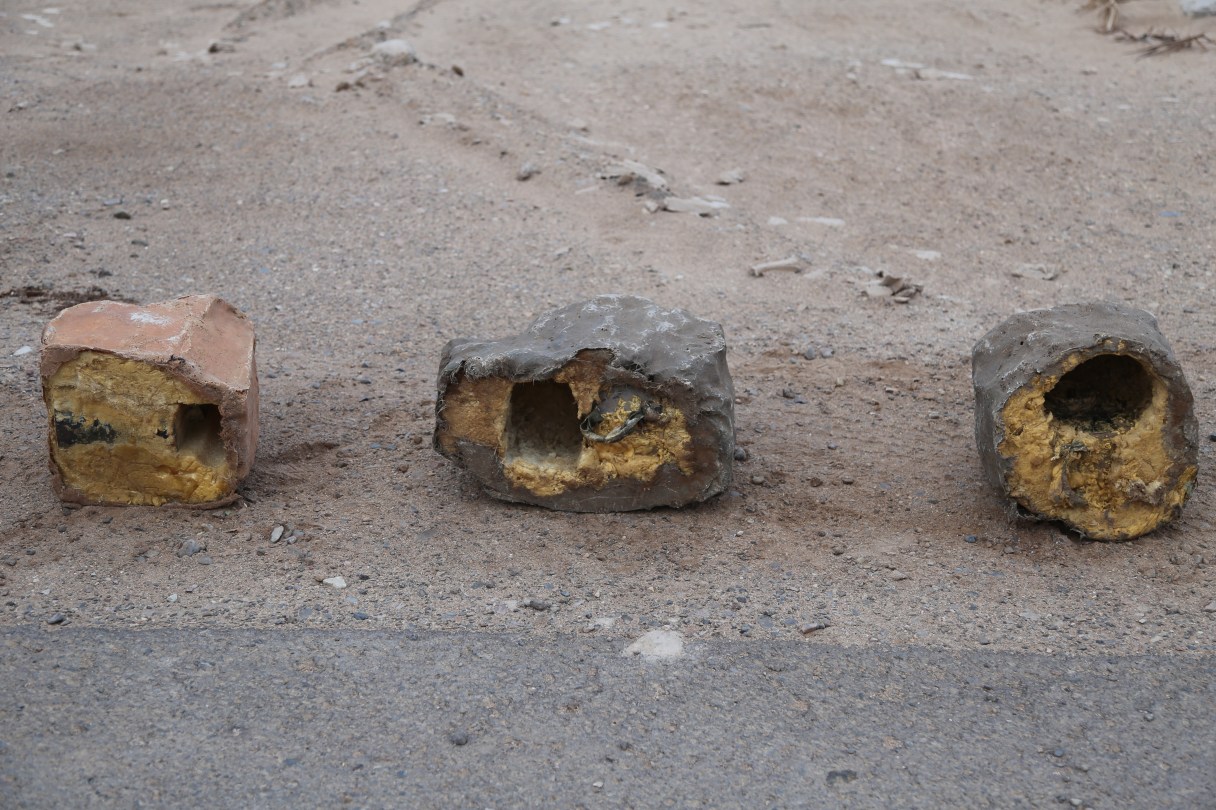
DUBAI, United Arab Emirates (AP) – Roadside bombs disguised as rocks in Yemen bear similarities to others used by Hezbollah in southern Lebanon and by insurgents in Iraq and Bahrain, suggesting at the least an Iranian influence in their manufacture, a watchdog group said on Monday.
The report by Conflict Armament Research comes as the West and United Nations researchers accuse Iran of supplying arms to Yemen’s Shiite rebels known as Houthis, who have held the country’s capital since September 2014.
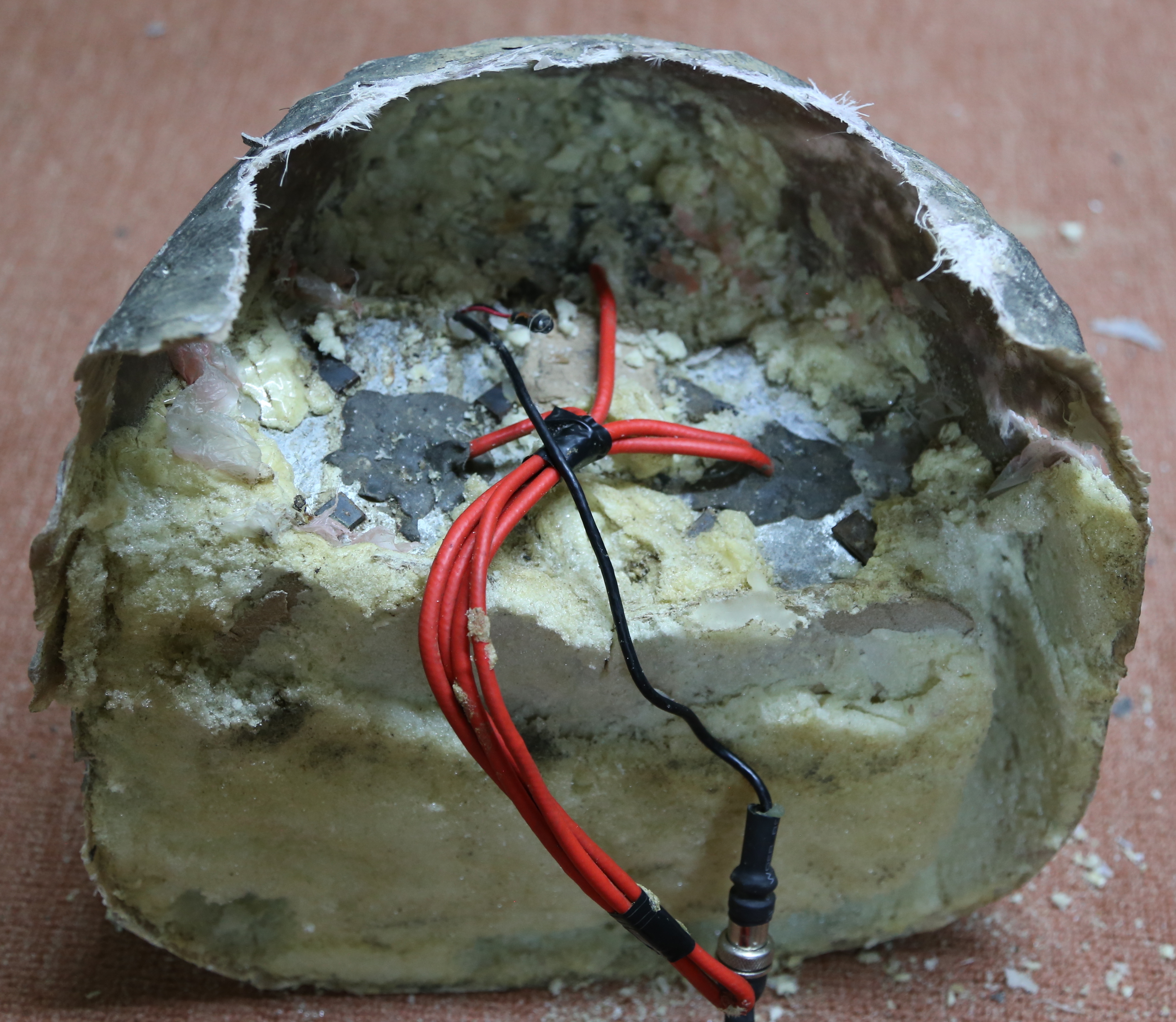 In this undated photograph provided by Conflict Armament Research, an independent London-based group that researches battlefield weaponry, an explosive disguised as a rock is on display in Yemen. Roadside bombs disguised as rocks in Yemen bear similarities to others used by Hezbollah in southern Lebanon and by insurgents in Iraq and Bahrain, suggesting at the least an Iranian influence in their manufacturing, a report released Monday, March 26, 2018, by Conflict Armament Research alleges. The report comes comes as the West and United Nations researchers accuse Iran of supplying arms to Yemen’s Shiite rebels known as Houthis, who have held the country’s capital since September 2014. (Tim Michetti/Conflict Armament Research via AP)
Those weapons allegedly included ballistic missiles used to target Saudi Arabia, which leads a military coalition of Arab nations backed by the United States that is stuck in a stalemate war with the Houthis. A barrage of Houthi missile fire late on Sunday killed one person in the Saudi capital, Riyadh, and wounded two others.
Iran has long denied supplying arms to the Houthis, and its mission to the United Nations is dismissing the new report. Iranian Foreign Minister Mohammad Javad Zarif has derided such weapons research as “fabricating evidence.”
The report is just the latest sign of how the conflict in Yemen, the Arab world’s poorest country where over 10,000 people have been killed, has changed from a civil war to a proxy fight among Mideast rivals. The Saudi-led war there turned three years old on Sunday.