
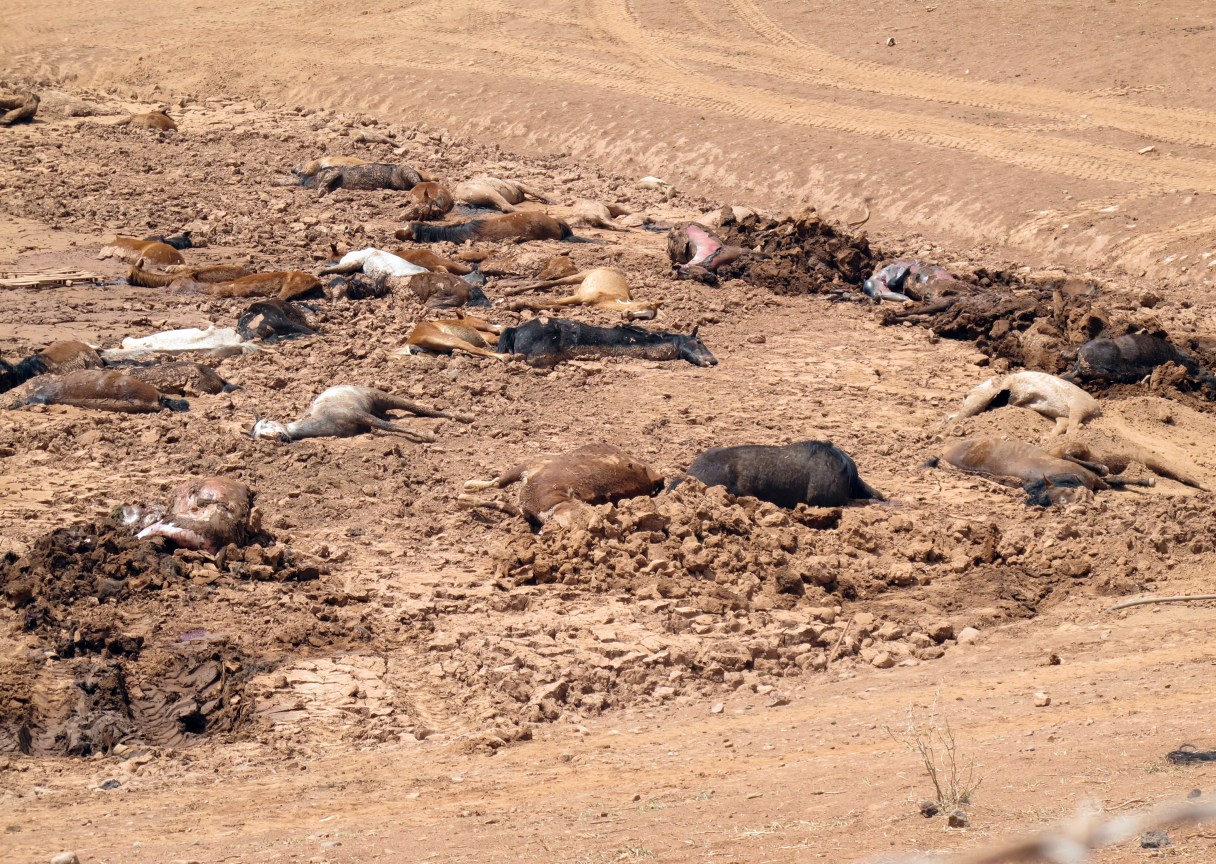
CAMERON, Ariz. (AP) – Off the highway surrounded by northern Arizona’s Painted Desert lies one of the starkest examples of drought’s grip on the American Southwest: Dozens of dead horses surrounded by cracked earth, swirling dust and a ribbon of water that couldn’t quench their thirst.
Flesh exposed and in various stages of decomposition, the carcasses form a circle around a dry watering hole sunken in the landscape.
It’s clear this isn’t the first time the animals have struggled. Skeletal remain are scattered on the fringes and in an adjacent ravine.
It’s a symptom of a burgeoning wild horse population and the scarcity of water on the western edge of the Navajo Nation following a dry winter and dismal spring runoff. Conditions aren’t forecast to improve anytime soon, and tribal officials suspect other animals have died with not enough to eat or drink.
“One of the things we do is we picture the worst-case scenario when we got out there,” said Harlan Cleveland of the tribe’s Department of Emergency Management. “I did smell the decomposition and the bodies starting to smell, the carcasses. But I didn’t realize until I looked down from the berm and saw all those horses down there.”