

WHITWELL, Tenn. – The mountain keeps winning battles with Mullins Cove Road, now pocked after two collapses, and some residents are worried that putting repairs on the back burner could put them in jeopardy.
Mullins Cove Road is a 22-mile-long, winding county road in Marion County that runs along the Tennessee River from the Marion-Hamilton county line near the Suck Creek confluence, where the road name at one point changes to River Canyon Road, to Griffith Highway, about six miles south of the town of Whitwell.
A landslide a couple of weeks ago that collapsed a 300-yard-long section of road on the west end of the road forced county leaders to pony up $250,000 for an emergency fix, but nearby residents are miffed that another collapse on the east end isn’t getting the same attention after two years.
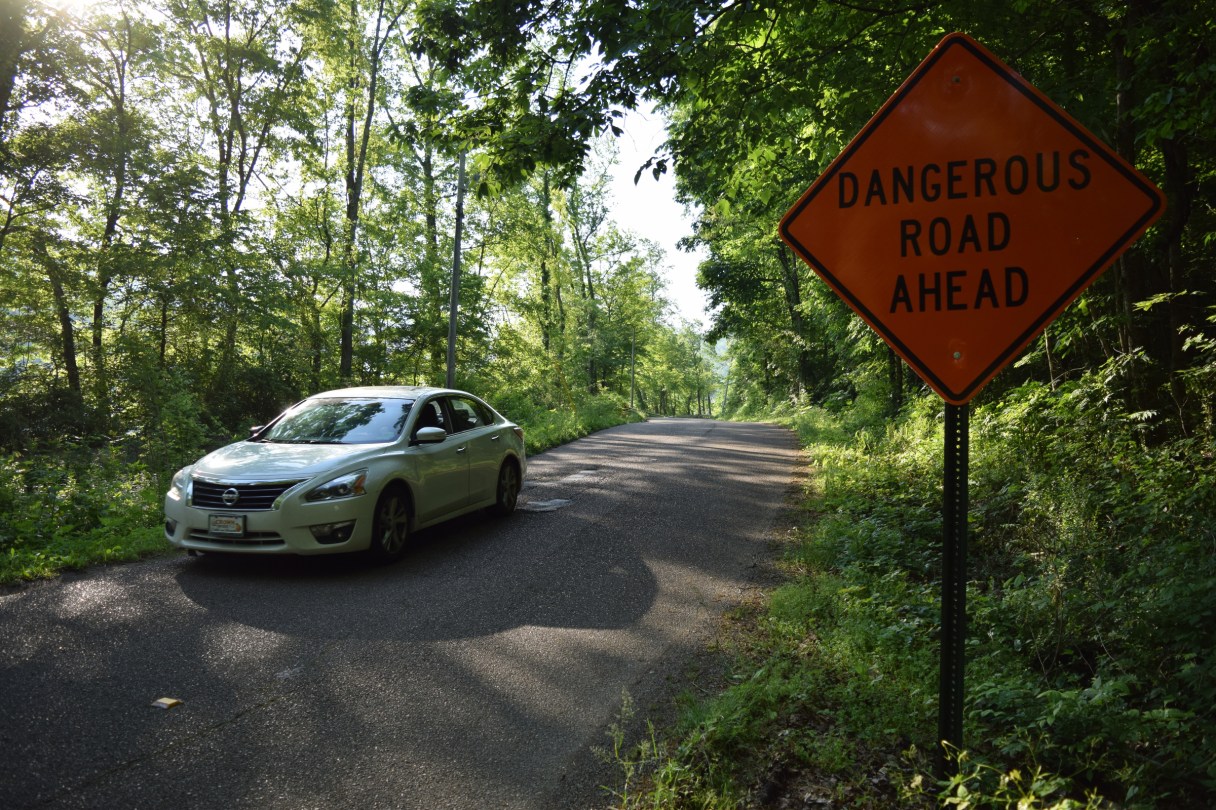
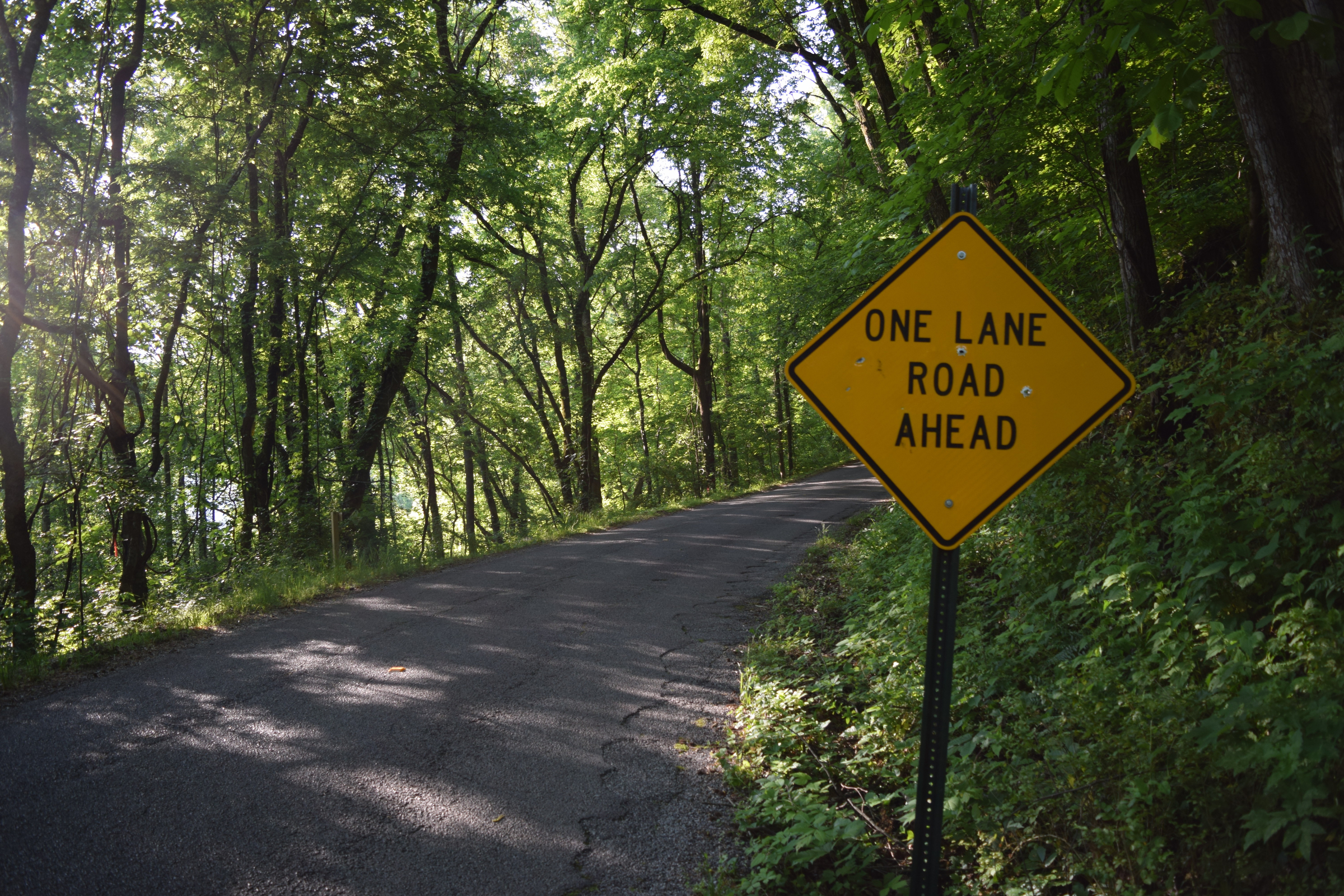
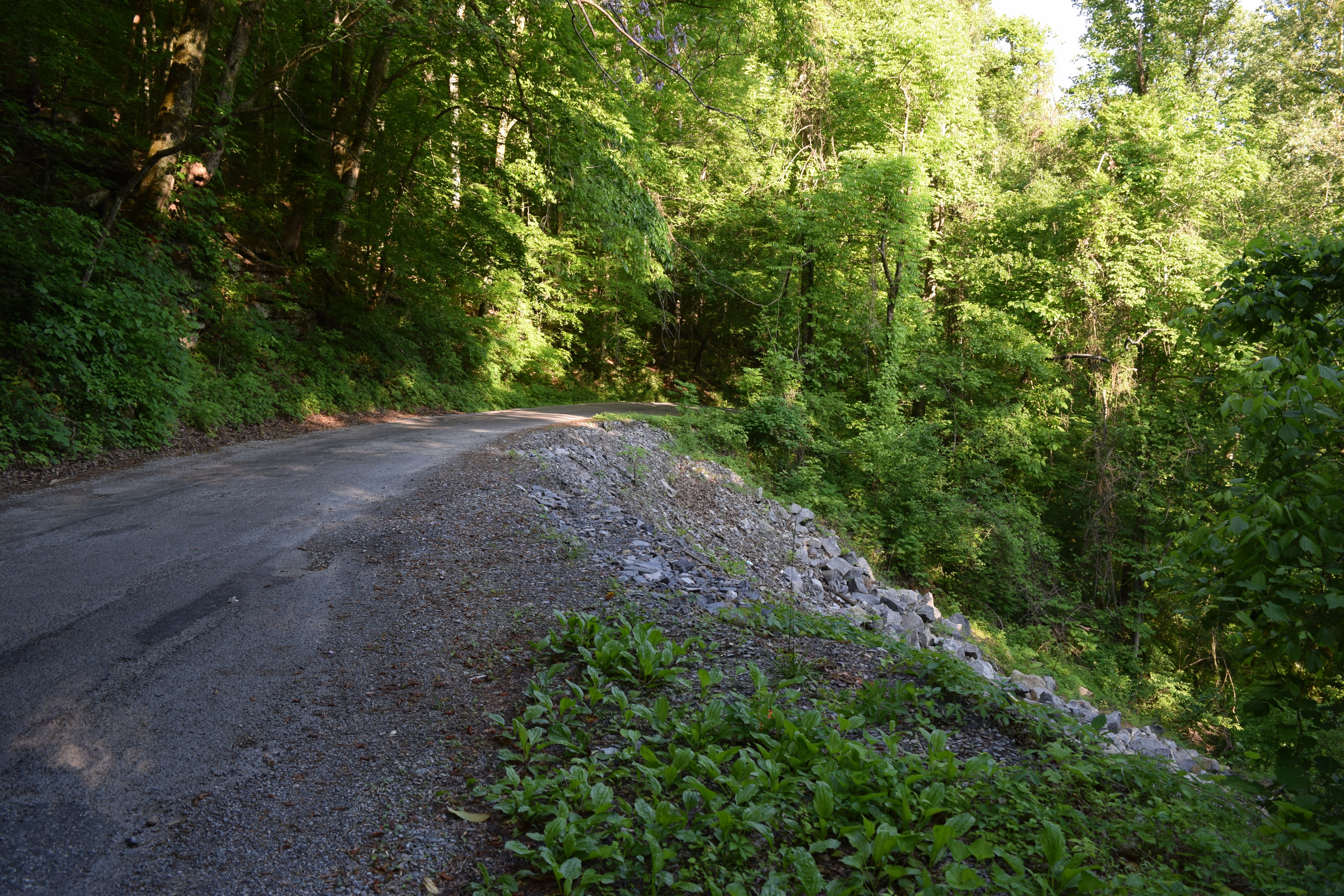
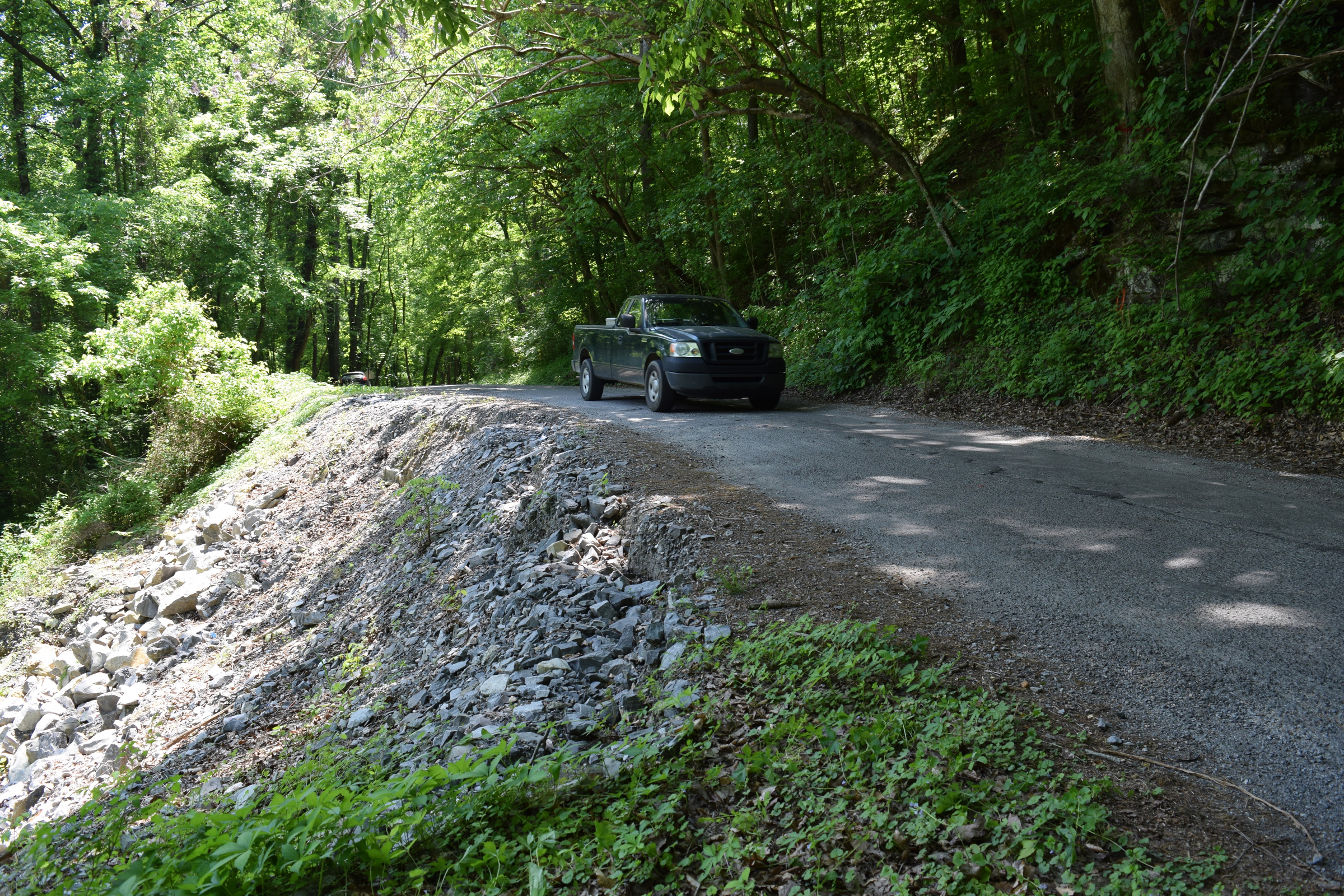
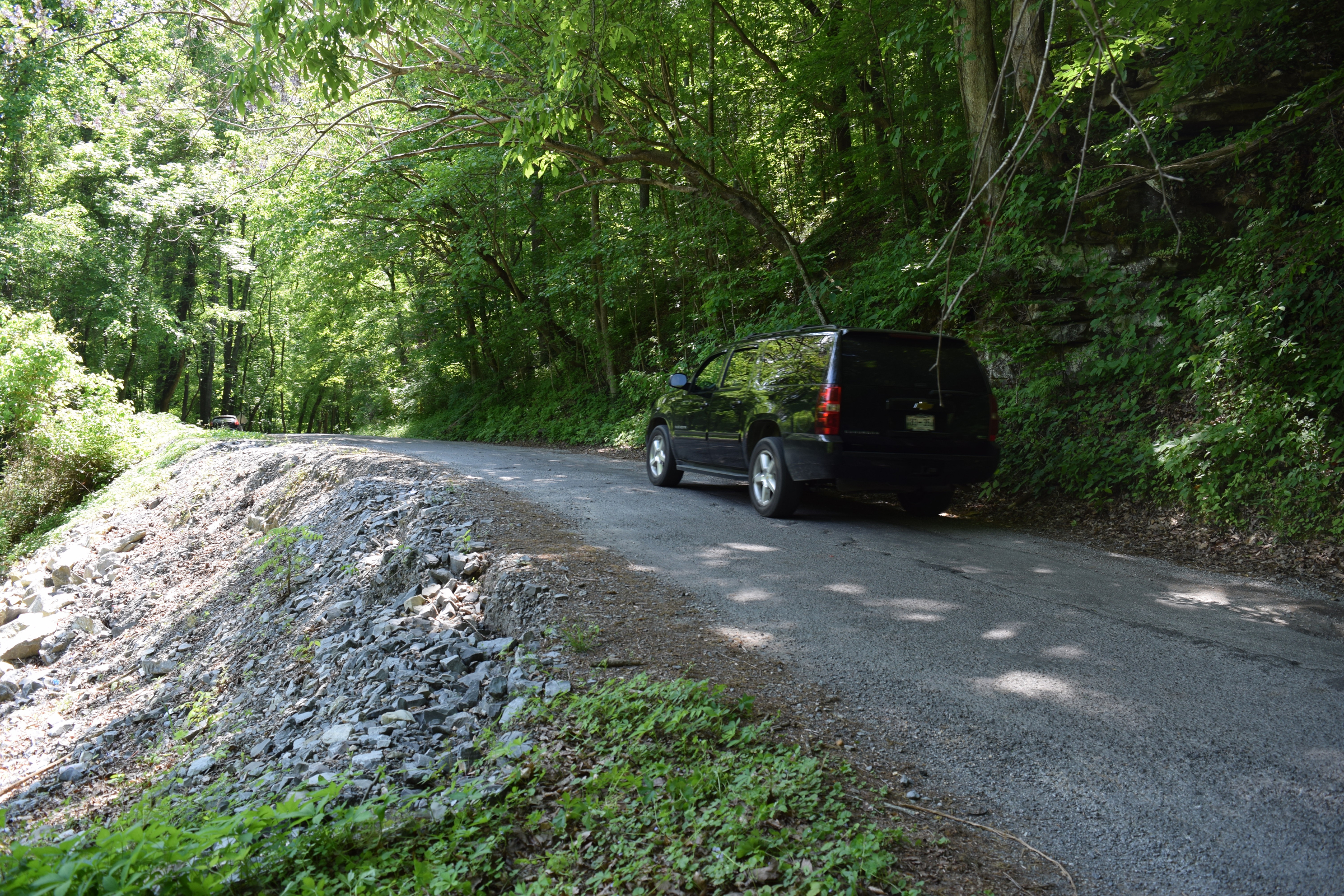
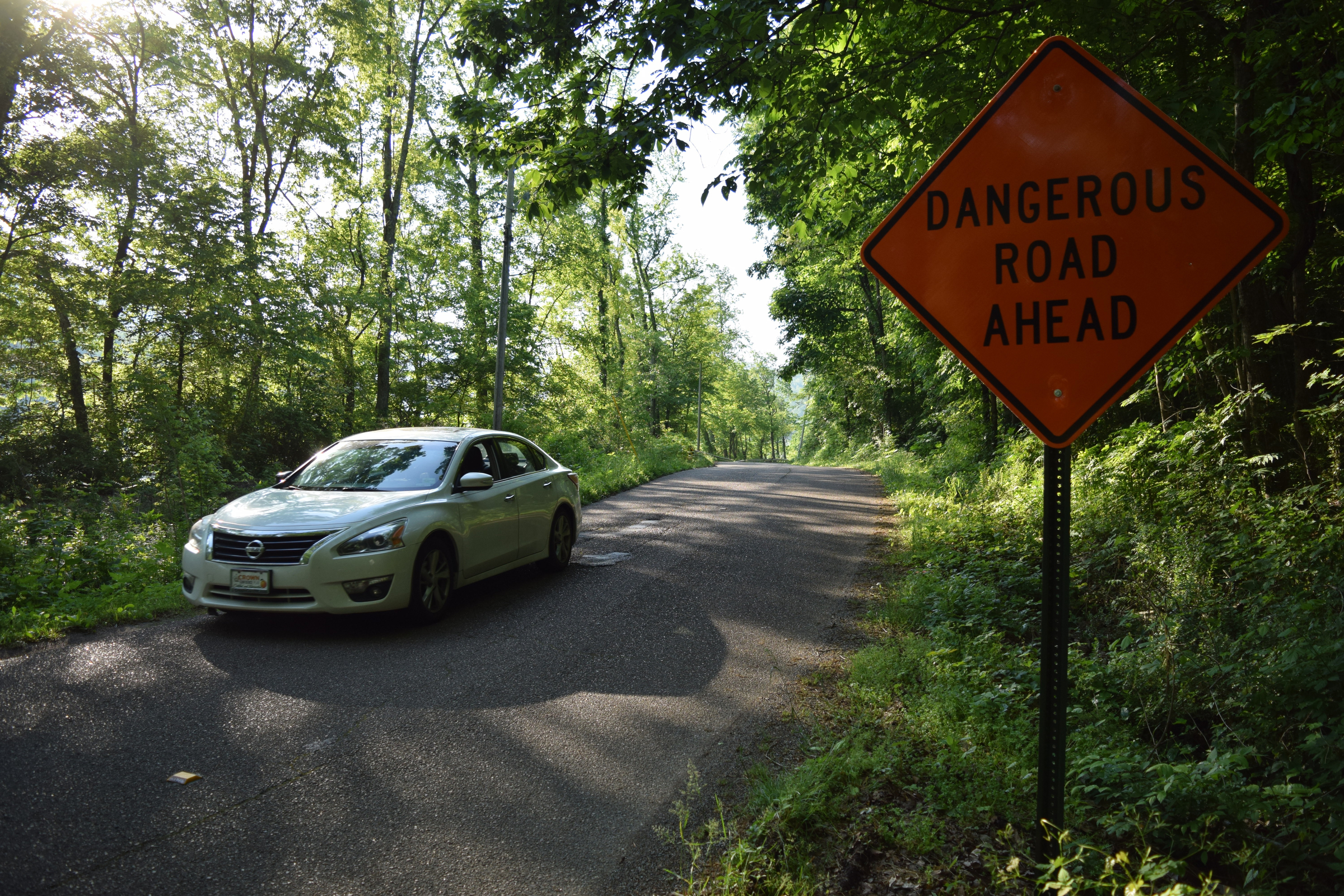
The road is decidedly worse on the east end, where it is wedged tightly between the river and the mountainside. The road on the west half – excepting the now-repaired slide site – is two lanes wide with a double-yellow center stripe, reflectors and white striping along the edges, while the eastern half has a number of reflectors but lacks much of the center-line striping and has almost no striping along its edges.
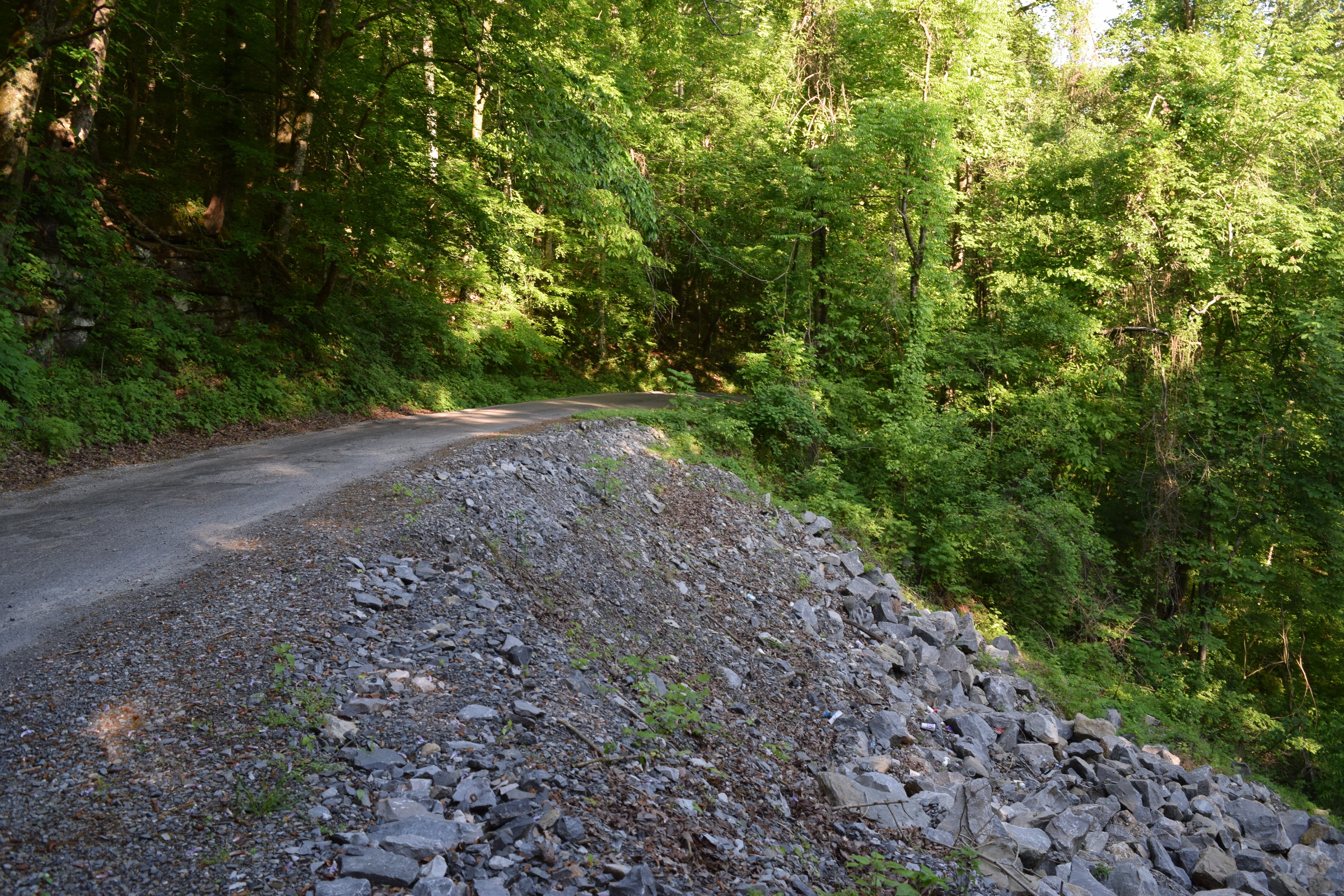
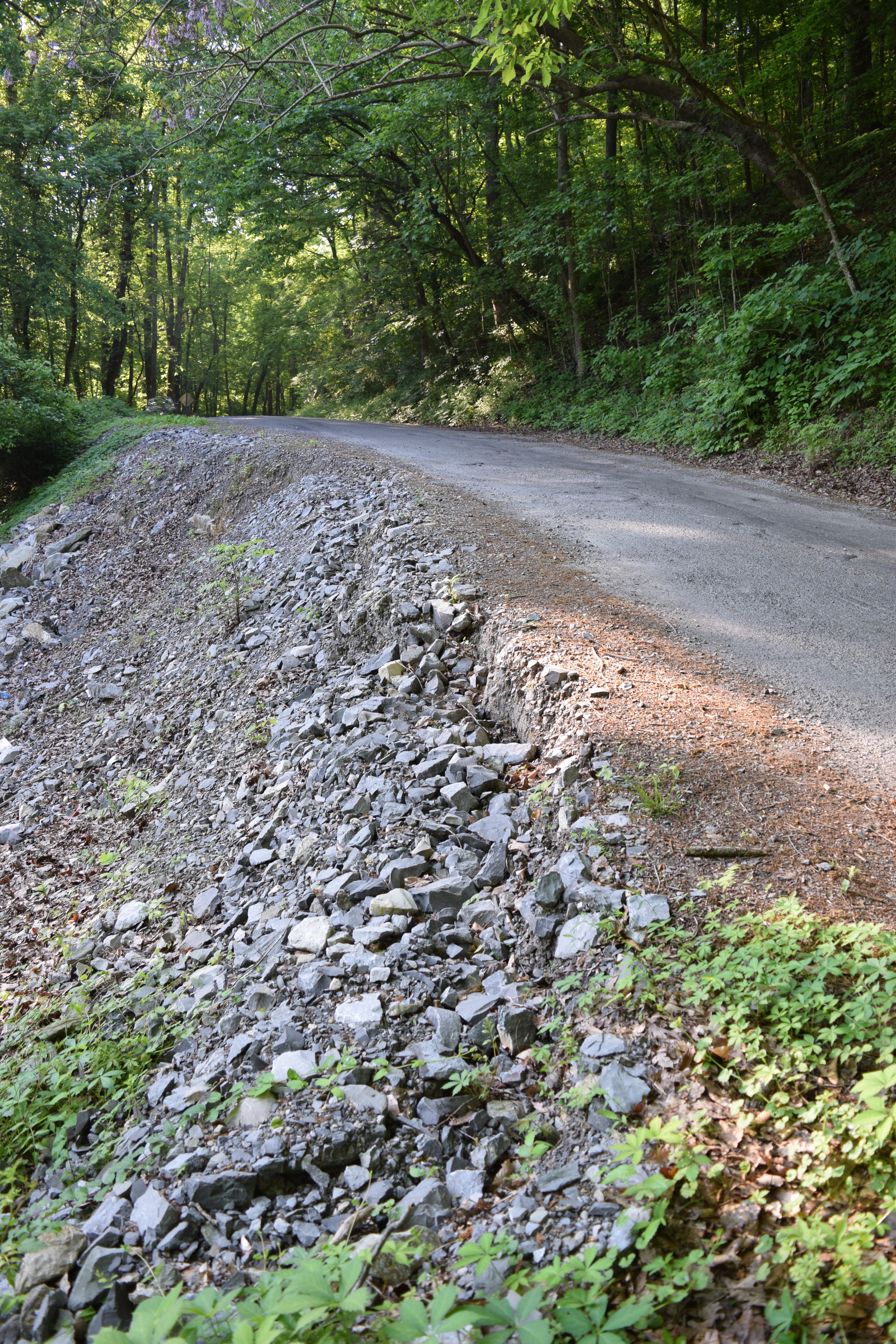
There, traffic must cross the one lane that remains while staying away from the unguarded edge of a 70-foot drop-off to the Tennessee River on one side and massive boulders just inches from the road on the other. At the edge, rip-rap rock, put in place as support some time ago for the remaining lane, is slowly sliding down the mountain toward the river. The outer part of the road makes a straight, vertical edge for several feet where the supporting rock is giving way, just a couple of feet from where the wheels of vehicles, including the local school bus, pass over.
The east end also is a bone-jarring checkerboard of potholes and patches that rattles vehicles traveling at any speed, while the west end is much smoother in most places and in far better condition.
On Wednesday, longtime resident Jane McKinney stopped her battered Jeep atop the one-lane stretch. She said she’s been dealing with Mullins Cove Road problems for three decades.
“It’s always been bad,” McKinney said, noting that she doesn’t replace her old Jeep because she doesn’t want to invest much money in something the road is going to beat to pieces anyway.
“They’ve been dumping rocks and putting stuff on it,” McKinney said of past repair efforts. She suggested that enough patching material had been dumped on the road a shovel-full at a time over the years to have paved the whole stretch at least once.
The reason for collapses?
“It’s the water,” McKinney said. She said runoff from heavy rains plows over and under the road, shifting rocks and eroding pavement along with the soil.
McKinney thinks a guardrail should be installed there at the collapse and probably in some other locations, too.
Another resident, Nancy Skinner, addressed the Marion County Commission in September. She said commissioners blamed the road department for not doing repairs and the road department blamed the commission for not funding them.
County Mayor David Jackson said the county road department doesn’t have the funds for the work on the older road collapse but he said Road Superintendent Jim Hawk had been seeking a solution for well over a year.
“Mr. Hawk has been working on that for 16 or 17 months trying to get some help from the state,” Jackson said. The emergency repairs recently completed on the most recent collapse “was probably the first time the County Commission has ever done that,” Jackson said.
“It’s the same problem that all county governments have, we just don’t have the funds and it seems like everything costs so much more,” he said.
Skinner believes county officials should strive to modernize their thinking when it comes to Mullins Cove Road’s eastern end. It’s used by out-of-town visitors who go to Pot Point Nature Trail (the road is called River Canyon Road at that point) and several trail heads and boat ramps in the Suck Creek area, she said.
Skinner said that, at night, the drop-off at the end of the eastbound lane is hard to see.
“I’m not giving up,” she said. “In good conscience, I don’t want to read that somebody died because I didn’t do enough.”
The second, older slide is on the road department’s radar, Hawk said.
“I haven’t touched it since I’ve been in office,” admitted Hawk, who was elected to the post in 2016. But that doesn’t mean no one is working on a solution, he said.
Hawk said he has some funding to put toward a little work at the site, but not a real fix.
“I know what we need to do, it’s just getting funds,” he said Wednesday after returning from the current slide work site on the west end. Hawk said his department, like many rural county road departments, gets little money from the county. Most work and departmental operations are funded by gas tax revenues annually issued to the department from the state.
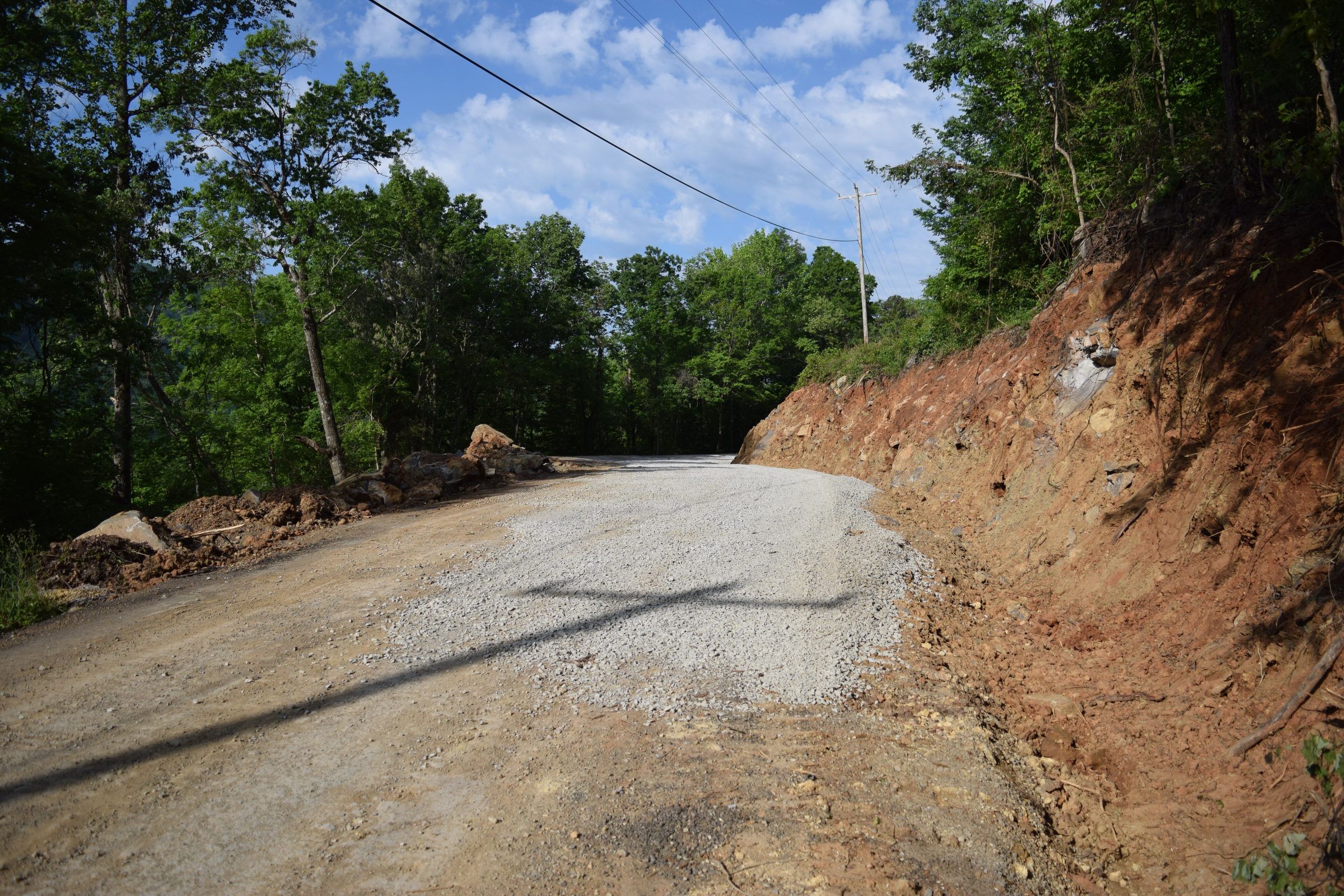
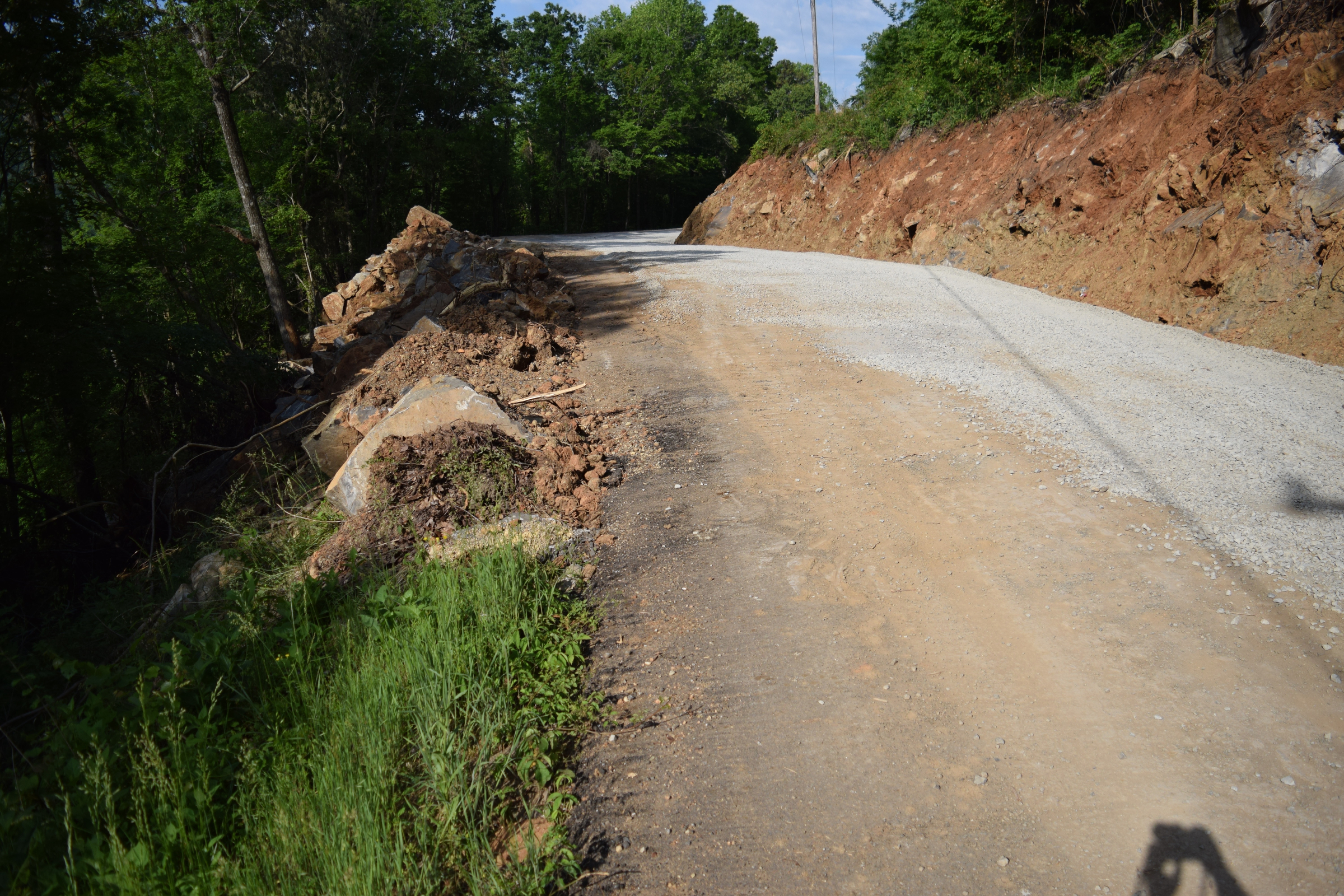
At the recent, major slide site on the west end, gravel was poured last week, and once it settles for a few days, paving work could be completed as soon as this week, Hawk said. The slide there, partially caused by an underground waterfall that can be heard at the surface, had cut off residents for a week or more, he said.
Hawk thanked nearby quarry operation Buzzi Unicem USA, which donated a considerable amount of rock for the project, while also praising county commissioners for approving the $250,000 in funding.
However, the lingering collapse on the east end will require more complicated work.
Hawk said engineers believe the road should be supported by building up from the river 70 feet or so below using pilings and other support mechanisms to strengthen the earth beneath. There are also ideas about cutting into the mountainside to make more room for the road in that direction.
Hawk said he has consulted over about 16 months with the agencies and entities with interest in that section of Mullins Cove Road – TVA, the Tennessee Division of Forestry, Tennessee Department of Transportation, U.S. Army Corps of Engineers and the Tennessee River Gorge Trust.
“We’ll be meeting with the engineer on May 25,” Hawk said.
In the meantime, the scary, narrow spot and the potholes have become the target of a petition.
Sheryl Davenport, an 18-year resident of the road, prepared a petition to take to county leaders to urge them toward a solution.
“It shouldn’t take two years to choose a plan to fix it,” Davenport said. “The county has got to do something. You can’t even dodge the potholes anymore.”
She said a petition- signing meeting held recently at Kelley’s Ferry Community Church netted 80 signatures before she handed it off to another Mullins Cove Road resident. She said she believes more people have signed the petition since then but she hasn’t heard how many.
These days, she doesn’t invite people to her home anymore because she’s afraid for them to drive by the collapse.
“It’s a miracle by the grace of God that no one’s been killed there,” Davenport said.
Contact staff writer Ben Benton at bbenton@timesfreepress.com or 423-757-6569. Follow him on Twitter @BenBenton or at www.facebook.com/benbenton1.