
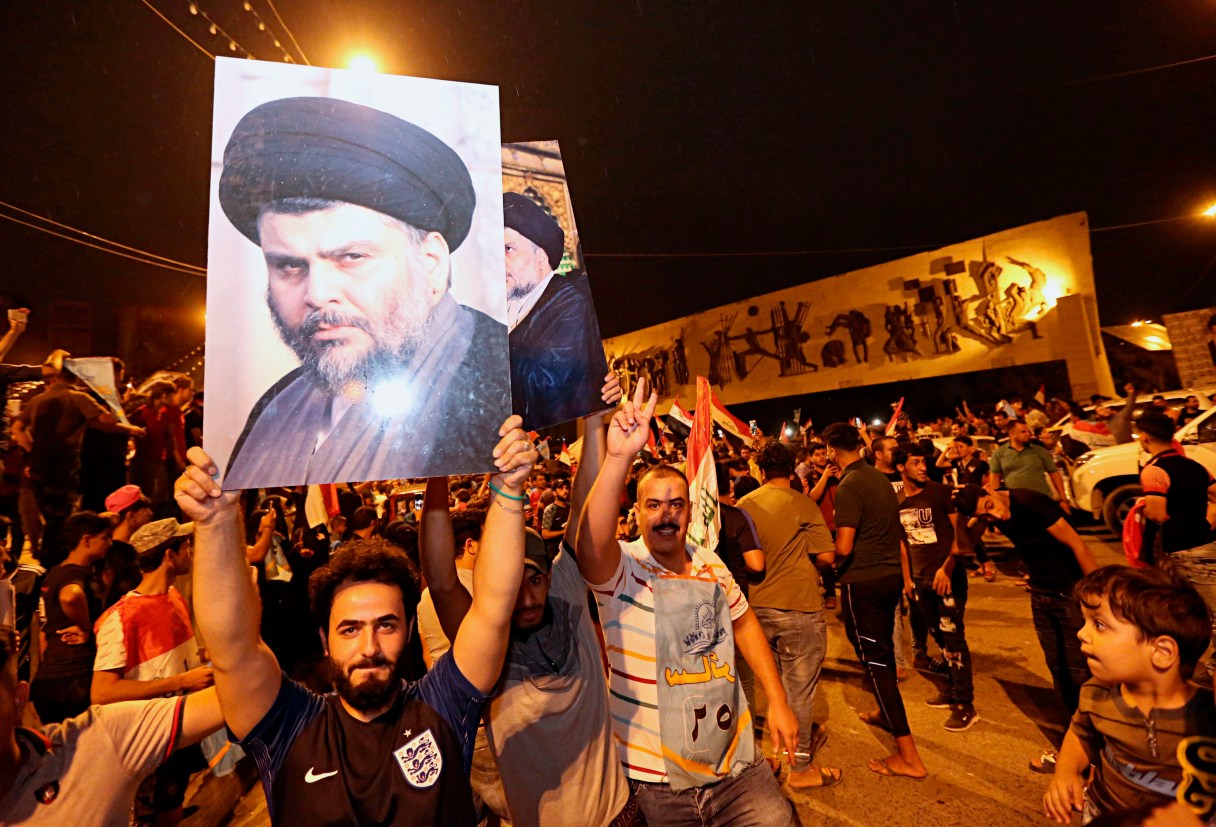
BAGHDAD (AP) – The political coalition of influential Shiite cleric Muqtada al-Sadr took an early lead in Iraq’s national elections in partial returns announced late Sunday by the Iraqi electoral commission.
An alliance of candidates linked to Iraq’s powerful Shiite paramilitary groups was in second. The alliance is headed by Hadi al-Amiri, a former minister of transport with close ties to Iran who became a senior commander of paramilitary fighters in the fight against the Islamic State extremist group.
Prime Minister Haider al-Abadi performed poorly across majority Shiite provinces that should have been his base of support.
The announcement came just over 24 hours after polls closed across the country amid record low voter turnout. It included full returns from only 10 of the country’s 19 provinces, including the provinces of Baghdad and Basra.
Members of the national election commission read out vote tallies for each candidate list in each of the 10 provinces on national TV. By the end of the announcement, al-Sadr’s list had the highest popular vote, followed by al-Amiri’s.