

In his compelling narrative “The Past is a Foreign Country,” David Lowenthal shows the challenges and limitations when we attempt to revisit memories, whether cultural or personal. Unpleasant episodes may have been buried. Prejudices may have been discarded. Fresh information may place an entirely new interpretation on what we experienced. The “good old days” may not bear close re-examination.
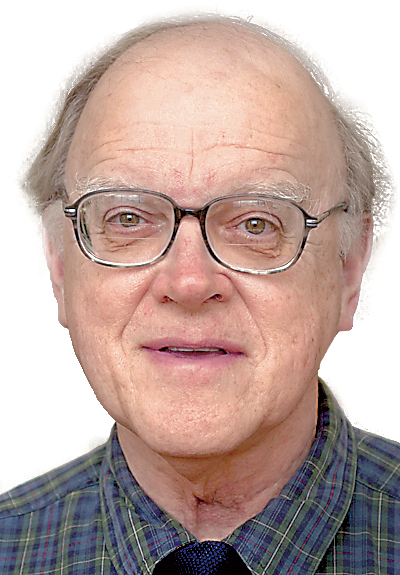 Dr. Clif Cleaveland
Ten days ago, I attended our eldest grandson’s graduation ceremony at Duke University, 60 years after receiving my undergraduate degree on the same campus. The contrasts of the two events could not have been more striking.
In 1958, an all-white faculty and administration conferred degrees on an all-white student body. The only African- Americans we saw on campus maintained grounds and facilities or tended to food services and housekeeping. No Hispanic or Asian students joined our ranks. An earlier attempt by divinity school students to integrate their seminary had failed.
We read of Rosa Parks and Martin Luther King Jr.’s roles in the boycott and subsequent integration of Montgomery, Alan’s buses. At the beginning of our senior year, President Eisenhower had ordered the National Guard to facilitate the integration of public schools in Little Rock, Arkansas. On campus we felt insulated from the rising turmoil of the civil-rights movement.
Few of us incurred debt. Tuition and fees totaled $450. A double-occupancy dorm room rented for $175 for a year. Summer jobs and part-time work during the school year could cover most financial gaps.
The Korean War had ended five years earlier. Several veterans of that conflict used benefits of the GI Bill to join our class. An uneasy peace with Russia prevailed, assuring the continuation of a military draft. ROTC, military reserve training and the National Guard offered alternatives for many classmates.
For unclear reasons, marriages tended to occur earlier, many in the months following graduation.
On the health scene, the Salk vaccine had progressively reduced the threat of polio, which had plagued our nation for decades. Six years before the Surgeon General’s report that linked smoking to lung cancer, cigarette smoking was widespread. Diuril, a newly released diuretic, provided a new tool to control high blood pressure. Few interventions existed for cardiovascular disease and cancer.
Overall, we did not have a lot to concern us: Vietnam, HIV/AIDS, global warming, assassinations of political leaders and outbreaks of domestic and international terrorism lay over a distant horizon. We maintained a cool demeanor, confidant that our futures would unroll smoothly before us.
In sharp contrast to 1958, the class of 2018 displayed a beautiful diversity of Americans: African-Americans, Chinese-Americans, Japanese-Americans, Indian-Americans. Only Hispanic students seemed underrepresented. Faculty and staff showed similar diversity. Immigration policies had clearly benefited the university.
Women made up a far larger proportion of undergraduate and graduate students. Sixty years ago, no women majored in engineering. A third of this year’s engineers were female.
Apple CEO Tim Cook delivered the keynote address. A leader in a complex, revolutionary technology that began decades after my graduation, he addressed complex problems that awaited the energy and ingenuity of graduates to solve.
Titles of undergraduate and graduate research employed a vocabulary that would have been uninterpretable six decades ago. Research teams included students at all levels of study. A visit to an undergraduate lab in the engineering school displayed breathtaking advances in electronics and computer programming.
How will this graduation be recalled in 60 years?
Other questions gnawed at me: Has emotional and ethical intelligence kept abreast of technologic and intellectual advances? Worldwide, the gap widens between “haves” and “have-nots.” Adequate food, potable water and access to health care are growing challenges in large tracts of the world. Within the U.S., poverty, violence and addictions to drugs and alcohol plague many communities and rural areas. Will the new graduates find solutions for these festering problems?
Will the fruits of technology simply build more personal fortunes and lucrative, startup companies, or can they be directed to the common good? Poorly funded and equipped public schools will deprive many Americans of the opportunity to participate in this higher-tech economy. Can the new graduates close the educational gap?
Listening closely, I concluded that this generation of graduates is less self-centered, more creative and more likely to tackle problems that the rest of us have deemed unsolvable. I am guardedly optimistic for our shared future.
Clif Cleaveland, M.D., is a retired internist and former president of the American College of Physicians. Email him at ccleaveland@timesfreepress.com.