
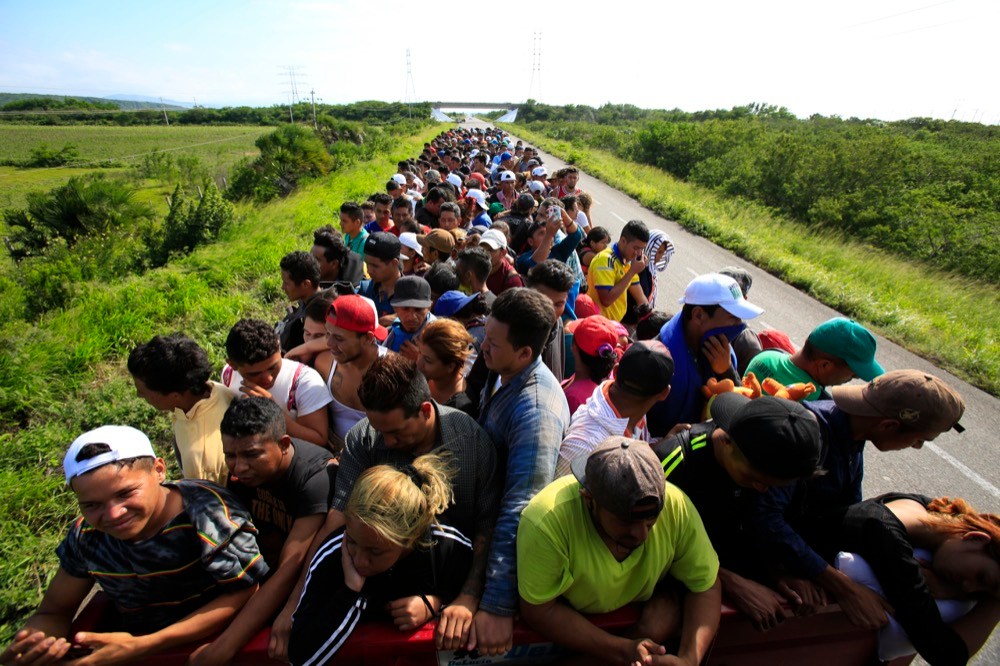
The caravan set out from San Pedro, Honduras, in early October. From an initial group of less than 200, numbers swelled to 7,000 as word of the caravan spread on social media and by word-of-mouth. Migrants were predominantly Honduran but included refugees from Guatemala, El Salvador and Nicaragua. They traveled on foot, some hitching occasional rides on flat-bed trucks. On Oct. 25, they pushed across the bridge over the Suchiate River at the Guatemalan-Mexican border. Mexican police initially blocked entry and fired tear-gas to deter the migrants before allowing peaceful entry to the caravan. Almost 2,000 applied for asylum in Mexico. Some migrants decided to return home at that point.
The remaining emigrants plan to walk a westerly route of hundreds of miles to reach the U.S. border where they will seek political asylum.
Honduras is a nation of 9 million, more than half of whom live in poverty. Almost half of children under age 5 suffer malnutrition. The nation has the highest level of income inequality in Latin America. The homicide rate is among the highest in the world. The Caribbean coastal area of Honduras is rife with drug smuggling. The area serves as a way-station for cocaine shipments from South America to the US. Young women may be forced into sexual servitude by the gangs. Workers and business owners are routinely forced to pay protection money.
In 2016, the U.S. government sent $128 million to Honduras to be used for military training, drug interdiction, violence prevention and agricultural subsidies. Six hundred U.S. military personnel are stationed at Soto Cano Air Base for training and for anti-drug activities.
In May 2018, President Trump removed “temporary protected status” from almost 90,000 Hondurans residing in the U.S., a first step in their deportation. Thousands of Hondurans had been granted entry to the U.S. after a hurricane devastated their nation in 1999. Thus far in 2018, almost 20,000 have been deported to Honduras.