
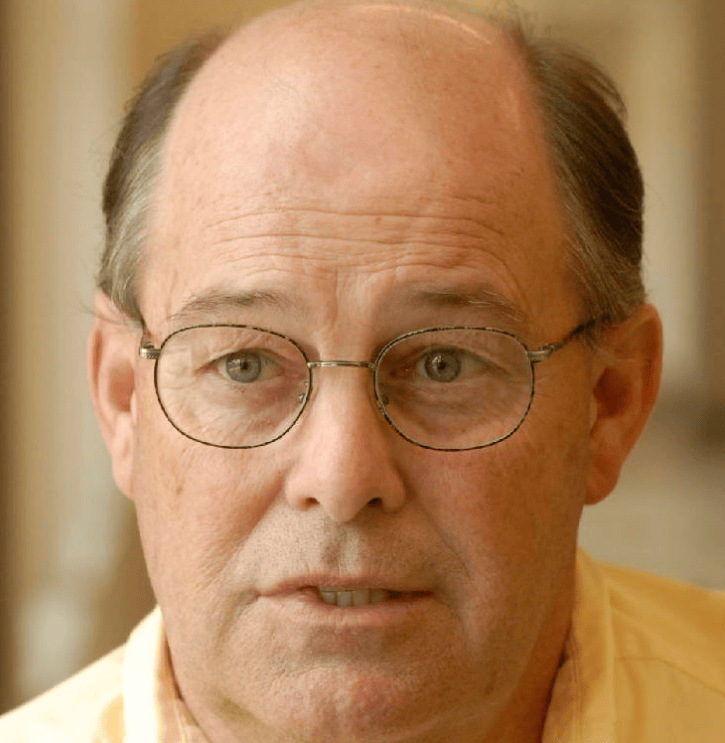
 Ted Rumley
TRENTON, Ga. – The state has offered a pretty great deal to Dade County: replace a bridge in Rising Fawn for just 4 percent of the cost.
But right now, the county commissioners are still at the negotiation table. County Executive Ted Rumley concedes that the state’s offer is good. But he believes it could be better.
The hiccup? Georgia wants the county to pay its share up front. All the county has to cover is half of the cost of the right-of-way purchase – the land bought from a private person to build the bridge there. The state believes the purchase will be $250,000. Rumley says he knows the actual cost: $0.
Rumley has a close connection with the property owner, who happens to be his brother.
“We’ll donate whatever right of way has to be there,” Rumley said. “In reality, they’re not going to have to take any property.”
But, he said, his contact at the Georgia Department of Transportation has not budged. Even though Rumley said the actual right-of-way cost will be free, he said the state is still demanding the county pay half of the projected cost, which comes out to $125,000 for the local government.
“That’s just a lot of money for us,” he said. “It’s not budgeted.”
The savings also would be great. Department of Transportation spokeswoman Natalie Dale said the overall cost to replace the bridge is supposed to be $2.8 million. But even a small fee makes a difference in Dade County, Rumley said. The county is home to only about 16,300 people, and the $125,000 by itself would represent about 1 percent of the general fund budget.
“The commission doesn’t want to distribute the money right now,” Rumley said.
But, he conceded, the county ultimately probably will pay for the project. The deal seems too good to pass up, even if the particular charge to the local government is confusing. (Dale, meanwhile, said she is not aware of the details of the negotiations with Rumley.)
The offer from the Department of Transportation is part of a statewide local bridge replacement program. The state has identified certain bridges that are owned by local governments and considered deficient. These are bridges so rickety, according to the state, that you aren’t supposed to cross them in emergency vehicles, school buses or agricultural vehicles. In some cases, you’re not supposed to even cross them in an SUV. (For his part, Rumley said the bridge’s condition is not as bad as the description in the state’s documentation implies; larger vehicles frequently cross it.)
The state sent offers to 45 counties that owned 52 bridges considered deficient. According to an August report on the bridges, 33 of those counties had signed contracts with the state. Twenty-nine counties had paid the charges demanded for replacing the bridges.
As part of the agreement, the state covers preliminary engineering costs, utility relocation, construction costs and half of the projected right-of-way costs. The county just covers the other half of the right-of-way costs.
Commissioner Robert Goff said last week he was not aware of the details of the negotiations between the county and the state. But he agreed with Rumley that there shouldn’t be a right-of-way cost at that location.
“I just don’t understand it,” he said. “The county does have right of way through there, obviously. I don’t know what it would be.”
Contact staff writer Tyler Jett at 423-757-6476 or tjett@timesfreepress.com. Follow him on Twitter @LetsJett.